

Audio By Carbonatix
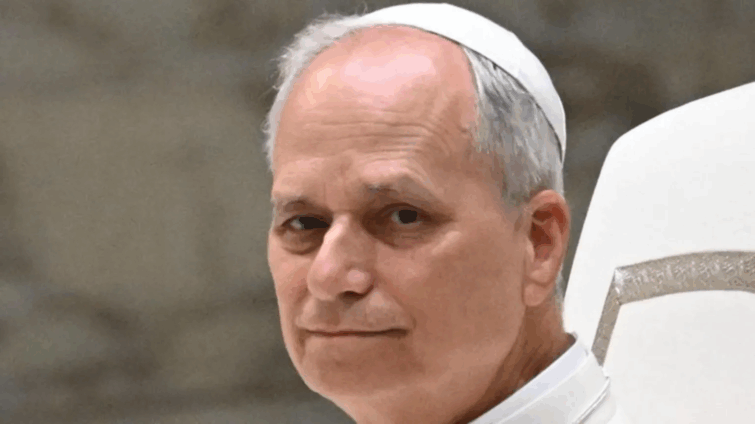
Pope Leo XIV has appointed the first Chinese bishop of his papacy, signalling that he will continue a historic agreement that sought to improve relations between the Vatican and China.
Both sides have hailed the appointment of Fuzhou Auxiliary Bishop Joseph Lin Yuntuan as an affirmation of their commitment to the 2018 accord, which was reached under the late Pope Francis.
The agreement gave Chinese officials some input on the appointment of bishops. However, its contents were never fully disclosed to the public.
Beijing insists that the state must approve the appointment of bishops in China, running contrary to the Catholic Church's insistence that it is a papal decision.
China has some 10 million Catholics.
Currently, they face the choice of attending state-sanctioned churches approved by Beijing or worshipping in underground congregations that have sworn allegiance to the Vatican.
On Wednesday, the Vatican said Yuntuan's ministry had been "recognised" by Chinese law.
"This event constitutes a further fruit of the dialogue between the Holy See and the Chinese Authorities and is an important step in the journey of communion of the Diocese," the Vatican said.
When asked about Yuntuan's appointment, foreign ministry spokesperson Lin Jian told reporters on Thursday that this showed how the 2018 agreement had been "smoothly implemented", state media reported.
China is willing to work with the Vatican to continue improving relations, he said.
The Pope's move shows a "willingness to support reconciliation instead of antagonism", Michel Chambon, a research fellow at the Asia Research Institute in Singapore who has written extensively about the Catholic Church, told Reuters news agency.
In September 2018, Pope Francis recognised seven bishops appointed by China. The Vatican also posthumously recognised an eighth bishop who died the year before.
China first broke off diplomatic ties with the Holy See in 1951, and many Catholics were forced to go underground during former communist leader Mao Zedong's rule, emerging only in the 1980s when religious practices were tolerated again.
Latest Stories
-
Catholic Bishops say moral values must match economic priorities in Anti-LGBTQ+ debate
5 minutes -
IGP Yohuno urges merit and hard work ahead of Police Academy exams
18 minutes -
Queendalyn Yurglee releases debut album ‘Clouds of Glory’
51 minutes -
UDS moves to clear MPhil student wrongly linked to robbery case
1 hour -
Vodza Regatta 2026: Prof Audrey Gadzekpo rallies investors for coastal tourism growth
1 hour -
Introduction of 100 new Metro Mass buses won’t affect transport unions – GPRTU
1 hour -
Deputy Transport Minister backs Yellow Line traffic initiative
1 hour -
MTN Ashanti-Fest music concert set to hit Kumasi on Saturday
2 hours -
Authorities probe discovery of dead fish at Tema shipyard
2 hours -
Minority welcomes fuel tax cuts, demands accountability for GH¢1 levy
2 hours -
It remains a priority — Sam George on Anti-LGBTQ bill
2 hours -
Police arrest Nigerian national seen in viral videos wearing police uniforms
2 hours -
Free golf training empowers underprivileged girls in Accra
2 hours -
Why SIGA’s reset is not a market sin, but a national necessity
2 hours -
SIGA Directive: Beyond the theatre of institutional displacement
2 hours