

Audio By Carbonatix
In markets across Ghana, plantain sellers are rethinking their survival strategies amid wild price swings.
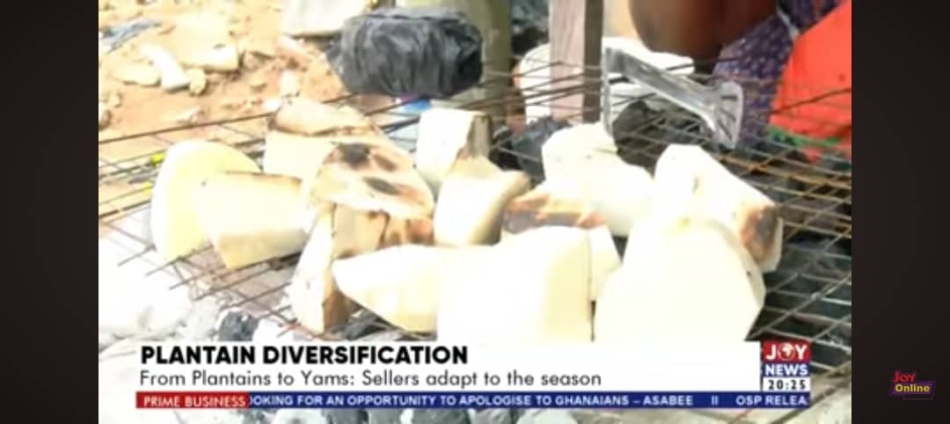
As shifting supply cycles create scarcity in some areas and gluts in others, vendors are expanding their offerings to include yams, maize, and cocoyam. Their goal: to retain loyal customers, stabilise earnings, and avoid tying up scarce capital in overpriced plantain stock.
Food vendor Justina Lamptey, who usually fries plantain for sale, has recently switched her focus.
“Lately, there’s no plantain, so I’ve switched to yam and cocoyam,” she explains. “Plantain has its season—when it’s out, prices go up, sometimes to GH¢20 for just three. At that rate, I can’t make a profit.”
She plans to reintroduce plantain to her menu as soon as prices ease.
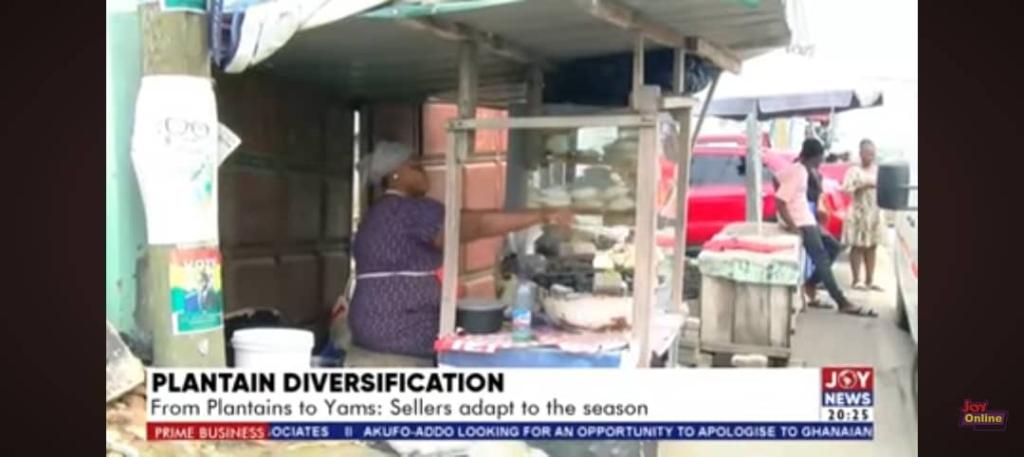
“My profit is higher on plantain than on yam or cocoyam, so I’ll add plantain the moment it’s in season.”
Roaster Beatrice Amarh has adopted a rotating menu to manage such risks.
“Because plantain is not in season, I only roast yam and maize. There is some plantain in the market, but it’s very expensive and I’d lose profit if I bought it.”
Years of trading have taught her to follow the crop calendar closely.
“When plantain is in season, maize goes out. When maize is in season, plantain goes out. So I switch depending on what’s available.”
In Kokomlemle, veteran trader Maa Gifty keeps a small, strategic stock of plantain on hand—even during peak price periods—to maintain her higher-spending clientele.
“Every year, plantain gets expensive when it’s out of stock. But this year, it’s very expensive,” she says.

A bunch can cost her GH¢40, which she retails at GH¢50, leaving a slim GH¢10 margin before factoring in transport, fuel, and spoilage.
“Many traders drop plantain entirely during these times, but I keep a little. It’s the rich people who often buy. One person can take the whole heap—I can get GH¢300 or GH¢200 just like that. Some come from the Industrial Area just to buy from me.”
She also gauges customer perceptions carefully.
“People feel more satisfied when they buy maize or corn instead of plantain,” she notes.
As a result, her stall balances smaller quantities of premium plantain for big spenders with more affordable staples like yam, maize, and cocoyam for general traffic.
For consumers like Thomas Asare, the price pressure is clearly visible.
“You go to the market to buy plantain—it’s very expensive. The plantain-and-beans they sell, one is now GH¢2 instead of GH¢1 or 50 pesewas,” he says.
For low-income households trying to stretch weekly food budgets, that price jump is significant.
So the next time you visit your favourite plantain seller, don’t be surprised if you leave with less, or none at all.
From yams to maize and cocoyam, Ghana’s market traders are diversifying their stock to keep their businesses afloat, and to keep dinner on your table.
Latest Stories
-
President Mahama ends Resetting Ghana tour of Ahafo Region
19 minutes -
African negotiators seek delivery of climate commitments at COP31
20 minutes -
BoG develops AI rules for financial sector
22 minutes -
‘Big Push’: Government assures contractors of prompt payments
26 minutes -
Court fines miner for breaking into gold buying shop
36 minutes -
Tarkwa court jails labourer for three years over GH¢123,000 theft
2 hours -
GAEC must retain nuclear scientists for Ghana’s nuclear ambitions – Minister
2 hours -
Man reportedly mistaken for game and shot by hunter dead in forest
2 hours -
19-year-old mason jailed 15 years for defiling seven-year-old pupil
2 hours -
Ghana’s banking sector assets rise 20.47% to GH¢500.2bn – BoG Governor
2 hours -
22 injured as Sprinter bus overturns at Sege after tyre burst
2 hours -
UN housing expert urges Ghana to strengthen Rent Control Department amid housing affordability concerns
2 hours -
Delta-BCI partnership reaches 166,000 people with breast cancer education
3 hours -
Power restoration fault suspected in Kumasi Central Market fire
8 hours -
The 7-foot giant of Ngleshie Amanfro: Seven-foot Ghanaian Ephraim Saawa dreams of joining the national basketball team
8 hours