

Audio By Carbonatix
The term ‘affordable housing’ has been variously used in different ways in different countries in seeking to provide direction towards addressing the housing needs of the populace. While the term is normally associated with the relationship between a household’s expenditure on housing and how much they earn as income, it generates a lot of controversies, especially as it is heavily influenced by perceptions and socio-economic circumstances of households. This state of relativity has often generated hazy tangential conversations, as it has often been in the Ghanaian housing delivery discourse. In this respect, the single measure of 30% benchmark is common in most countries around the world including Ghana, as recognised in the 2015 National Housing Policy.
However, it should also be stated that many countries have indeed gone further to clarify this definition at national, regional and locality levels, introducing some form of eligibility criteria, towards targeting those most in need. It is this remit of eligibility criteria which has not been clearly communicated in the Ghanaian discourse, hence my asking the question, affordable housing for whom?
Housing indeed operates within the market economy and is thus subjected to market forces, yet it is also true that, since the post war era, housing has been considered as a welfare issue in most progressive countries around the world. Given that inadequate housing has huge socio-economic implications in affecting the mental health of households, governments have often intervened in helping to sustain functional societies. The affordability issue can be addressed from two main extremes; the social production cost of housing at the lower end and market production cost at the upper end. Social production cost focuses on housing as a public good and not necessarily profit making, while market production cost seeks to optimise profit making as would happen in any rational business sector in a market economy.
Thus, affordable housing is not intended to make full market recovery but rather satisfy social production cost. This in essence is about targeting those who are really in need, which is not what we are witnessing in the affordable housing delivery projects in Ghana. My contention here is that, we are in this situation because we have not clearly considered the big issue of housing for “whom” and what the eligibility criteria should be beyond the 30% benchmark. There is the need for clarity on the criteria for affordable housing, both on the demand and supply side, even before the project commences.
Related to this is the issue of the welfare concept to housing. This, as already stated, is integral to housing delivery in most progressive countries around the world. Within this context, three main dominant welfare schemes are in place: the social democratic welfare scheme, the corporatist welfare scheme and the liberal welfare scheme. In the social democratic scheme, the State is heavily involved in providing housing for all citizens based on the concept of equal distribution of wealth. Many of the Scandinavian countries fall within this category.
The corporatist welfare scheme is based on limited but active participation of the State in providing housing for those who genuinely need help. Most Western European countries, example Germany, Austria and Italy are involved in this. However, Non-Governmental Organizations (NGOs), including Faith-based Organizations heavily support government efforts in reaching out to those really in need of assistance. The liberal approach involves strong market orientation but at the same time, the State actively identifies low income earners and those with specific challenges for immediate assistance.
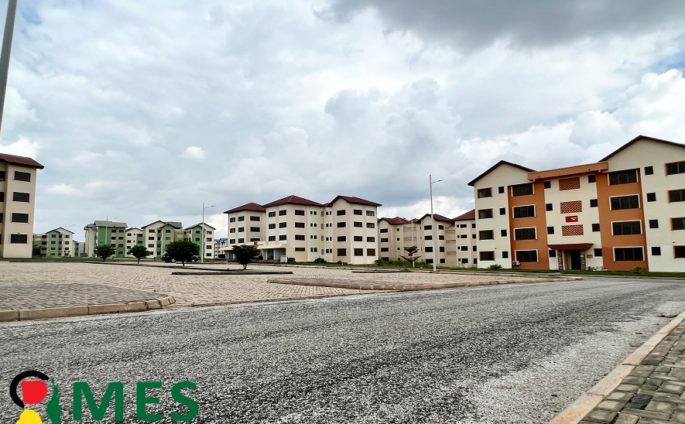
In Ghana, it is currently not clear which of the welfare schemes aligns with the official position of the State, as the citizens have not been made aware. While it is not the intention here to go into the merits and demerits of the various welfare schemes, what is clear is that, all three are geared towards addressing the needs of those really in need of housing and/or the vulnerable in society. However, public discourse in Ghana indicates that, affordable housing programmes implemented over the years have not reached out to those really in need – suggesting the lack of eligibility criteria in place. If attempts at addressing housing needs is not trickling down to those who are really in need, then it sounds logical to question eligibility criteria and implementation. There is therefore obviously the need for some public conversation on the criteria for affordable housing, even before the scheme commences. If this clarity exists, we would not be confronted with this awkward situation of the state seeking to sell current housing projects to private sector parties, because of the claim that it is not affordable. This conversation must start now, as it is as urgent as necessary if we as a Nation, expect to make any headway in targeting those really in need of affordable housing programmes. The way forward is for the Ministry of Works and Housing to make public its policy direction on housing regarding for instance; the vulnerable and socially excluded, informal workers, people with disability, the elderly and aged in society, single mothers, first time home owners, first time renters etc. There is indeed clarity for a deliberately well thought out public policy and eligibility criteria targeting all income levels/class of the society to make true meaning to our quest to deliver affordable homes to those really in need.
The writer, Professor Divine Ahadzie is Chartered Member of Chartered Institute of Housing (UK) and also Head, Centre for Settlements Studies, Kwame Nkrumah University of Science and Technology, Kumasi.
Latest Stories
-
Anti-LGBTQ Bill: Forget the rumour mongers, I’m a man of action, and will pass the bill – Speaker
2 minutes -
Women and children among those killed in Sudanese army shelling of wedding celebration
5 minutes -
President Mahama is not sincere with Ghanaians on LGBTQ bill matter – Hassan Tampuli
23 minutes -
Gov’t to establish Prison Industrial Hub to equip inmates with income-generating skills – Prison Service boss
42 minutes -
Alhassan Tampuli donates cement, roofing sheets to support storm victims in Gushegu
42 minutes -
Alhassan Tampuli appeals for urgent support for storm victims in Gushegu
45 minutes -
The hypocrisy must stop; pass Anti-LGBTQ+ Bill now – Alhassan Tampuli to Mahama
49 minutes -
Imprisonment should be rehabilitative, not punitive – Ghana Prisons boss at UNGA
1 hour -
Ga Adangbe traditional priests petition Mahama over McDan aviation licence revocation
1 hour -
Anti-LGBTQ Bill: NDC’s arrogance is worrying – Hassan Tampuli
2 hours -
Let’s give OSP time to mature, not to scrap it – Hassan Tampuli
2 hours -
Nigeria convicts 386 Islamist militants in mass trials
2 hours -
Djibouti president wins election with 97.8% of vote, state media says
2 hours -
We don’t have mandate to deduct tax from rent allowance of security services personnel – Interior Ministry clarifies
2 hours -
Ablakwa receives Presidential Special Envoy on Reparations to advance global agenda
2 hours