

Audio By Carbonatix
A research report on electricity pricing recommends redesigning Ghana’s lifeline electricity tariff into a hybrid, better-targeted protection system to improve its effectiveness for the intended beneficiaries.
The report found that only a small proportion of households benefit from the lifeline tariff, with beneficiaries unevenly distributed across Electricity Company of Ghana (ECG) districts and heavily concentrated in low-income areas.
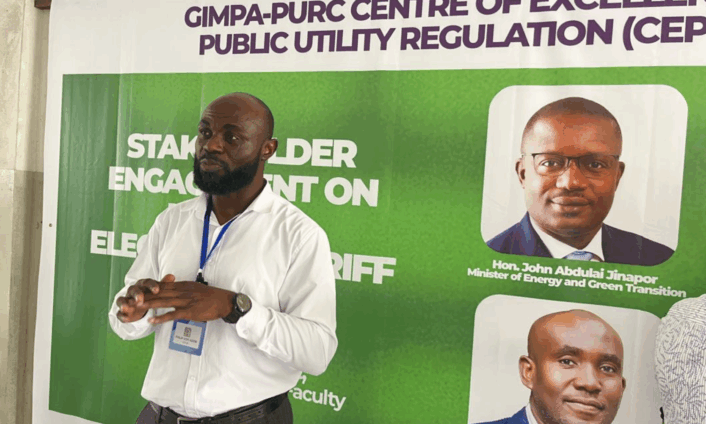
Professor Philip Kofi Adom, the lead researcher, disclosed this at a stakeholder engagement in Accra on Thursday, presenting the study's findings.
The research, titled: “The Lifeline Electricity Tariff Classification Policy in Ghana: A Hit or Miss!”, was carried out in the Greater Accra and Central regions, and supported by the International Growth Centre, an organisation focusing on economic policy research.
Lifeline electricity tariffs provide subsidised power to low-income residential consumers, defined in Ghana as households consuming between zero and 30 kilowatt-hours per month.
The report recommended fixing “targeting linkages” for beneficiaries and addressing exclusion errors through improved metering systems.
It also proposed introducing micro-consumption bands, such as 0–30 and 30–35 kilowatt-hours, to reduce sharp bill increases that were “driving bunching and conservation through deprivation.”
Additionally, the report suggested automatic, time-limited rebates for repeat “near-miss” customers to protect near-poor and larger households that narrowly exceed the consumption threshold.
Other recommendations included enforcing the one-household-one-meter policy to address shared meters and implementing intensive, district-specific public education campaigns to improve understanding of the lifeline tariff system.
The dialogue was organised by the Ghana Institute of Management and Public Administration (GIMPA)–Public Utilities Regulatory Commission Centre of Excellence in Public Utility Regulation.
Dr Ishmael Arkaah, Technical Advisor at the Ministry of Energy and Green Transition, said the Ministry remained committed to ensuring reliable and affordable electricity.
He said cost-effective tariffs were necessary to curb illegal connections, stressing that energy served as an anchor for integrating other sectors of the economy for national development.
Professor Samuel Kwaku Bonsu, Rector of GIMPA, described electricity as the engine of development, noting that both households and industry depended on it.
He urged the government to design systems that ensured easy and affordable access to electricity, as many citizens spent a significant share of their income on utilities.
Participants called for broader stakeholder engagement to clarify eligibility criteria for lifeline tariffs, noting that the policy, intended to benefit the poor, was often accessed by wealthier households.
Latest Stories
-
Every gram will be tracked – Gold Board unveils traceability push to deal with illegally-mined gold
4 minutes -
Analysis: Why the Bank of Ghana sold half its gold reserves
11 minutes -
Buy wrong gold, face prosecution – Gold Board CEO cracks down on rogue dealers
14 minutes -
Africa pushes integrated health agenda ahead of One Health Summit in Lyon
51 minutes -
We own the strategy, its not head office decision – GCB MD positions bank as engine of Ghana’s economy
1 hour -
No more waiting for head office – GCB boss pushes Ghana-first banking
1 hour -
Mahama lauds Julius Debrah for shaping Kwahu Business Forum
2 hours -
Why actors beg in difficulty – Patience Ozokwor on Nollywood financial struggles
2 hours -
Any man who apologises to woman deserves to suffer – Brymo
2 hours -
Nigerian artistes no longer put effort into making music – Omah Lay claims
2 hours -
‘I’m now skeptical about going into politics’ – Davido
2 hours -
Nigeria’s Seplat Energy resumes operations as oil workers halt strike action
3 hours -
Nigeria launches manhunt after abductions by bandits in northwest Zamfara
3 hours -
Kenya fuel executives resign as state probes supply chain irregularities
3 hours -
Senegal bans ministers from foreign travel as oil price rise bites
3 hours