

Audio By Carbonatix
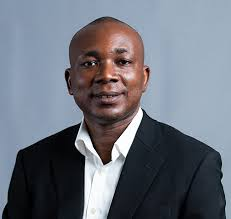
An economist at the University of Ghana Business School, Professor Godfred Bopkin, has raised key concerns about the country’s tax system, emphasising the potential for tax reforms that could improve both fiscal stability and business confidence.
Speaking on the Joy FM Super Morning Show on Monday, February 17, Prof Bopkin asserted that the nation is largely on track in terms of revenue performance but stressed that the current tax regime has imposed a significant burden on businesses, particularly manufacturers and financial institutions.
"If you look at the revenue performance, you can say that we are largely on track. In fact, per our analysis, we could do away with these taxes without compromising the trajectory. And with some additional measures, we could actually close the fiscal gap," Prof Bopkin explained
However, the economist highlighted the ongoing challenges faced by businesses, noting that companies have been forced to continually reconfigure their systems to ensure compliance with the country’s evolving tax policies.
He pointed out that this constant restructuring comes at a considerable cost to businesses, including manufacturing disruptions and increased operational costs, making long-term planning difficult. “The compliance cost has been quite enormous,” Prof Bopkin said.
He added "The uncertainty, in fact, the unpredictability in the business environment that our tax regime introduces clearly we should be able to avoid that."
Prof Bopkin emphasized that, despite challenges, the country’s tax revenue collection has been impressive over the years.
According to his analysis, the Ghana Revenue Authority (GRA) has consistently exceeded its revenue targets between 2020 and 2023. He noted that this achievement could be further optimized by revising the targets set for the tax collection body.
“This is a country that we would say we are not collecting enough revenue, but in the last four years, in fact, 2020, 2021, 2022, 2023, GRA has been exceeding their target, precisely, we should be looking at the module to which we set the target. What it also means is that, actually, with the right target setting and challenging enough, we could actually collect more tax revenue,” he remarked.
Latest Stories
-
Kwame Dadzie: Did Stonebwoy’s ‘Jejereje’ really give NDC “significant” electoral impact?
1 hour -
Lands and Mines Watch Ghana commends Armah-Kofi Buah for transparent Damang Mine Lease Transition
3 hours -
GTVETS announces resumption of work as PSWU strike is called off
3 hours -
AratheJay brings “The Odyssey” to life with stunning live performance release
3 hours -
Gender Minister engages unemployed persons with disabilities
3 hours -
Formal education is a key to success, not the only path – Klef Carter
4 hours -
Why Africa’s creators must lead the movement To build Africa’s 1.5 Billion-consumer single market
4 hours -
IMANI-Africa flags ‘decade and a half of policy failure’ as SIM card re-registration returns
4 hours -
9th Africa Business Tourism & Mice Masterclass to spearhead regional integration and infrastructure readiness
4 hours -
South Africa’s premier sustainable tourism province to welcome Pan-African tourism industry leaders
4 hours -
Photos: Mahama leads wreath-laying ceremony honouring enslaved Africans in New York
4 hours -
Sulemana Braimah urges probe into ‘Big Push’ contracts
4 hours -
Honda Football Championship 2026 officially launched
5 hours -
Salah to leave Liverpool at end of season
5 hours -
Photos: President Mahama’s high-level session on reparatory justice at United Nations
5 hours