

Audio By Carbonatix
As global wildlife populations continue to decline at an alarming rate, scientists from Ghana, Brazil, and the United Kingdom have converged in Kumasi for a landmark workshop to equip the next generation of conservation researchers with the tools needed to reverse the tide.
According to the Living Planet Report 2024, global wildlife populations have declined by an average of 73% between 1970 and 2020, driven by habitat loss, climate change, and overexploitation.
More than one million species are now threatened with extinction, with amphibians and marine mammals among the most at risk. Africa has recorded the second-highest regional decline at 76%, a figure attributed to intense human pressure on natural habitats.
The Biodiversity Monitoring Tools Workshop, running from March 24 to 27, 2026, is held under the theme: “Capacity Building and Observation Network for Nature and Climate in Tropical Ecosystems (CONNECT)”.
The event is a collaboration between the Forestry Commission of Ghana, the Forestry Research Institute of Ghana of the Council for Scientific and Industrial Research (CSIR-FORIG), the University of Ghana, and the University of Bristol in the United Kingdom.
Targeting postgraduate students, early-career researchers, and biodiversity conservation professionals, the workshop introduces participants to a suite of emerging technologies transforming conservation science, including Artificial Intelligence (AI) for biodiversity monitoring, Species Distribution Models (SDMs), and Environmental DNA (eDNA) analysis.
These innovations enable non-invasive, large-scale data collection on species movement, population health, and ecosystem changes, significantly reducing the labour burden on conservation researchers.
For the organisers, the stakes go beyond scientific training.
Senior Research Fellow at the University of Bristol, Fillipe Machado França, stressed the importance of bridging the gap between knowledge generation and real-world impact.
“One of the things we would want to achieve is to allow for knowledge exchange and training, what we call capacity building, particularly here in Ghana,” he said. “We want to fill the science and policy gap. Sometimes we are generating knowledge, but we need to make sure that the knowledge being created here is being adopted and translated into real actions in the real world.”
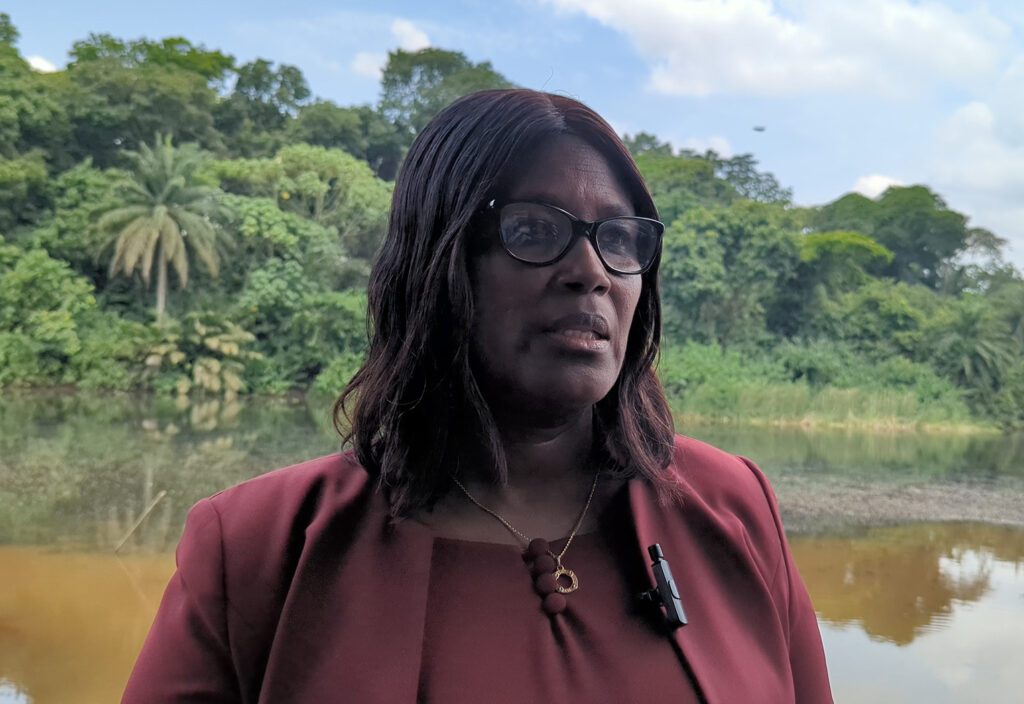
Deputy Director of the CSIR-FORIG, Dr. Mrs. Lucy Mensah, speaking at the event, highlighted the long-term institutional benefits of the international partnership.
“Partnering with this group from the University of Bristol in the UK and our Brazilian colleagues would build the capacity of a new generation of scientists in Ghana, and we think that is going to help us achieve our mandate inscribed by the Government of Ghana, which includes the conservation of biodiversity and forest resources,” she said.
Dr. Mensah further called on the Ghanaian government to invest in training more professionals in artificial intelligence so that AI tools can be meaningfully integrated into national conservation operations.
“With regards to the technological improvements, we need a lot of training because there are many kinds of AI. Government should come in to support the training of young scientists in this regard,” she added.
Participants at the workshop also expressed enthusiasm for the programme's practical value.
A researcher from the Department of Marine and Fisheries Sciences at the University of Ghana, Jannatu Fridaus, said the knowledge gained would directly inform her ongoing research work.
“I expect that the knowledge that will be shared from the workshop, which has to do with AI-driven biodiversity tools, Species Distribution Models (SDMs) and also the eDNA, I would be able to apply it in my research area,” she emphasised.
Latest Stories
-
AU’s 10-year reparations agenda is essential to address historic injustices – Spio-Garbrah
10 minutes -
Ghana can’t remain vulnerable to global economic disruptions— Dr Tutu-Boahene
24 minutes -
‘No nepotism’ – Former NSA Board Chairman demands world-class coach after Otto Addo exit
28 minutes -
Volta Region seen as top choice for luxury weekend breaks — V. L. K. Djokoto
37 minutes -
Halt small-scale mining for one year to fight galamsey – Hopeson Adorye
42 minutes -
President Mahama orders full probe into ‘Big Push’ procurement exposé
60 minutes -
Weija-Gbawe MP calls for commissioning of Weija paediatric hospital
1 hour -
Ghanaians dying in Russia–Ukraine war: The danger is real
1 hour -
Player ratings: Oppong earns high marks as Sibo and Adjetey draw low scores in Germany defeat
1 hour -
Pres. Mahama pledges action on 1.2m out-of-school children after School for Life raises concern
1 hour -
Suhum MP vows NPP will probe Gold-for-Reserves in 2029
2 hours -
Ghana to host Zimbabwe’s President Mnangagwa on three-day state visit
2 hours -
Ghana pushes for stronger West African blue economy partnership at Liberia fisheries investment conference
2 hours -
Ghana hosts high-level African climate strategy meeting ahead of COP31 and COP32
2 hours -
Today’s Front pages : Tuesday, March 31, 2026
2 hours