

Audio By Carbonatix
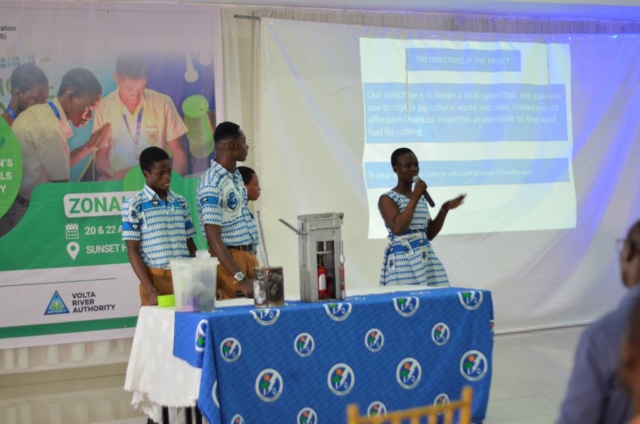
Some senior high schools taking part in the ongoing Renewable Energy Challenge will be granted patent rights for the clean technologies they have created for cooking and food processing.
This follows agreements between the Energy Commission, the Council for Scientific and Industrial Research, and the US-based Clean Cooking Alliance.
The Renewable Energy Challenge aims to streamline renewable energy and energy efficiency for STEM education while encouraging creativity and mentoring among young students in Ghana's second-cycle universities.
One hundred and nineteen senior high schools across the country participated in the third edition of the Renewable Energy Challenge.
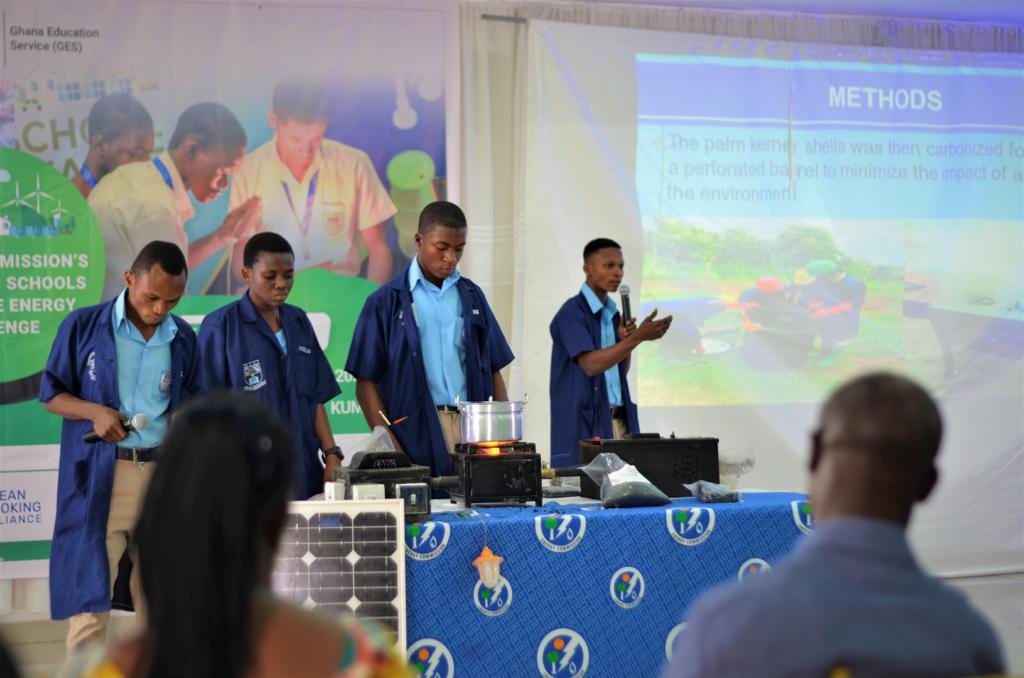
Six of the schools will be battling it out for the national championship.
This year’s theme hinges on providing renewable technologies for clean cooking and food processing.
The World Health Organization estimates an average of four million people die yearly from toxic pollution emanating from conventionally detrimental cooking processes using fuels.
The Energy Commission through its Renewable Energy Act 2011, seeks to promote efficient use of electricity and renewable energy resources to help the country in achieving the Sustainable Development Goal (SDG) 7.
Director for Renewable Energy, Energy Efficient and Climate Change at the Energy Commission, Kofi Agyarko says, “I am happy it’s not only the science students who are doing this but the business students, too. This would help the younger ones to understand the essence of renewable energy so that they can move in line with the global trend of transiting from fossil fuel powered economy to a renewable economy, that’s the net-zero kind of development that the whole world is looking at. We want to help the students to lead that drive”.
Executive Secretary of the Energy Commission, Oscar Amonoo-Neizer, revealed that participating schools will enjoy patent rights to their technologies with mentorship and technical support from the Clean Cooking Alliance and Council for Scientific and Industrial Research.
“One unique thing about this challenge is that the good projects will not end up on the shelves. There is an arrangement with the Council for Scientific and Industrial Research (CSIR) and the Clean Cooking Alliance (based in the USA) to provide mentorship to the winning projects, and other equally good ones to develop and improve on them to become commercially viable. One likely legacy of this competition is that, in future, some schools are going to hold patent rights to technologies that will be a major source of income to them,” he said.
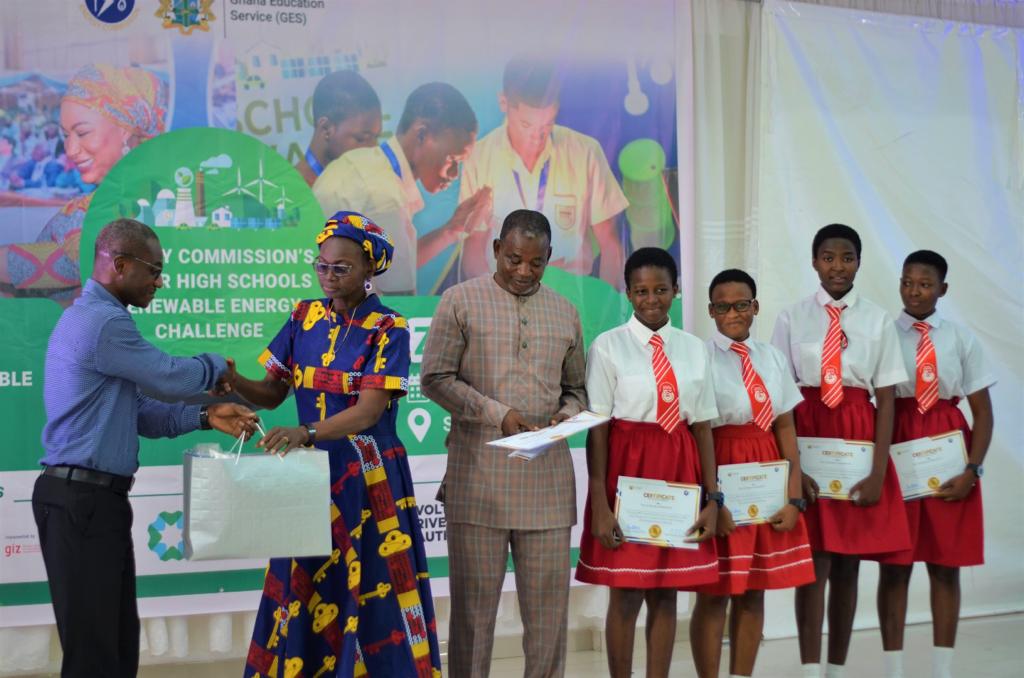
Pleased with the innovations, Director of the STEM Unit at the Ghana Education Service, Olivia Opare, indicated the homegrown solutions by the schools provoke thinking and creativity amongst students.
“They are putting the skills to use to generate products so that in the future it will be viable. The challenge shows creativity. One is able to think critically and come up with something. It also encourages innovation. The students did a lot of research for the challenge using digital means,” she said.
Speaking on behalf of Chief Executive officer of Bui Power Authority, Director Administration of the power distribution company, Pascal Kanbonnabah revealed that collaborations are ongoing for students’ capacity building.
“To further advance the development of renewable energy, which is one of our core mandate and also at the heart of the SHS RE Challenge, BPA is collaborating with the University of Energy and Natural Resources, Kwame Nkrumah University of Science and Technology, and the Berlin Technical University of Germany DAAD to undertake capacity building and Research in renewable energy for students, lecturers and professionals in the RE sector,” he said.
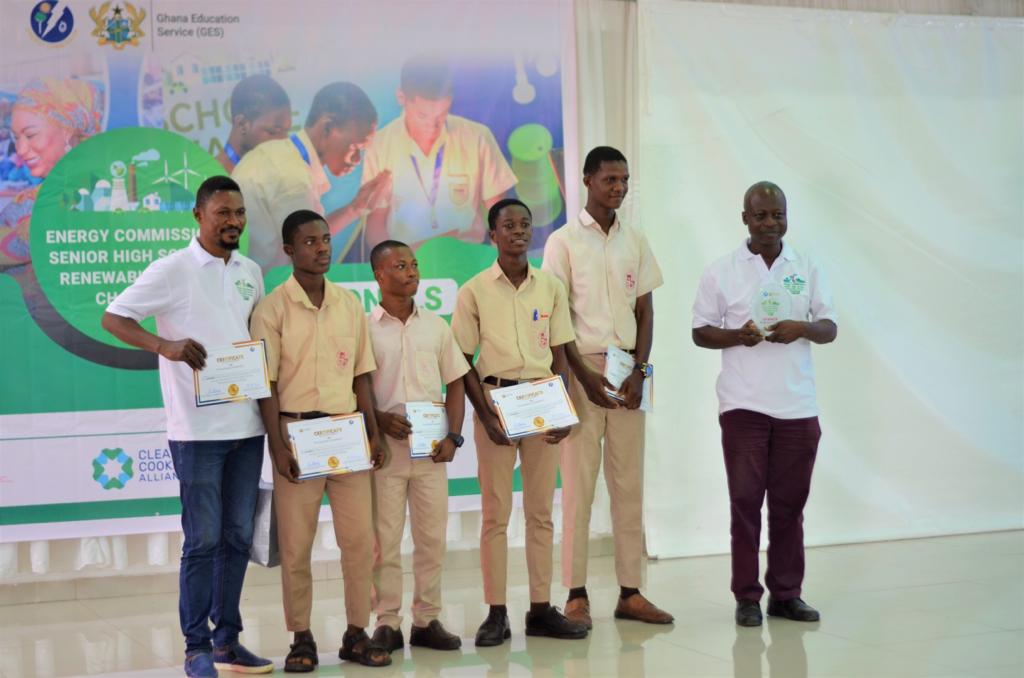
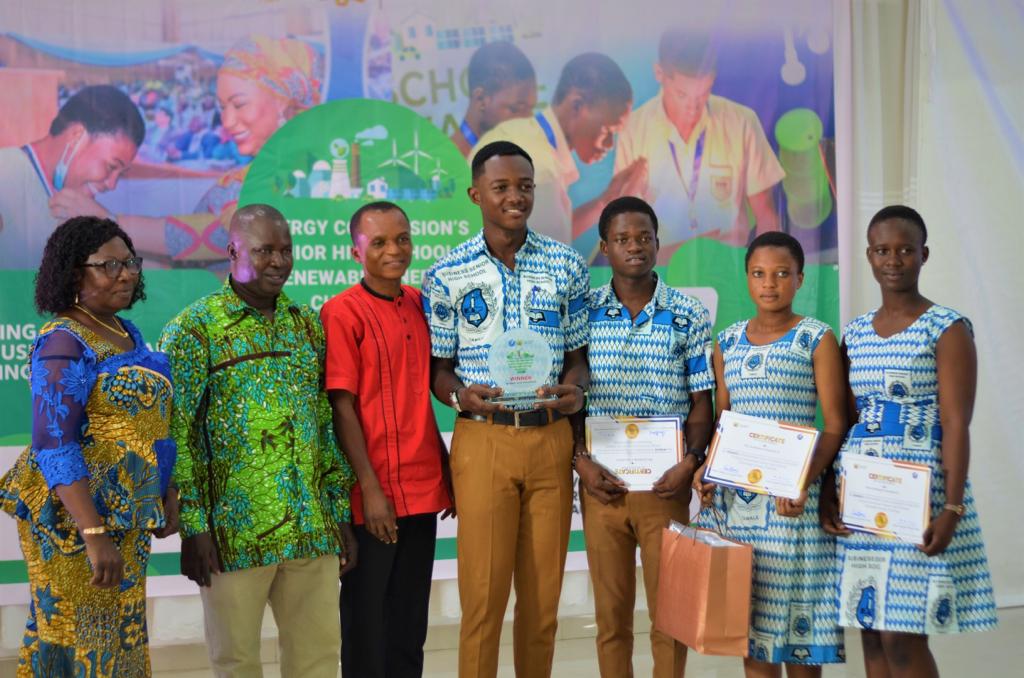
Ghana Secondary Technical School’s (GSTS) TECAN Smart Solar oven and Business SHS’s Agricultural waste recycler into charcoal briquettes won the respective Southern and Northern zonal competition.
Team member for GSTS, Kingsley Mensah said the challenge motivates students to apply theoretical concepts underlying science topics they learn at school.
“Sometimes when I take a physics or chemistry book, do all theories and not apply them I am discouraged. It is difficult learning theories and not apply them. But if we are going to apply them to solve problem, then I am motivated to research more,” he said.
Latest Stories
-
Health Ministry engages Ga Mantse ahead of Free Primary Healthcare launch
13 minutes -
We can tackle multiple priorities – Sam George defends Anti-LGBTQ Bill push
48 minutes -
Statement: Ghana Chamber of Mines’ Response to Claims in Joe Jackson’s “Ananse Stories about the Economy of Ghana”
49 minutes -
GES opens 2026 teacher recruitment for licensed B.Ed graduates
52 minutes -
Ghana must value skilled trades, build resilient learners — Ibn Chambas
60 minutes -
Ghana must rethink education around relevance, resilience and responsibility — Ibn Chambas
1 hour -
Prince Harry faces defamation lawsuit from charity he co-founded
1 hour -
South Korea deploys thermal cameras to track escaped zoo wolf
1 hour -
Calls for royal meeting with Epstein survivors grow ahead of US visit
1 hour -
Ibn Chambas advocates blend of technology and human values in education
1 hour -
UMA improves healthcare access in Asutifi North with GH₵700k ‘Kim Taylor Legacy’ Walkway
1 hour -
Scholarships Authority and Fanaka University offer sponsorship for procurement and supply chain studies
1 hour -
Bisa Kdei drops new single ‘Go N Look’ featuring Medikal
1 hour -
Benin facing rising terrorism in north as French military presence faces growing criticism
1 hour -
UEW Public Lecture Series 2026: Education debate ‘about the soul of Ghana’s future’ — Dr Ibn Chambas
1 hour