

Audio By Carbonatix
Some experts are warning of challenging times for the Ghanaian economy because of increasing interest costs of its international bonds.
According to them, this will affect government finances and liquidity in the economy, thus depriving businesses adequate funds to expand and grow.
Ghana’s dollar bonds are the worst performers this month in a Bloomberg index tracking emerging-market hard-currency debt, with a decline of 5.8%. The 2025 yield jumped 153 basis points on Monday, 18th October, 2021, the most in a day on record since the debt began to trade in April 2021.
This will compel investors holding the country’s bonds to demand high premiums or interest rates.
Subsequently, if the situation persists, Ghana may have no option than to return to the International Monetary Fund (IMF) for financial support. Ghana’s debt has reached alarming levels of ¢335 billion as of the end of July 2021.
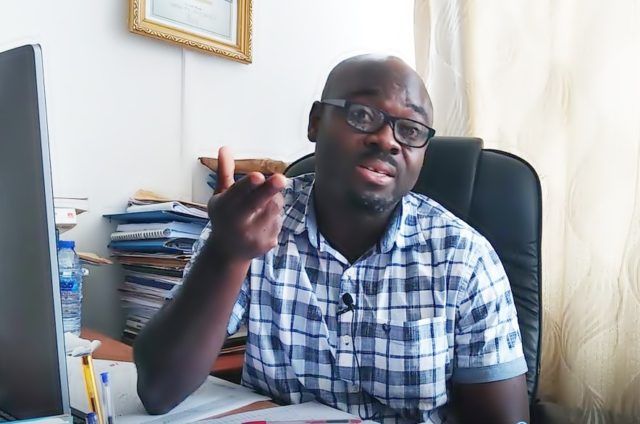
Speaking to Joy Business, Finance Lecturer at the University of Ghana Business School, Professor Lord Mensah said “it’s going to have impact on our economy. I mean bonds that we’ve floated because obviously once the premium yield goes up, we should expect that every investor would require higher rate as far as our bonds are concerned.”
“We should expect higher rates on any issue [new bonds or rollover]. It will affect the possible floatation that we’re going to do in future”, he added.
To him, “businesses will be affected in a way, because once interest rates go up in a certain environment, it increases cost of operations. Even the banks struggles to raise funding.”
He added that if government is struggling to raise funds, then obviously it would be borrowing, adding “when the government borrows in excessive manner, it stifles businesses from accessing funds. So, obviously it’s going to affect businesses locally.”
Government to spend ¢36bn on interest payment
Government set aside about ¢36 billion as interest payment on existing and fresh loans that it will be servicing this year.
But following this development of investors demanding for high interest rate, this amount could be go up further.
Interest Payments is now the biggest spending item on the 2021 budget, overtaking compensation which had traditionally led the spending list.
Latest Stories
-
One injured as fire destroys 14-bedroom house at Kwame Danso
2 minutes -
GACL struggling despite recording profit, levy needed for expansion – Agalga
5 minutes -
Kwahu Business Forum: Ghana Sports Fund calls for stronger corporate backing for sports dev’t
14 minutes -
Penplusbytes’ statement on police action against deepfake and misinformation activities in Ghana
45 minutes -
QNET, EOCO partnership showcased at UN global fraud summit as model for fighting organised crime
46 minutes -
Mussa Dankwah is like a ‘lotto doctor’ – Miracles Aboagye
52 minutes -
Investors target Ho Airport for training and maintenance hub — GACL Chair
57 minutes -
NDC’s ‘grand deception’ on anti-LGBTQ+ bill exposed – Ntim Fordjour
57 minutes -
Speak out against Mahama government’s LGBTQI+ u-turn – Ntim Fordjour to clergy
1 hour -
Ghanaians worse off despite improved macroeconomic indicators — Miracles Aboagye
1 hour -
Police intercept narcotics, arrests five suspects in Upper West
1 hour -
Government to establish Kumasi Machinery Innovation Park under 24-Hour Economy programme
1 hour -
When Hormuz Fails: The day a waterway stops the world
1 hour -
Ghanaian students in UK to protest over unpaid fees, stipends
1 hour -
Inflation to go up marginally in April 2026 – Report
1 hour