

Audio By Carbonatix
As Ghana prepares for its 2027 local assembly elections, stakeholders are calling for stronger measures to ensure increased women’s participation in governance to accelerate development.
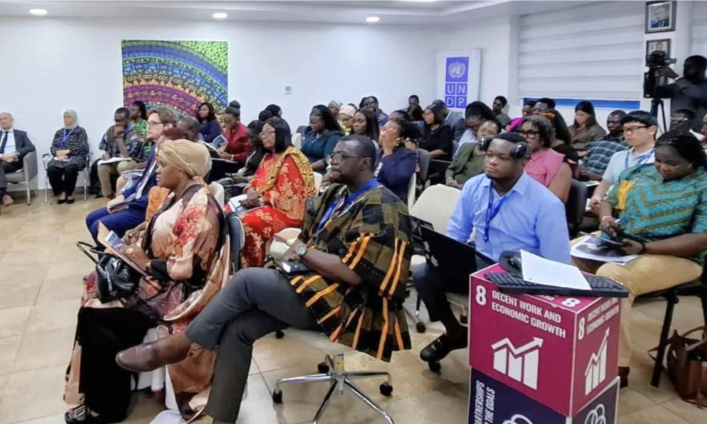
At a roundtable convened by the United Nations Development Programme (UNDP), the Danish Embassy, and the Nordic Africa Institute, speakers proposed practical solutions ranging from legislative quotas to community-level protection against violence.
Despite the increase in average share of women in Ghana’s Parliament from nine per cent in 2000 to 15 per cent in 2024, it remained below the 2026 target of 30 per cent, with only 4.1 per cent women being members of district assemblies.
The forum kickstarted conversations about how women’s political participation could be increased, while gendered electoral violence could be mitigated ahead of the 2027 district assemblies’ elections.
Stakeholders agreed that though efforts had been made, particularly the passage of the Affirmative Action Bill into law in 2024, gender gaps remained widened among women.
They called for practical actions beyond the enactment of laws and pronouncements and translate them into substantive gender gains towards deepening Ghana’s democratic credentials.
Quotas, party reforms, and protection mechanisms were identified as critical levers to ensure women can contest and win seats at the local level, strengthening democracy and inclusivity.
Niloy Banerjee, UNDP Ghana Resident Representative, said women’s participation must be safeguarded by law and practice, including temporary quotas for them in local government and Parliament.
He said Ghana’s comparative advantage in trained security forces should be leveraged to protect women in politics, while civil society and political parties committed to creating safer spaces for female candidates.
He advised women to use available instruments for safety, report threats to authorities, and leverage mentorship and awareness-raising to support their political involvement and not feel physically threatened to participate in the political process.
Mr Banerjee underscored UNDP’s commitment to promoting women’s full participation in economic, political, and social affairs, noting that a women-led strategy was being implemented to address community peacebuilding issues.
The Danish Ambassador to Ghana, Jakob Linulf, noted that while cultural and historical barriers could not be changed overnight, continuous advocacy and legal reforms could gradually secure equal opportunities.
The Ambassador recommended continuous awareness and empowerment of women to actively participate in local and national level politics, with stakeholders standing up against injustices and promoting a collective effort towards gender equality.
He appreciated UNDP’s efforts in raising awareness on the subject and highlighted the importance of both men and women supporting the implementing laws against discrimination and pushing for enforcement of existing laws.
Diana Hølund Madsen, a Senior Researcher with the Nordic Africa Institute, noted that local governance was often overlooked as a pipeline for women’s political leadership, reflected in the only 4.1 per cent of district assembly members bring women.
She called for strategies to address electoral violence, which disproportionately affected female candidates, and urged greater support for women-led initiatives at the community level.
“Improving women’s conditions in politics goes beyond just increasing numbers. It involves creating a safer and more inclusive environment for women to participate,” Ms Madsen said.
“This includes addressing violence against women in politics, especially in Africa, and ensuring they have the necessary support to thrive.”
To achieve that, she said it was crucial to shift focus from just counting heads to examining the conditions that hindered women’s effective participation, adding that “by doing so, we can create a more enabling environment for women to contribute to decision-making processes.”
Latest Stories
-
Libya’s military seizes narcotics after firefight with smugglers
2 hours -
At least 139 migrants dead, including some children, after boat from Djibouti to Yemen capsizes, UN agency says
2 hours -
“US Embassy introduced TRIBE Culture Fest to NSA, GTA” – Kofi Adams
2 hours -
“NSA did not tell us of any embassy arrangement” – Kofi Adams
3 hours -
Kumasi records third commercial fire in three days
4 hours -
Trump faces growing backlash over plans to import diesel from Russia
4 hours -
AI is less regulated than milk, says Microsoft president
4 hours -
Boots sold in £7bn deal to Canadian billionaire family
4 hours -
Glasner suffers loss on Selhurst return as Palace beat Forest
4 hours -
WAFU B U17: ‘We won but I expected more from my boys’ – Kassim Ocansey
4 hours -
Royal Mail plans to cut 2,500 jobs
4 hours -
Man City cruise to statement win over 10-man Liverpool
4 hours -
Citroen revives the 2CV for an electric age
4 hours -
Blind guide dog owner says quiet EVs put lives at risk
5 hours -
Hamilton apologises to Ferrari as Antonelli moves to brink of title
5 hours