

Audio By Carbonatix
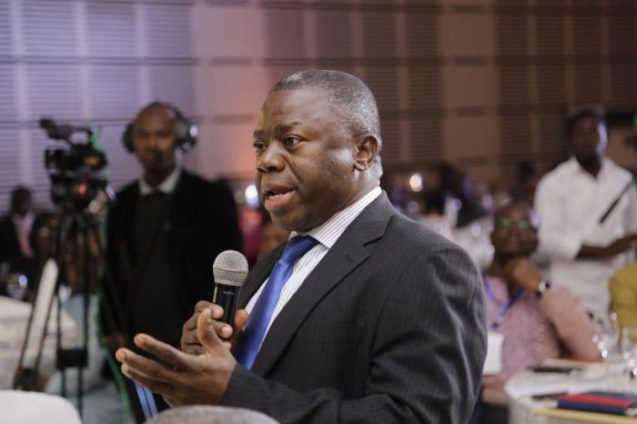
Former President of the Ghana Association of Banks, Alhassan Andani, says the institutions of state must not lose sight of their responsibility to raise red flags at the right time.
According to him, the recent banking sector crisis and its subsequent clean-up operation which cost the country an estimated GH₵10.98bn ($2.1bn), equivalent to just over 3% of the nation’s GDP in 2019, could have been mitigated had state institutions raised red flags on time.
He noted that their long silence despite the canker staring them in the face is what had led to the so-called crisis.
“So when people say banking crisis as we had and they collapsed, most of it wasn’t crisis. We saw that these entities that failed were simply not doing banking; they were not doing banking as we know it.
“That’s why I am saying we should never compromise institutional discipline for keeping the society clean, keeping the economy clean, and making sure that people can believe where they’re going to put money,” he said on JoyNews’ PM Express Business Edition.
“So we had all these people gathering money from people and promising interest rates that were out of this world. And for those of us who were in regular banking knew that there wasn’t any kind of investment that you could deploy borrowed funds, I mean, clients’ deposits to earn the kind of interest rates that they were promising people who were depositing monies with them.
“So straight away, institutions were there, whether it was SEC, whether it was Bank of Ghana, whether it was other governmental agencies, they were there that knew that this was not right but we allowed it. So for me it wasn’t crisis. We allowed thievery, we allowed just outright wrongdoing to persist for a very long time,” he explained further.
In 2017, the Akufo-Addo-led government implemented the financial sector clean-up initiative to prevent the financial sector from collapsing.
This followed an asset quality review in 2015 and 2016 by the Bank of Ghana. The report noted that there were severe challenges with solvency, liquidity and asset quality in the country’s banking industry.
According to reports, about nine banks, 23 savings and loans companies, 386 microfinance companies and 53 fund management institutions were collapsed.
Many employees lost their jobs due to the financial sector clean-up.
Latest Stories
-
MOBA must reduce reliance on donations to protect Mfantsipim’s future – Patrick Kittoe
46 seconds -
GCB extends Customer Service Week into month-long customer engagement
2 minutes -
Africa risks widening inequality if it fails to build AI expertise – Kweku Awotwi
2 minutes -
Women’s Voices Matter Movement petitions Gender Ministry over women’s rights and development
3 minutes -
Huel ad banned for suggesting its products could replace all meals
15 minutes -
Global InfoAnalytics poll puts John Boadu, Justin Kodua and Titus Glover ahead in NPP executive race
2 hours -
Ghana to establish skills development university with $50m from German support package
2 hours -
Baffour Awuah under EOCO investigation over alleged financial loss and money laundering – Deputy AG
2 hours -
How healthy is Ghana’s health sector?
2 hours -
HACSA Tech4Girls graduates 80 young women with digital and technology skills
2 hours -
Arrest of Manhyia South MP should involve Parliament, not police station – Kpebu
3 hours -
Two Nigerians sentenced to 189 months in US prison over $2.4m cyber fraud
3 hours -
Cristiano Ronaldo leaves Portugal’s training camp after rift with Head Coach
3 hours -
Ghana Energy Awards opens nominations for landmark 10th anniversary edition
3 hours -
Aayalolo contra-flow: Are we treating the symptom instead of the disease?
3 hours