

Audio By Carbonatix
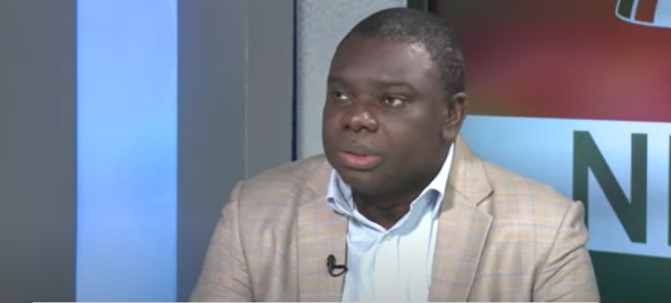
Senior Partner and Chief Executive Officer Ishmael and Associates, says most students graduate from basic, senior high, and tertiary institutions without acquiring the requisite skills needed for the job market.
Michael Harry Yamson explained that the development is a result of government's failure to liaise with stakeholders in the business industry when developing curricula for students to use in schools.
Speaking on Joy FM's Super Morning Show, Tuesday, May 11, he noted that schools train students for hard work but fail to train them for innovation, which he believes has contributed largely to the inability of graduates to generate their own businesses after school.
"We know that what industry is looking for is not what our system is producing but who designs the educational system? It is our government that says these are the skills that I want graduates to have but business is the one that takes over these graduates.
"If 'business' is going to take over these graduates, then surely, the design of curricula, the development of students, and the testing of students cannot be one where there's an arm's length relationship between industry and government," he said.
Speaking further, he indicated that only 10% of people in the Agric sector have the required skills required to be successful in the sector.
"If you walk into the Agric sector, the kind of skills that are required to create the Agric of the future that everybody talks about, only 10% of people in the sector are suitably trained to deploy the skills we require to be successful in Agric and Agribusiness," he said.
That notwithstanding, he entreated government to review the curricula such that, it includes skills development programs that will enable students to become more innovative after school.
"Heaven knows we have enough graduates but the ability to create new knowledge and innovation and to build sustainable businesses out of those innovations is a skill that we are greatly lacking that cuts across every sector.
"We need to rethink the relationship (between industry and government) through this chain and make sure that industry, which is going to take graduates is much more closely involved both in the design, the implementation, the training or the education and the testing of students because this distance is what has allowed the situation where people come out of SHS and technical school and universities and the skills are not quite right," he said.
Latest Stories
-
Tarkwa court jails labourer for three years over GH¢123,000 theft
26 minutes -
GAEC must retain nuclear scientists for Ghana’s nuclear ambitions – Minister
58 minutes -
Man reportedly mistaken for game and shot by hunter dead in forest
1 hour -
19-year-old mason jailed 15 years for defiling seven-year-old pupil
1 hour -
Ghana’s banking sector assets rise 20.47% to GH¢500.2bn – BoG Governor
1 hour -
22 injured as Sprinter bus overturns at Sege after tyre burst
1 hour -
UN housing expert urges Ghana to strengthen Rent Control Department amid housing affordability concerns
1 hour -
Delta-BCI partnership reaches 166,000 people with breast cancer education
1 hour -
Power restoration fault suspected in Kumasi Central Market fire
7 hours -
The 7-foot giant of Ngleshie Amanfro: Seven-foot Ghanaian Ephraim Saawa dreams of joining the national basketball team
7 hours -
Government promises support for Kumasi Central Market fire victims
7 hours -
Vibes The Movie: Big Ghun’s Ghanaian film earns five nominations at 2026 REFFA
8 hours -
‘I’m a fulfilled man’—Justice Korbieh on missing out on Supreme Court despite two nominations
8 hours -
MamaCare CEO warns unresolved conflicts among health workers could undermine maternal and neonatal care
8 hours -
Health professionals urged to translate medical knowledge into practice to save mothers
8 hours