

Audio By Carbonatix
The vision to drive blue-circular communities globally is yielding positive results with the development of viable environmental solutions.
That is a major outcome of the Norwegian University of Science and Technology and the Regional Water and Environmental Sanitation Centre Kumasi (RWESCK) ALL4WASH Summer school in Kumasi.
The fortnight-long programme yielded six modules.
Blue-circular economy looks at recycling resources embedded in wastewater and solid waste streams.
It is meant to reduce overdependence on limited resources for sustainable development.
Students from Norway in the global north came together with students from Mali, South Africa, Ethiopia, Uganda, Tanzania and Ghana in the global south to come up with solutions for environmental problems.
The students were put into six groups to find sustainable ways to prevent waste using the RWESCK building as a case study.
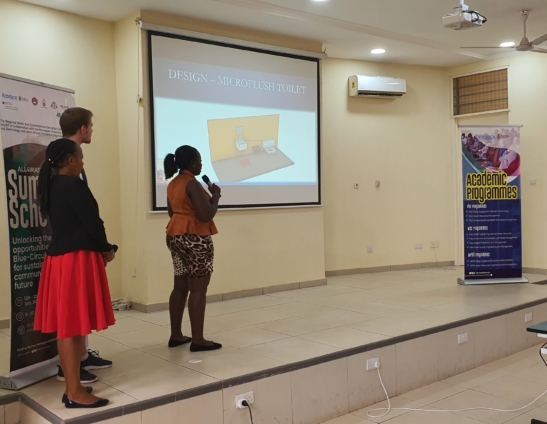
All the groups presented on the solutions to some waste management problems in the building.
Ms. Priscilla Badaweh Coffie and her group members presented on how solid waste can be reduced in the RWESCK building.
They introduced a new technology in the form of a bin that will sort out waste into various chambers to ensure easy recycling.
“So basically, we were looking at the solid waste management in this building and we were able to come up with a compartmentalized bin.
“Which will do automatic separation of solid, plastics and other waste into the various compartments,” she said.
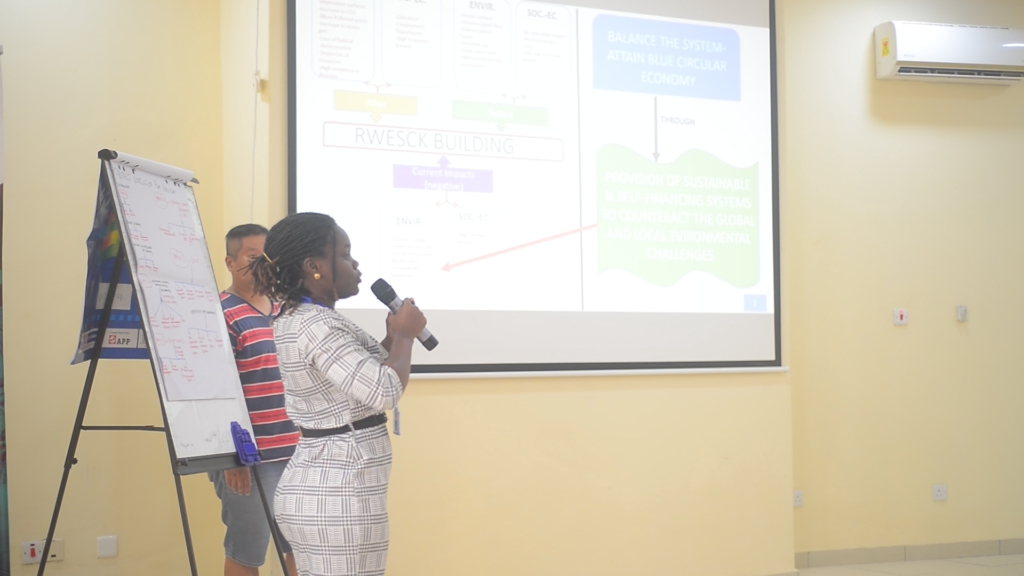
Ms. Munira Iddi Kaoeneka and her group also looked at cheaper ways of treating waste water in the RWESCK building.
They also talked about planting trees in the surroundings to improve the beauty and provide shade for students and teachers.
“And so, we decided to make revisions in the wastewater treatment that is done in this building by implementing cost effective technologies that will be able to treat waste water.
“Also take into account the infrastructure and the aesthetics of the buildings so we have an ABR and wet land construction.
“The ABR will be very cost effective and the wetland will be able to implement something that can be also appealing to the eye, having plants and trees there so that the students and teachers can rest and recreate,” she said.
Prof. Esi Awuah, of the department of civil engineering commended the student’s efforts.
She also said that they are going to enforce the solutions that the students worked on.
“I think that this summer school is different from the others.
“So far, the people have really put in much more than I expected.
“We are going to implement them and that is the joy,” she said.
Latest Stories
-
Gramps Morgan names Ghanaian business leader Monalisa Effah as Ghana-Jamaica Homecoming Ambassador
22 minutes -
CAF President urges faith in African football despite AFCON 2025 issues
40 minutes -
AFCON U-17: Black Starlets’ aim is to win trophy – Head Coach Prosper Ogum
45 minutes -
ENFA expands access to global capital for Ghanaian SMEs
53 minutes -
Beyond security: Why mobile payment fraud has become a customer experience crisis
53 minutes -
Former Effia MP demands full disclosure of Truedare AI deal, warns of ‘hidden risks’
1 hour -
Joseph Cudjoe raises alarm over potential revenue loss in Truedare AI Customs deal
1 hour -
Video: Awoshie-Anyaa Highway: Years of fatal crashes caused by faulty traffic lights
1 hour -
No financial transactions with Ghana Card yet, says NIA
1 hour -
Former Netherlands Fire Chief engages GNFS Tema Command on capacity building
2 hours -
Finance Ministry defends Publican AI rollout amid stakeholder concerns
2 hours -
Police arrest 5 in Asankrangwa robbery; cash and guns retrieved
2 hours -
Why I joined NPP – Jeneral Ntatia
2 hours -
Three UDS students remanded over alleged armed robbery
2 hours -
Kudus Mohammed at risk of missing World Cup 2026 after fresh injury blow
2 hours