

Audio By Carbonatix
If you want to know why Sudan matters to so many other countries, just take a look at a map.
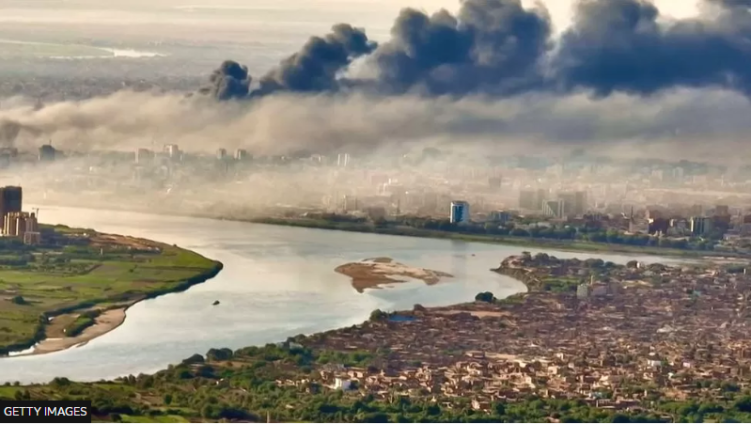
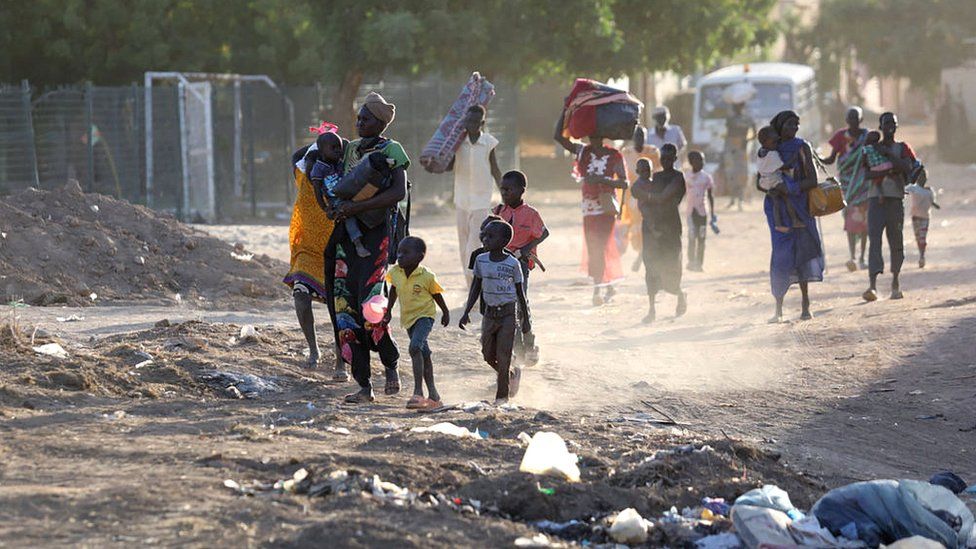
There's a reason why the fighting that has erupted there over the past week is ringing so many international alarm bells. Sudan is not only huge - the third largest country in Africa - it also stretches across an unstable and geopolitically vital region.
Whatever happens militarily or politically in the capital, Khartoum, ripples across some of the most fragile parts of the continent.
The country straddles the Nile River, making the nation's fate of almost existential importance; downstream, to water-hungry Egypt, and upstream, to land-locked Ethiopia with its ambitious hydro-electric plans that now affect the river's flow.
Sudan borders seven countries in all, each with security challenges that are intertwined with the politics of Khartoum.
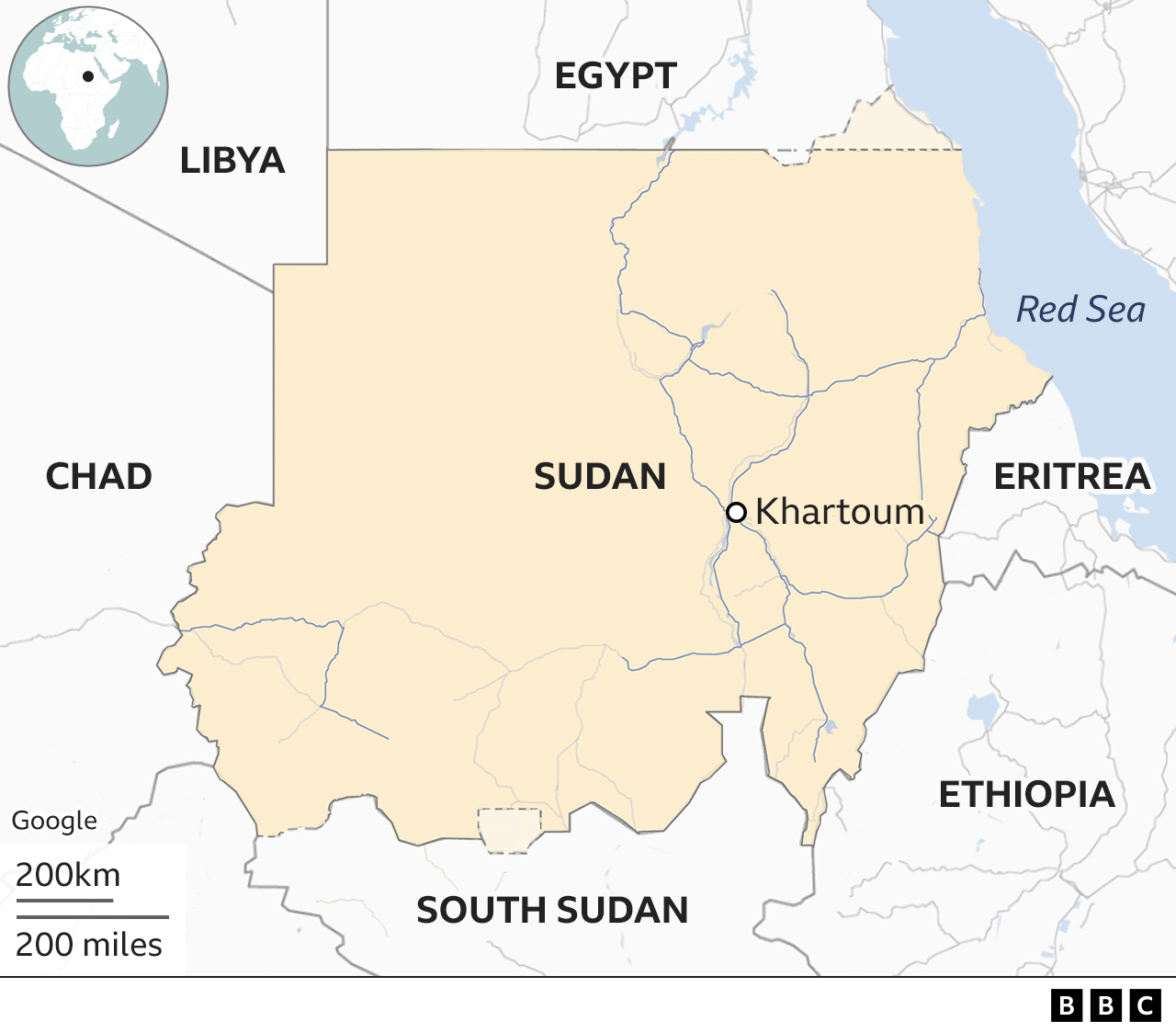
Trouble in Sudan's western Darfur region almost inevitably spills over into neighbouring Chad, and vice versa. Weapons and fighters from coup-prone Chad, and from the war-torn Central African Republic, often flow freely across the region's porous borders. Much the same has proved true with Libya, to the north-west.
Sudan borders the Tigray region of northern Ethiopia - only recently emerging from a gruelling conflict that involved another unpredictable neighbour, the isolated and highly militarised autocracy of Eritrea. There is also tension on other parts of Ethiopia and Sudan's shared - and in places, contested - border.
To the south, Sudan faces a relatively new nation, South Sudan, which formally broke away from its northern neighbour in 2011 after one of Africa's longest and bloodiest civil wars. That border, too, remains unstable.
South Sudan quickly spiralled into the sort of broad scale civil war that some fear could now be Sudan's fate too. Upon independence, South Sudan took with it most of the region's precious oil fields, leaving Sudan far poorer, and contributing, indirectly, to the current crisis in Khartoum, as rival military groups now struggle for control of shrinking economic resources, like gold and agriculture.
As part of that struggle, Sudan's generals - the military have always been big, allegedly corrupt players in the local economy - have gone in search of foreign partners. For agriculture, that has meant inviting Gulf states to invest in the huge, and relatively underused potential of the rich soil that borders the Nile River.
When it comes to gold, far murkier deals appear to have been done with Russia's notorious Wagner group, which is accused of smuggling gold out of Sudan. The US Treasury has accused Wagner's head, Yevgeniy Prigozhin, of "exploiting Sudan's natural resources for personal gain and spreading malign influence" online through his "troll farm".
Russia's interests in the country, and region, go much further. Eastern Sudan's stark coastline looks out onto the Red Sea.
The Kremlin has, for years, been seeking to establish a military base in Port Sudan, giving its warships access to - and influence over - one of the world's busiest and most contested sea lanes. Moscow has come close to finalising a deal about the base with Sudan's military government - which seized power in 2021 in a coup.
Not surprisingly, a vast range of governments are now seeking to influence events on the ground in Sudan.
For now, the focus appears to be on ending the battle between the army and the RSF paramilitary group before it spreads further, and threatens to evolve from a relatively straightforward power struggle into a more complex civil war.
Beyond that, some foreign governments are anxious to help guide Sudan towards the democracy that many had hoped might follow the overthrow, back in 2019, of the country's brutal ruler, Omar al-Bashir.
But other states may prefer to back another strongman, and to thwart the will of the Sudanese people, who have waited decades for one of Africa's struggling giants to fulfil its potential.
Latest Stories
-
The job interview question you don’t have to answer
1 hour -
Trump unveils ‘Super Intelligence Force’ to oversee AI policy
1 hour -
[Video]‘I have asked God to take me when it is time’ – Pete Edochie on health struggles
4 hours -
Manager remanded over $1m auto fraud
4 hours -
Mr President, Ghana was mentioned at the UN; why aren’t we talking about it?
4 hours -
US Marine arrested over murder of woman in Okinawa, Japan
4 hours -
Accra to convene Africa’s regulators and markets on tokenisation at AVAS 2026
4 hours -
Indian police accused of sexually harassing journalists at protest
5 hours -
Jeffrey Archer returns to his former school library
5 hours -
France to close up to 500 schools on Monday over student protests
5 hours -
The Paradox of Plenty — When every smartphone becomes a newsroom
5 hours -
Australia investigating Flydubai co-pilot’s links to country
5 hours -
GTA sensitises taxi drivers in ‘Know Ghana’ tourism campaign
6 hours -
Archbishop Agyinasare calls for responsible speech amid growing social media abuse
6 hours -
‘It will be inexcusable for gov’t not to honour payment of teachers’ arrears by 30th October’ – Haruna Iddrisu
6 hours