

Audio By Carbonatix
Information Minister Kojo Oppong Nkrumah has called on the European Union (EU) to work with African, Caribbean and Pacific (ACP) countries to prevent its proposed ethical and sustainable supply chain rules from becoming a burden on the local cocoa and coffee industry.
According to him, though the new legislation is a way to drive better practices within the cocoa and coffee subsector, more importantly, the EU must work with ACP countries in achieving these sustainability standards else it risks putting players within the value chain out of business.
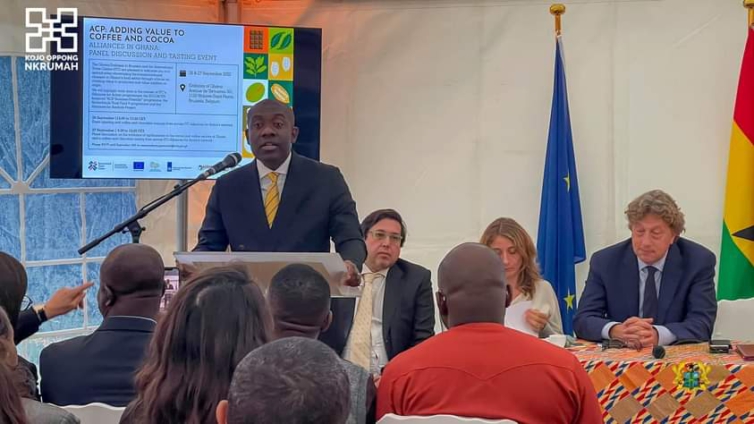
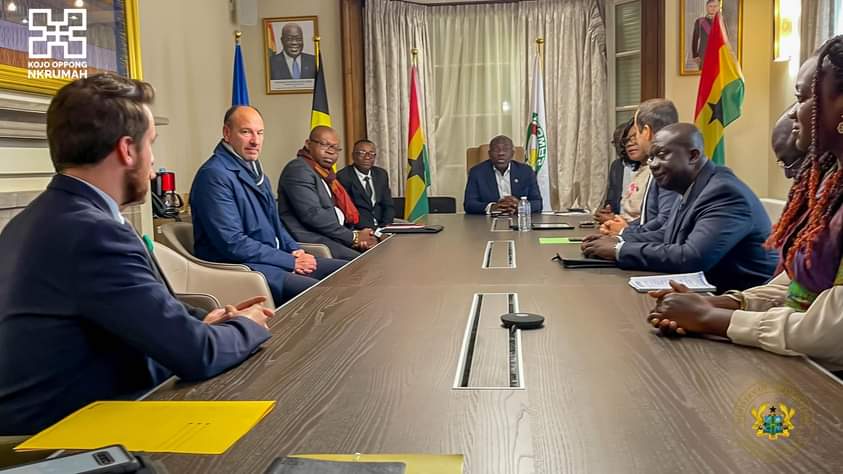
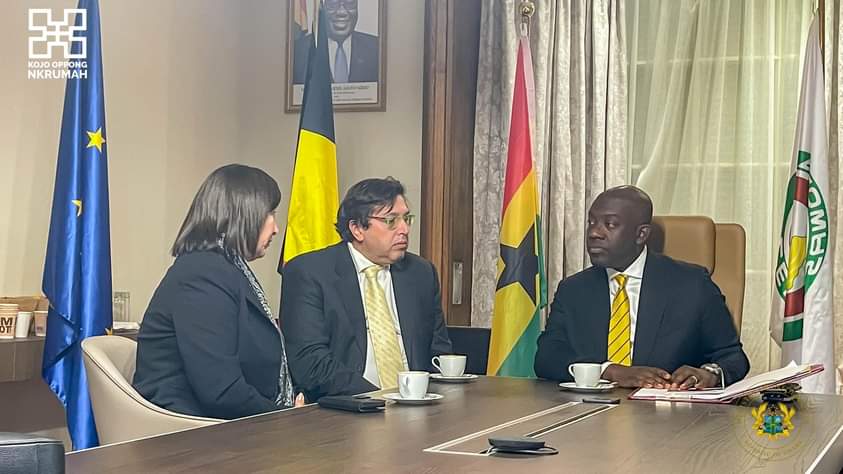
He made the call when he chaired a two-day forum on the future of Ghanaian cocoa and coffee value chains in the face of this new EU legislation at the “Alliances in Ghana: Coffee and Chocolate at the Table” in Brussels, Belgium.
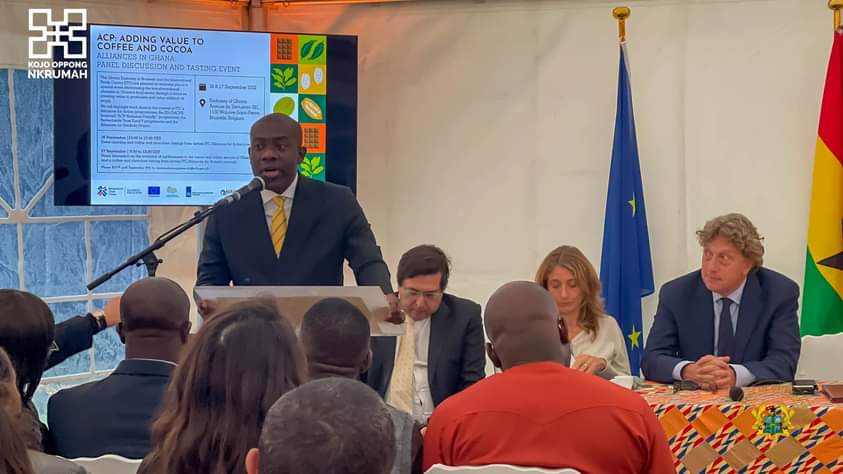
The forum was organised by the International Trade Centre (ITC) and the Ghanaian Mission in Brussels last week.
“At a time where farmlands are coming under threats for competing and more rewarding economic activities, sustainability is a matter that requires some more attention.
“By no means, however, should sustainability be used as a pretext to limit market accessibility. The exchange of best practices and technical assistance is necessary so that we can have a win-win situation in all of this.
“Farmers deserve recompense for their hard work and should not be left out in any business or policy negotiation.
"Their social reality and cultural context must be considered when designing legislation so they may meet their demands and not bear a disproportionate burden for complying with the regulation,” he said.
EU lawmakers have backed a proposal for a law that will ban the sale of agriculture products linked to the destruction of forests and human rights violations.
The bill was supported by 453 votes, to 57 with 123 abstentions. The EU Parliament will now start negotiations on the final text with EU member states.
Once approved, the law would force companies and producers to give assurances that products are deforestation-free and meet the EU’s sustainability standards.
Businesses will be forced to verify that agricultural goods sold in the EU have not been made on deforested or degraded land anywhere in the world.
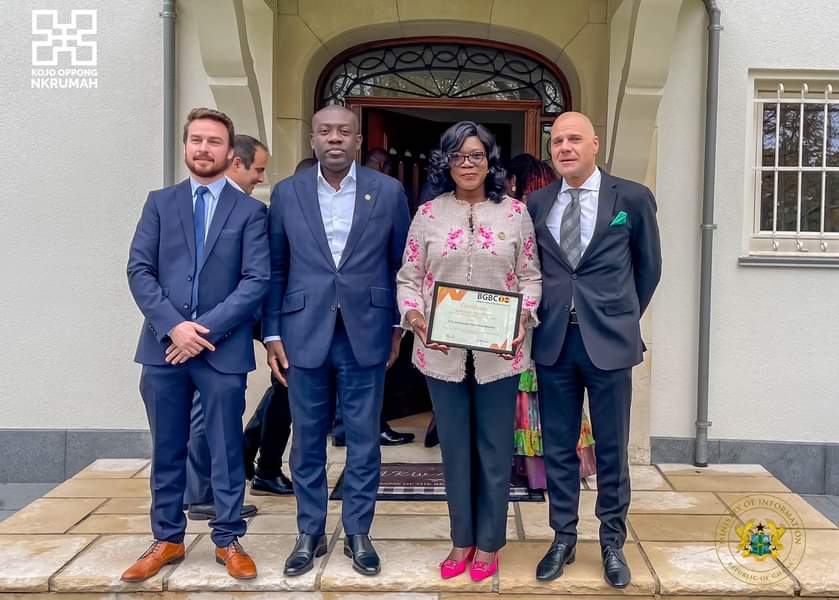
This, Mr Oppong Nkrumah said, could soon make Ghanaian cocoa and coffee unexportable to many international markets within the 27-nation bloc.
He said Ghana must act quickly to ensure the two industries meet the interests of European markets else millions of households and the economy, in general, could be significantly affected by this proposed legislation.
Latest Stories
-
I have supported highway authority financially to fix roads in my constituency – A Plus
13 minutes -
US, Iran fail to reach peace agreement after marathon talks in Pakistan
37 minutes -
ECG kicks off Phase Two of transformer upgrades at Lashibi; brief outages expected
1 hour -
Port crises loom as 11,000 drivers threaten four-day strike
2 hours -
A source of excellence across generations – Vice President Opoku-Agyemang lauds Mfantsipim
3 hours -
(Photos) Mfantsipim School launches historic 150th anniversary
3 hours -
Knights and Ladies of Marshall group backs Catholic Bishops’ stance on anti-LGBTQ+
4 hours -
Bright Simons writes: All the Filla in the Ibrahim Mahama/E&P – Gold Fields Saga
5 hours -
Monetise Idiocy In Ghana
5 hours -
The Ghanaian prophet and the mysterious death of his scottish wife Charmain Speirs
5 hours -
Nearly 400 sentenced in Nigeria for links to militant Islamists
6 hours -
Ghana’s recovery supported by gold strength despite global oil price pressures – Standard Bank Research
6 hours -
Methodist Church hails Mfantsipim@150; calls for “fresh consecration” to excellence
6 hours -
‘Excellence is our inheritance’ – Nana Sam Brew-Butler hails Mfantsipim’s 150-year reign in leadership
6 hours -
Kwaku Azar writes: A-G vs OSP
7 hours