

Audio By Carbonatix
Ghana has over 2.3 million people living with various mental health conditions, yet mental health care remains a challenge, with a 98% treatment gap. Since 2022, the country has been implementing the Director General’s Special Initiative for Mental Health (DG-SIMH) in four regions to address the gaps and strengthen the standard of mental health and well-being.
The five-year initiative supported by the Government of Norway and USAID seeks to get 100 million more people to access quality and affordable mental health services in 12 countries around the world, including Ghana.
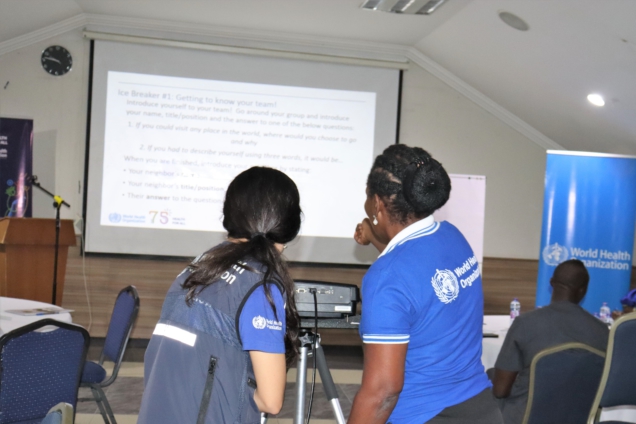
Now, the World Health Organization (WHO) is enhancing the capacity of the implementing regions and partners to ensure the sustainability of the initiative and other inventions even after the implementation period.
“Through the WHO Special Initiative for Mental Health, Ghana has stepped up efforts to improve mental health care. So now we are working to ensure that the significant effort being made is sustained beyond the lifespan of the initiative,” says the Noncommunicable Diseases & Risk Factors Officer at WHO Ghana, Dr Joana Ansong, during a sustainability planning and business case development workshop for the implementing partners in Kumasi.
On her part, the Deputy Director for Mental Health at the Ghana Health Service, Dr Amma Boadu lauded the foresight of WHO in seeking to enhance capacity for sustainable programming and pledged the service’s commitment to leverage the new skills sustain health programmes at all levels.
The workshop was aimed at building the foundational knowledge and expertise of the regions to effectively pursue, secure, and manage strategic partnerships for sustainable and impactful health programs.
“This capacity will help us to address gaps in our efforts to sustain mental health programmes and other health interventions, especially at the subnational level where resources are very constrained,” noted Dr Boadu.
Participants described the workshop as timely and insightful as they empowered with the requisite technical competence to build strong business cases for sustainable health interventions.
“This is the first time we are participating in this kind of workshop. We are ready to leverage the skills to not only mental health programmes but all other health interventions,” says Mr Edward Owusu, the Savannah Regional Mental Health Coordinator.
The four-day workshop saw participants taking through partnerships, resource mobilization and advocacy to strengthen their capacity to sustain their health programmes.
Latest Stories
-
MTN Ashanti-Fest music concert set to hit Kumasi on Saturday
59 seconds -
Authorities probe discovery of dead fish at Tema shipyard
4 minutes -
Minority welcomes fuel tax cuts, demands accountability for GH¢1 levy
13 minutes -
It remains a priority — Sam George on Anti-LGBTQ bill
19 minutes -
Police arrest Nigerian national seen in viral videos wearing police uniforms
21 minutes -
Free golf training empowers underprivileged girls in Accra
38 minutes -
Why SIGA’s reset is not a market sin, but a national necessity
41 minutes -
SIGA Directive: Beyond the theatre of institutional displacement
43 minutes -
Boso Odweegyi Festival 2026 launched with call for unity, cultural preservation
44 minutes -
YEA clears majority of beneficiary arrears, assures completion of outstanding payments
1 hour -
AfCFTA key to building globally competitive African businesses – Zambia envoy urges Ghanaian CEOs
2 hours -
Albert Kobina Mensah, soil pollution and remediation: Risk assessment, phytoremediation, revegetation
2 hours -
GIFEC supports national rollout of One Million Coders Programme with laptop presentation
2 hours -
Old Tafo MP rolls out street lights project to boost security and night-time economy
2 hours -
Telecel Ghana CEO urges urgent education reform and stronger industry-academia partnership at UEW Public Lecture
2 hours