

Audio By Carbonatix
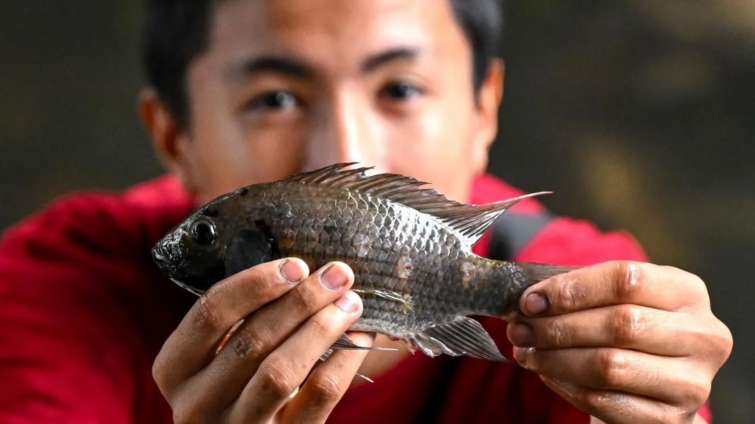
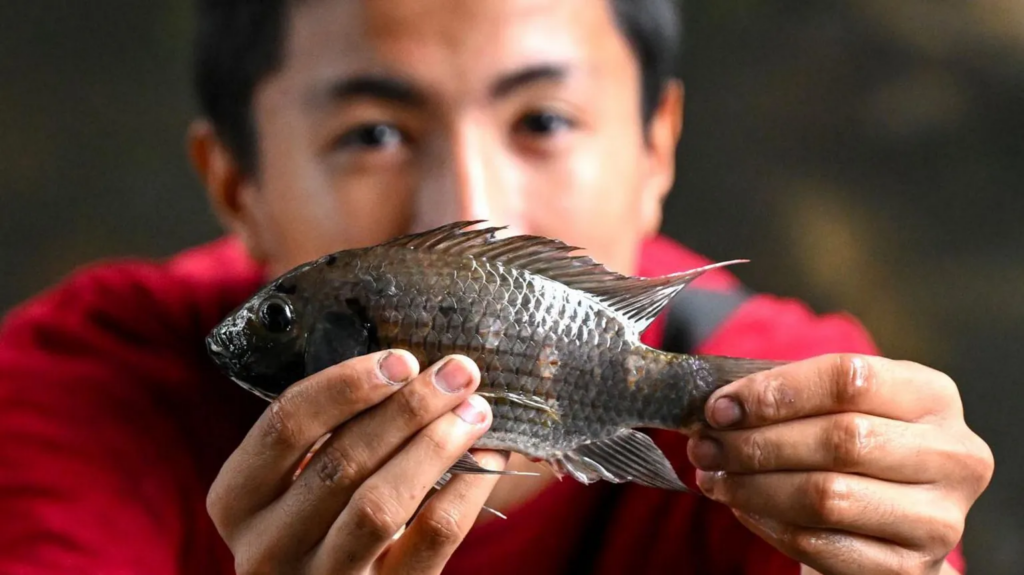
It has been described as the "most invasive species" to ever hit Thailand - one which risks enormous damage to the environment, according to officials.
Attempts to control it have seen crowds wading out into lakes, and genetic modification.
And yet the blackchin tilapia continues to spread through Thailand's waterways, so far impacting 17 provinces.
An investigation in parliament has aimed to uncover the cause and its proponent, with Bangkok MP Nattacha Boonchaiinsawat declaring: "We will not pass a devastated ecosystem to the next generation."
So can Thai authorities win the battle - and how exactly did this West African fish end up causing havoc half a world away?
Battling an alien species
Thailand had experienced outbreaks of blackchin tilapia in the past, but none has been as widespread as this most recent episode.
Mr Nattacha estimates that this particular outbreak is going to cost Thai economy at least 10 billion baht ($293m; £223m).
The core problem is that the blackchin tilapia prey on small fish, shrimp, and snail larvae, which are among Thailand's important aquaculture products.
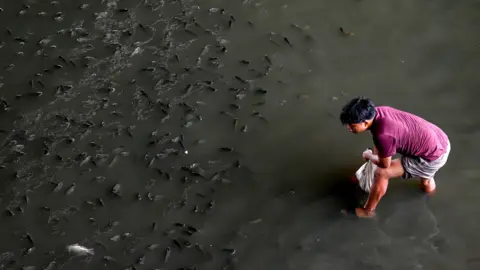
So for months now, the government has encouraged people to catch blackchin tilapia, which have found their way in rivers and swamps. The fish thrive in brackish water, but can also survive in fresh and salt water.
The Thai government has also doubled the amount that it will pay people who catch the fish, to 15 baht ($0.42; £0.33) per kilogram. The result? In Bangkok's suburbs, crowds have waded in knee-deep waters hoping to catch blackchin tilapia with their plastic basins.
Authorities have also released the blackchin tilapia's predators - Asian seabass and long-whiskered catfish - to hunt them down.
However, they are battling a species which reproduces at speed: females are able to produce 500 fingerlings at a time.
And so authorities have also gone to the extent of developing genetically-modified blackchin tilapia that would produce sterile offspring, planning to release them as early as the end of this year, in the hopes of stopping their population from exploding further.
But Mr Nattacha told BBC Thai the government needed to do even more.
"Who will win?" he wondered. "We need the people to follow the case closely, otherwise this matter will be quiet, and we will pass on this kind of environment to the next generation."
So how exactly did this fish - easily identifiable thanks to the black spots on their chins and cheeks - come to be in Thailand?
One theory that parliament has looked into is that an experiment by food behemoth Charoen Pokphand Food (CPF) 14 years ago had caused the spread.
The company, which produces animal feed and runs shrimp and livestock farms, imported 2,000 from Ghana in late 2010. It said all the fish died and were buried properly.
Two years later, outbreaks of blackchin tilapia were reported in Thailand, including the area of a CPF laboratory, according to local broadcaster Thai PBS.
But CPF - the agribusiness arm of one of Thailand's largest conglomerates, Charoen Pokphand Group (CP Group) - has rejected the allegations. It has also threatened to sue those spreading what it calls “misinformation” on the matter.
It is cooperating with state agencies fighting the spread of the alien species.
“Although the company is confident that it is not the cause of the outbreak, it is not indifferent and is ready to cooperate with the government to alleviate the suffering of the people,” said Premsak Wanuchsoontorn, CPF's aquaculture and research development officer.
However, CPF officials have attended parliament hearings in person only once. They have previously given their explanation to lawmakers in writing.
The director-general of Thailand's Department of Fisheries, Bancha Sukkaew, notes only one private company had sought permission to import blackchin tilapia.
He told the BBC that there was a possibility that some escaped from the laboratory.
However, he is also not discounting the possibility that the invasive fish species could have been smuggled into Thailand.
In the end, though, how they came to be in Thai waterways is the past - the problem is the future, and getting the outbreak under control. But is it possible?
Experts told BBC Thai that the battle against the blackchin tilapia could be a losing one.
“I don’t see the possibility of eradicating it,” said Dr Suwit Wuthisuthimethavee, an expert in aquatic animal genetics at Walailak University.
“Because we cannot limit its range. When it is in nature, it reproduces continuously, has a fast reproductive cycle,” Dr Suwit added.
Nonn Panitvong, an expert in freshwater ecosystems, agreed.
“The problem with alien species is that once they are established, they are very difficult to eradicate,” he said.
Latest Stories
-
MCEs, DCEs drilling GH¢100k boreholes nationwide with government approval – Assafuah reveals
4 minutes -
Ghana moves to enact new loans law to enforce discipline
5 minutes -
Ashanti regional U-17 football tournament reaches its thrilling climax this weekend
9 minutes -
Akoti Chief lauds Chirano Sefwiman Foundation, Asante Gold for new teachers’ quarters
14 minutes -
WASS teacher assault case: Court fines three GH₵4,000 each
25 minutes -
TTU makes history as first deaf student graduates with Master’s degree
26 minutes -
Ohemma Pokua Afoa Dankoto II enstooled as Queen Mother of Wenchi
26 minutes -
GhIE identifies use of mixed rock types in collapsed Accra New Town school building
36 minutes -
Ayawaso Central MCE says technical assessment delayed action before New Town collapse
41 minutes -
Weak enforcement behind New Town building collapse – Bureau of Public Safety
55 minutes -
‘Neglect is killing our people’ – NALAG President sounds alarm after Accra New Town building collapse
58 minutes -
Betty Krosbi Mensah urges young women to prepare for leadership, not wait for it
1 hour -
Evidence collection must follow rescue, not debris clearance — GhIE President on Accra New Town buiding collapse
1 hour -
NALAG President writes: When neglect kills in Accra New Town; preventable tragedy
1 hour -
Abandoned La Beach Towers under assessment as engineers probe unsafe structures
1 hour