

Audio By Carbonatix
A 25% tax is set to be imposed on all imports of steel and aluminium into the US, ending exemptions from the rules for goods from major trade partners including Canada, Mexico, Brazil, as well as the European Union.
The expanded tariff measures announced by President Donald Trump, expected to go into effect next month, will mean many US businesses wanting to bring the metals into the country will have to pay more.
But there is a risk that the companies will pass on the added costs, or some portion of it, to consumers.
Since steel and aluminium are key components in many goods, what items could get more expensive?
Canned food, beer and fizzy drinks
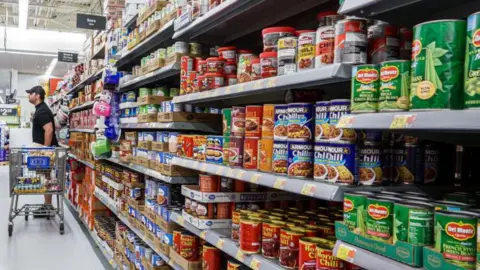
About 70% of the steel used in the US to make cans for food is imported today, coming in from countries such as Germany, the Netherlands and Canada, according to the Can Manufacturers Institute (CMI), a business group representing can-makers.
After Trump ordered tariffs on steel in 2018, many can-makers won "exclusions" from those import taxes, over the objections of steelmakers, given the limited production of the type of steel used to make cans in the US.
Since then, steel manufacturers have cut production further, pushing up prices, warned the CMI, which sent a letter to the Trump administration earlier this month signed by big food companies including General Mills, Del Monte and Goya.
Robert Budway, president of the CMI, said without exemptions for can manufacturers to import steel tariff-free, grocery prices for canned foods made in the US are likely to rise.
"While the president may believe that these tariffs are protecting the steel industry, they certainly are undermining our food security and our supply resiliency for American canned food, which Americans rely on every day," Mr Budway said.
When it comes to aluminium, brewers and makers of fizzy drinks, such as Coca-Cola, have also warned the move will add costs and could lead to higher prices for customers.
"We control enough variables that we can adapt and mitigate our way through what is happening," Coca-Cola chief executive James Quincey told investors this week.
Trump has said there will be no exemptions from the rules this time either for individual products or for particular countries, however, some sectors are hoping he will row back from that position.
Cars
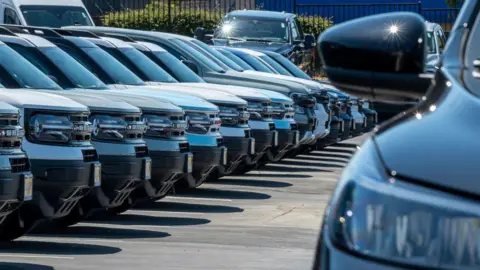
After Trump imposed tariffs on steel and aluminium during his first term, carmakers including Ford and General Motors warned the measures would add about $1bn to each of their costs.
For customers, Morningstar estimated the tariff costs back then would result in a roughly 1%, or a $300 price rise for customers.
David Whiston, an analyst at Morningstar, warned Ford could be facing a similar cost increase this time, but said it was unclear how consumers will be affected.
Affordability pressures in a market where sales have yet to return to 2019 levels could limit how much of the costs companies choose to pass on, according to Michael Wall, an auto analyst at S&P Mobility.
But he said it was still "realistic" to expect some of the costs from the metals tariffs to trickle down to buyers.
However, he noted that Trump's announcement of tariffs on all goods imported from Canada and Mexico, currently on hold until March, would have a much bigger impact for buyers.
At a business conference, Ford chief executive Jim Farley warned Trump's recent moves were causing "a lot of cost and a lot of chaos" for his industry.
TD Economists has estimated cars could up in price by about $3,000 if blanket tariffs on goods from Mexico and Canada came into force.
Construction, housing and appliances
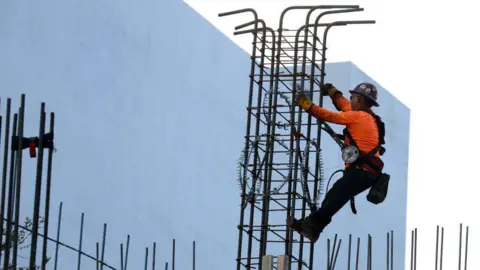
The construction industry as a sector is one of the single biggest users of steel, which developers and homebuilders need for everything from building frames to appliances.
Carl Harris, chairman of the National Association of Home Builders, said the decision to impose tariffs on steel and aluminium ran "totally counter" to Trump's stated goal of making housing more affordable, warning it would raise costs and deter development and rebuilding.
"Ultimately, consumers will pay for these tariffs in the form of higher home prices," he warned.
The National Association of Home Builders has urged the president to exempt building materials from the proposed tariffs.
After Trump imposed steel tariffs in 2018, appliance maker Whirlpool faced an unexpected $350m jump in costs it said was driven by the jump in steel prices.
Companies unable to absorb such costs would likely pass them on through higher prices in the shops.
Latest Stories
-
World Bank maintains Ghana’s growth rate forecast at 4.8% in 2026
1 hour -
Cedi was worst African currency in quarter 2, 2026 – World Bank
1 hour -
AI gains can lift three times as many people out of poverty in Ghana – World Bank
2 hours -
Police arrest suspect over jewellery theft during fire outbreak
4 hours -
EOCO returns Hanan’s £6,700, GH¢2,750 and devices after defence challenge
4 hours -
Opplift Youth Entrepreneurs Summit 2026 equips entrepreneurs with skills, mentorship and support
5 hours -
Rival clubs want range of punishments for Man City
5 hours -
Tear gas in Paris and Marseille as school protests grow across France
5 hours -
Kane inspires England to win over Czech Republic in UEFA Nations League
5 hours -
Finland orders halt to work on two Google data centres
5 hours -
Substitute Merino scores twice as Spain win in Croatia
5 hours -
Ronaldo wants Portugal ‘punishment’ but not retiring
6 hours -
White House defends Trump comment to let Iran ‘take out’ LA and San Diego
6 hours -
Asos confirms hackers sent ‘unauthorised’ notification to app users
6 hours -
US televangelist Jim Bakker, disgraced from sex scandal and fraud, dies at 86
6 hours