

Audio By Carbonatix
As someone who has worked in Ghana’s media space since 1995, served as a legislator for eight years, and contributed across three terms on the National Media Commission (NMC), I have seen both the strengths and shortcomings of our current constitutional framework. The Constitution Review Committee’s proposals for reform present a bold reimagining of the NMC - what I call the envisioned National Media Commission. This vision is ambitious, but it is not without risks. While it promises a modern, empowered regulator, it also raises questions about inclusivity, independence, and balance.
From Protector to Regulator
The existing NMC has functioned largely as a protector of media freedom and a mediator in disputes. However, the envisioned Commission is designed to be a proactive regulator- accrediting journalists, enforcing standards, and preventing monopolization. This transformation is necessary in an era of digital disruption and misinformation. Yet, it must be approached with caution to avoid undermining the very freedoms it seeks to protect.
Streamlined Governance- Less Representation
The proposal reduces Commission membership from 18 to 7, introducing an Executive Secretary as Chief Executive Officer. While this promises efficiency, it risks excluding diverse voices — civil society, academia, and other professional associations that have historically enriched the Commission’s deliberations. A leaner Commission may be faster, but it could also be less representative of Ghana’s pluralistic society.
Expanded Mandate- Risks of Overreach
The envisioned NMC will:
- Accredit journalists and media houses.
- Issue and revoke broadcast authorizations.
- Sanction ethical breaches.
- Prevent monopolization and cross-media dominance.
- Define media broadly to include digital platforms.
These powers are impressive, but they raise concerns:
- Accreditation could be perceived as licensing journalists, potentially restricting free expression.
- Sanctions and enforcement may politicize the Commission if not carefully safeguarded.
- Anti-monopoly powers are laudable, but thresholds and enforcement mechanisms remain vague, risking inconsistent application.
- Overlap with other regulators, like the National Communications Authority, could create confusion and turf wars.
The Executive Secretary- Power and Accountability
The creation of a powerful Executive Secretary role professionalizes leadership, but it also concentrates authority. With part-time commissioners and a full-time CEO, the Commission risks becoming Executive Secretary–driven rather than Commission–driven.
The appointment process, involving the President and Parliament, may expose the role to political influence. Without strong oversight, the Executive Secretary’s wide powers could weaken the control of Commission members.
Funding Independence- Risks of Dependence
For decades, inadequate and inconsistent funding has weakened the effectiveness of the National Media Commission. The envisioned reforms seek to address this by guaranteeing resources and making the Commission eligible for grants from the Democracy Fund. Such financial independence is vital for ensuring impartial regulation and institutional resilience.
Yet, guaranteed funding alone does not eliminate risks. Because these resources remain government-controlled, the Commission could still be vulnerable to delays, manipulation, or political influence. True independence requires more than constitutional promises — it must be safeguarded in practice through transparent disbursement, predictable budgeting, and strong protections against interference.
The Importance of Realism
As someone who has lived the realities of Ghana’s media evolution - from the early liberalization years to today’s digital disruptions - I believe the envisioned National Media Commission represents a necessary leap forward. It seeks to balance freedom with responsibility, diversity with regulation, and independence with accountability. This vision is not about curtailing media freedom, but about strengthening the integrity of the media space so that it continues to serve democracy, empower citizens, and reflect Ghanaian cultural values.
Yet, this promise will only be realized if its weaknesses are addressed. Without safeguards, the Commission risks becoming a regulator that is efficient yet less representative, powerful yet politically vulnerable. The challenge, therefore, is to build an institution that is both strong and fair - capable of regulating a complex media environment while preserving the pluralism and independence that are the lifeblood of our democracy.
Conclusion
The Constitution Review Committee’s proposals should be embraced as a blueprint for reform, but with critical safeguards. The envisioned National Media Commission must be both strong and fair: strong enough to regulate a complex media environment, yet fair enough to protect media freedom, diversity, and independence.
As a practitioner, legislator, and Commission member, I believe this vision is achievable - but only if we confront its weaknesses head-on and build an institution that truly serves Ghana’s democracy.
******
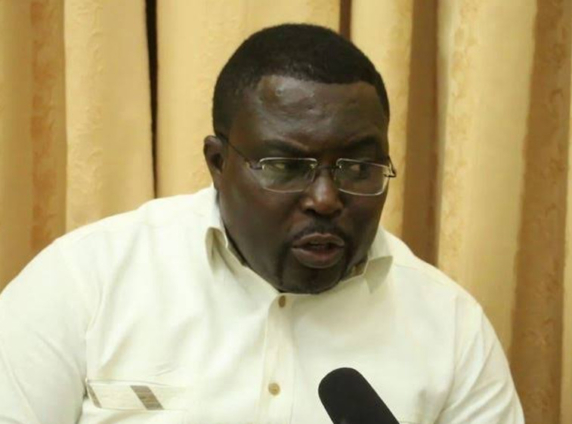
Richard Quashigah – Media Practitioner since 1995, Legislator for 8 years, and three-term Member of the NMC
Latest Stories
-
NPP revises internal election guidelines to strengthen transparency and inclusiveness
39 minutes -
NACOC set to issue licences to qualified applicants for cannabis cultivation – Deputy Director-General
47 minutes -
Easter Outreach: Victory Bible Church offers free healthcare, NHIS support to hundreds
50 minutes -
NPP cannot pressure Mahama to sign a bill not yet received—Solomon Owusu
59 minutes -
MPs, institutions deepen support for Ghana Sports Fund with fresh contributions
1 hour -
Four people die trying to board boat in Channel crossing attempt
1 hour -
Abirem MP announces GH₵500,000 education fund to support needy students
1 hour -
African stakeholders call for stronger ‘One Health’ action on climate and health crises
1 hour -
DVLA to commission 5 new service centres in Greater Accra
1 hour -
Agenda 111 and the right to health: A broken social contract
1 hour -
Bawa-Rock Ltd funds GH¢400,000 free surgeries for 102 vulnerable patients
1 hour -
Lambussie MP awards over GH¢200,000 in scholarships to students
2 hours -
Vice President expresses gratitude after double enstoolment in Volta Region
2 hours -
Beyond the Noise: Rebuilding trust in journalism in a digital age
2 hours -
I have to follow the law – CAF president tells Senegal regarding AFCON saga
2 hours