

Audio By Carbonatix
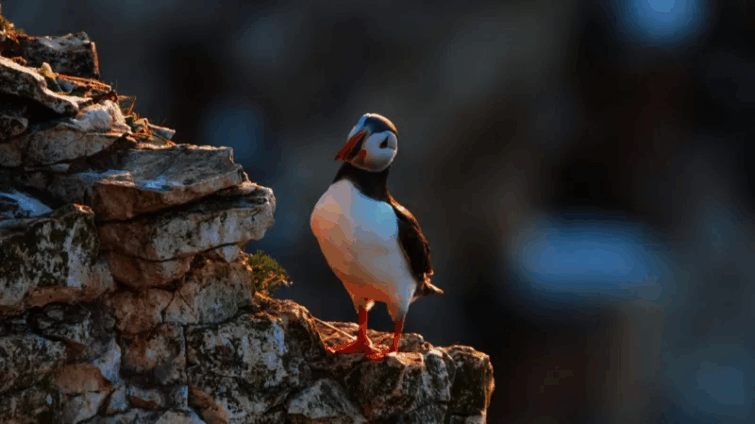
Every year, from April to July, thousands of puffins fly across the Atlantic and return to the same spot in Yorkshire.
At RSPB Bempton Cliffs on the east coast, 3,000 of the distinctive seabirds settle in the crags to breed.
The nature reserve welcomes visitors from across the region and as far afield as Australia and America.
Danielle Jackson, visitor experience manager at the site, says it is the perfect spot to see puffins.
"It is a spectacular area of the coastline," she says. "When the puffins are back and the other seabirds, we do get a real uplift in visitors.
"It's what everyone wants to come and see. Everyone loves coming here and finding their puffin of the year or seeing a puffin for the first time."
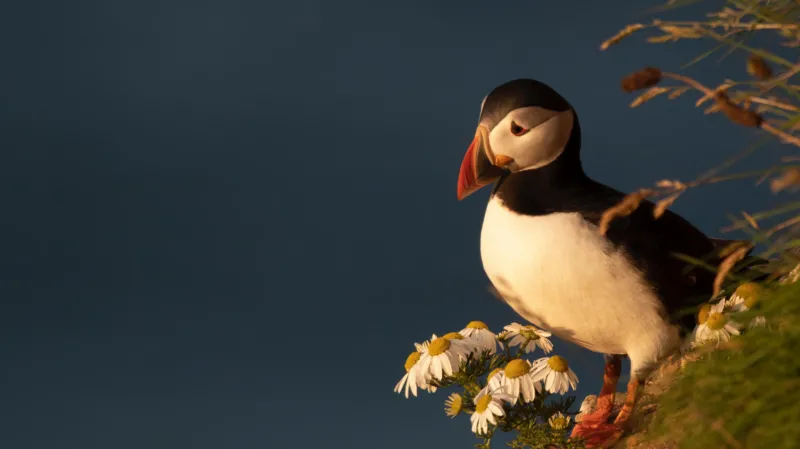
Puffins mate for life and return to the same nesting site every spring, so many visitors can spot the same pairs each year.
"If you've got a good reliable spot within the cliffs and you know you've seen that puffin year after year, you have the opportunity to come and see it again and again. So it's really fantastic to be able to spot that," Ms Jackson says.
"They are quite tricky to spot though. You have to search for them. They make you work for it but once you find them you feel like you've achieved something.
"I absolutely love that and I love how much people adore them."
Unfortunately, the birds are an RSPB Red List species, meaning they are among the species most at risk and of highest conservation concern.
According to Ms Jackson, the UK has lost about a quarter of its puffins since 2000, and monitoring their numbers is tricky because of their elusive nature.
"They're a really hard one to be able to monitor but we've been keeping sort of an approximation on how many numbers there are since the millennium," says Ms Jackson.
"Some of the other seabirds, for example the kittiwakes, feed on the same food source as the puffin, so we monitor them and their productivity - how many chicks they raise out of their nest each year - and we can kind of get a guess at how the puffins are doing."
The reasons for their decline are wide-ranging, but include overfishing, climate change and increased risk from non-native predators.
"There's a whole combination of things that could impact the puffin numbers," says Ms Jackson.
"So it's like you're fighting a battle on all fronts really. Then there's things that we can't really control much like bird flu that could have an impact on those puffin populations.
"It would be really heartbreaking if people come to Bempton and there weren't any puffins there. So it's definitely something that we're trying to keep an eye on."
This year has seen a number of suspected bird flu cases across Yorkshire, including at North Cave Wetlands and at poultry farms in Easingwold and Bridlington, the town closest to Bempton Cliffs.
According to Ms Jackson, the disease has had an impact on seabird populations across the UK, especially among species such as the skua.
But the National Trust has said there are signs puffins in Northumberland are building an immunity to the disease.
It said in April that while rangers on the Farne Islands had collected almost 10,000 dead seabirds in 2022 and 2023 due to bird flu, all seabirds there remained free of the disease this year.
Bird flu has previously affected the gannet population at Bempton, they have fared a bit better but since 2023, says Ms Jackson.
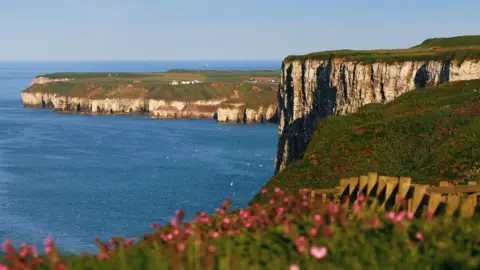
As well as puffins and gannets, the site is also a popular location to spot seals and even dolphins from the accessible clifftop viewpoints.
"We've got amazing wildlife here," says Ms Jackson. "We've got gannets, which are the biggest seabird you can see in the UK, and it's the only mainland colony here in England.
"It's a really special place for them but you also have things like dolphins that come past, there are seals as well, so the sea here is so productive, but there is a lot of wildlife around.
"On top of the cliff we've got things like barn owls, we had short-eared owls just recently, so it is a really special place for nature and wildlife."
Of course, for many people puffins remain their favourite species to spot.
"People absolutely love them," says Ms Jackson. "They just look cute. They've got a massive orange beak. There are some species of wildlife that people just love generally and I think puffins fall in into that category.
"They're known as the clown of the sea and when you see a group of puffins together it's called a little circus of puffins, so I think it all adds into the cuteness factor that people just absolutely love."
Latest Stories
-
Sir Sam Jonah slams political interference in insurance industry
32 minutes -
Yemen’s Houthis enter Iran war with attacks on Israel, while US Marines arrive in region
1 hour -
Potential Houthi threat to Red Sea shipping could further damage global economy
3 hours -
Sir Sam Jonah unveils five-point plan to boost Ghana’s insurance industry
4 hours -
Abstention not a rejection of Ghana’s slavery resolution — EU
4 hours -
‘DDEP was a big blow; full recovery not achieved yet’ – Sir Sam Jonah
4 hours -
The hypocrisy of the global north and the truth about the Transatlantic Slave Trade
5 hours -
2,280 students graduate with B-Tech, M-Tech from Takoradi Technical University
5 hours -
“We are losing ourselves” – Special Prosecutor laments cultural erosion in Ghana’s education system
6 hours -
‘We were trained to serve, not lead’ – Special Prosecutor condemns colonial education legacy
7 hours -
Education must preserve identity and drive innovation – Special Prosecutor
7 hours -
Corruption raises bank risk, weakens diversification benefits, research finds
8 hours -
The Apostolic Church-Ghana bans ‘you may kiss your bride’ during marriage ceremonies
10 hours -
Ɔdadeɛ 95 marks reunion with GH₵200k Solar Project at PRESEC-Legon
10 hours -
AI is the new phase of the digital age, and Africa must be ready or risk being left behind – Dr Bawumia warns at LSE Africa Summit
10 hours