

Audio By Carbonatix
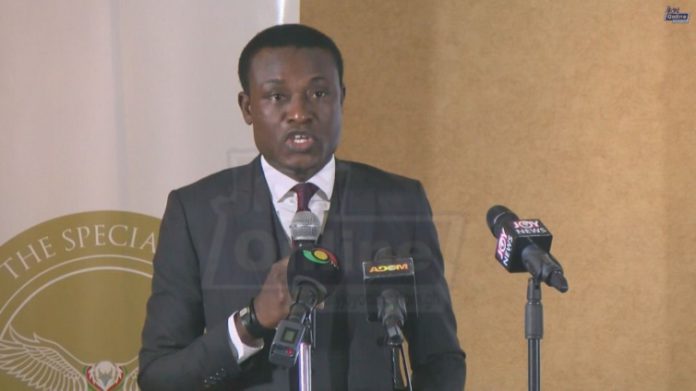
Special Prosecutor Kissi Agyebeng has criticised Ghana’s education system, arguing that it continues to bear the imprint of colonial objectives rather than serving the country’s developmental needs.
Speaking as a guest speaker at the 95th Anniversary Speech and Prize-Giving Day of Accra Academy, Mr Agyebeng said the country’s educational foundations were deliberately structured during colonial rule to produce a limited workforce suited to administrative and commercial support roles.
“On this score, I would be remiss not to recall that by reason of being a former British colony, our education was modelled on what the colonialists thought fit to churn us out as their half-baked appendages – not for our sakes – but to suit their purposes of a workforce designed to carry out the basics of colonial administration and rudimentary commerce,” he stated.
His remarks formed part of a broader address on the theme “Education as the Catalyst for Preserving Heritage, Driving Innovation, and Empowering Future Leadership", where he called for urgent reforms to align Ghana’s education system with national priorities.
Mr Agyebeng maintained that education must evolve beyond its colonial roots to become a transformative force for national development.
“We must shape an educational system that works for us,” he implied, underscoring the urgency of redefining Ghana’s approach to learning in a rapidly changing global landscape.
Legacy of Colonial Design
Mr Agyebeng noted that even post-independence efforts to expand higher education did little to fundamentally transform the inherited structure.
“The later establishment of the University of Ghana by the colonial government nine years before independence did not significantly turn around this module,” he added.
According to him, the persistence of this colonial framework has contributed to a system that often prioritises theoretical instruction over practical innovation and local relevance.
He argued that the model failed to adequately equip Ghanaians with the tools needed to drive industrialisation, technological advancement, and self-sufficiency.
Call for Structural Reforms
Mr Agyebeng stressed the need for a deliberate shift toward an education system that reflects Ghana’s cultural identity while equipping students with skills for modern challenges.
He warned that without such reforms, the country risks perpetuating dependency and underdevelopment.
His comments echo long-standing concerns among education experts that Ghana’s curriculum remains overly exam-oriented, with insufficient emphasis on critical thinking, creativity, and problem-solving.
Education stakeholders have increasingly called for reforms that integrate indigenous knowledge systems, promote technical and vocational training, and strengthen links between academia and industry.
The Accra Academy anniversary event, attended by alumni, students, and dignitaries, provided a platform not only to celebrate the institution’s legacy but also to reflect on the future direction of education in Ghana.
Latest Stories
-
David Selassie Anthony declares bid for NDC Deputy National Organiser
43 minutes -
Amin Adam proposes 13 measures to strengthen Ghana’s debt transparency and market confidence
1 hour -
Mahama announces $2bn annual investment to accelerate industrialisation
1 hour -
Amin Adam urges monthly disclosure of Sinking Fund as Ghana prepares for DDEP repayments
1 hour -
Stronger banks will fuel business growth and jobs – ADB MD
1 hour -
Galamsey: ‘Rivers that fed our grandparents now run the colour of chocolate milk’ – Sam Jonah
1 hour -
We have been scammed by NDC, government is only doing PR – Abanga Fuseini
1 hour -
Republic Bank–JoyNews Habitat Fair opens in Ho today
1 hour -
BoG pledges stability to attract investment, urges stronger Africa–Asia partnerships
1 hour -
Amin Adam warns treasury bill dependence could expose Ghana to refinancing risks
1 hour -
Ghana better placed to withstand commodity price shocks – IMF
2 hours -
GAPTE intensifies efforts to increase bus availability for Aayalolo contra-flow
2 hours -
Amin Adam warns cedi depreciation could reverse Ghana’s debt relief gains
2 hours -
Fiscal discipline crucial for pension fund investments – Finance Minister
2 hours -
BoG Governor rallies IMF to back Africa’s digital sovereignty
2 hours