

Audio By Carbonatix
The European Union (EU) has launched a diplomatic charm offensive to repair its image in West Africa following its refusal to back a landmark United Nations resolution on the Transatlantic Slave Trade.
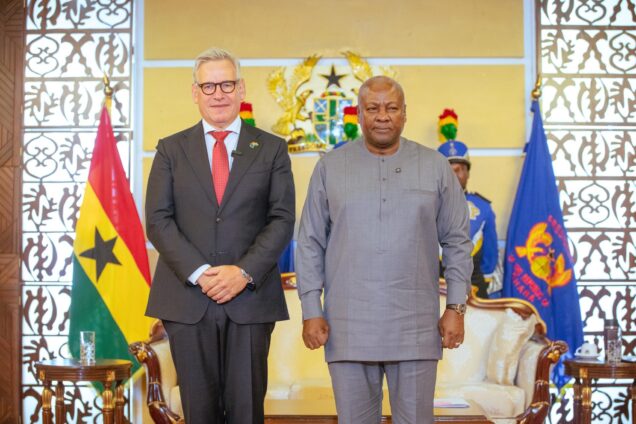
The EU’s Head of Delegation to Ghana, Rune Skinnebach, has stepped forward to clarify that the bloc’s decision to abstain from the vote was a matter of procedural disagreement rather than a rejection of the moral imperative behind the motion.
The resolution, which was a significant diplomatic feat for President John Dramani Mahama, officially labels the slave trade as the "gravest crime against humanity".
In an interview on Citi TV on Saturday, March 28, Ambassador Skinnebach pulled back the curtain on the tense negotiations that preceded the General Assembly vote. He revealed that while 123 countries, led by Ghana, pushed for the current text, the EU’s attempts to shape the resolution were sidelined.
“We have been trying to engage constructively also in New York in the debate around this resolution. We have come up with a couple of suggestions; they have not been taken on board. This is fine,” Skinnebach remarked, suggesting that the final document did not reflect European input.
Despite the snub, the Ambassador emphasized that the EU purposely avoided joining the United States and Israel in voting "No". Instead, they chose the middle ground of abstention.
Addressing the public outcry in Ghana over the bloc's perceived indifference, Skinnebach was firm in his defence of Europe’s historical and moral position. He argued that an abstention on a specific text does not equate to a denial of the horrors of slavery.
“I understand the rules of the game but what I am saying is we did not vote against it. We abstained for very clear reasons. It does not mean, however, that we do not support the moral underpinnings of this resolution,” he stated.
He further pointed out that the EU is eager to address the "enduring scars" of the trade, provided the approach is collaborative and "forward-looking".
“It does not mean that we don’t want to engage in a forward-looking unified approach to address the legacy of slavery. It does not mean that we have not addressed this legacy in the past also,” the Ambassador added.
The "clear reasons" for the abstention, though not fully itemised by the Ambassador, are widely understood by analysts to center on the resolution’s call for a formal Reparations Framework.
Many EU capitals remain wary of the legal and financial precedents that a UN-sanctioned reparations model would set, preferring instead to channel support through traditional development cooperation.
However, with Ghana’s Foreign Ministry and the African Union now armed with a majority UN resolution, the pressure is mounting on Brussels to move beyond "moral support" and toward a tangible acknowledgement of the economic and social debt owed to the continent.
Latest Stories
-
Video: Immunity should be exercised without creating classism – Inusah Fuseini on cocaine bust
3 minutes -
Ghana Air Force passes out 293 recruits after six months of intensive training
11 minutes -
EOCO vrs Baffour Awuah: EOCO should have secured warrant before arrest attempt at court – Inusah Fuseini
15 minutes -
Triple fibre cuts disrupt telecom services across Northern, Oti regions – Sam George
18 minutes -
Politicisation could undermine parliamentary probe into cocaine seizures – Dr Osae-Kwapong
25 minutes -
EOCO chases MP: Can Section 41 cure lacuna in EOCO Act? – Inusah Fuseini asks
28 minutes -
GNFS, GWL inspect fire hydrants in Ministries enclave; 23 found faulty
33 minutes -
Gov’t directs release of 50,000 bags of grain to ECOWAS
35 minutes -
Ghana, Germany deepen cooperation on railways, labour mobility
40 minutes -
Huge crowds greet Pope in Paris for open-air Mass
51 minutes -
‘I never said I’ll declare a state of emergency’ – President Mahama on galamsey
2 hours -
Bobby Banson condemns EOCO’s attempted arrest of Nana Agyei Baffour Awuah
2 hours -
When Kumasi begins to look like somebody is in charge
2 hours -
Parliamentary probe into cocaine seizure would be a waste of time – Inusah Fuseini
2 hours -
Cocaine seizure: Focus on Ghana’s reputation, not partisan blame – Osae-Kwapong
2 hours