

Audio By Carbonatix
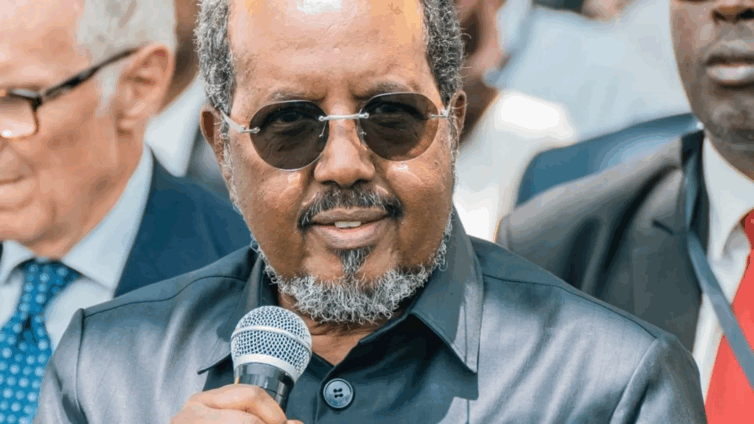
Police in Somalia have arrested four TikTokers for allegedly insulting President Hassan Sheikh Mohamud in a dance video.
In the post, several young men are seen dancing to a remix of a campaign song originally used during the president's election bid in 2022, but with the lyrics altered to include derogatory language.
In a statement, the police said the suspects were in custody and would be formally charged. They have not commented since their arrest.
Several social media influencers have been arrested and jailed in the past for spreading clan-based insults, incitement or "immoral" content on platforms like TikTok - but this is the first case involving a top politician.
In August last year, seven TikTokers were sentenced to six months in prison by a court in the capital, Mogadishu, for provoking civil unrest and spreading immorality.
The authorities said the behaviour in the recent video - the original of which has been deleted but it still being widely shared on TikTok and other social media platforms - constituted a criminal offence under Somali law.
Police spokesman Gen Abdifatah Aden warned the public that anyone engaging in similar acts that disrespected national institutions or leaders would "face the full force of the law".
The arrests have reignited public debate over the role of social media in Somalia, particularly TikTok, which has been at the centre of controversy in the past.
Some have expressed their support for the young men, while others have defended the arrests, saying freedom of expression should not extend to such levels, particularly in a country still grappling with fragile governance.
TikTok is a popular platform in Somalia and within the large diaspora - especially among the youth, who use it for political commentary and satire.
Many people also use it for business as well as a source of entertainment.
In 2023, the government considered banning the platform altogether, citing concerns over national security, the spread of misinformation and the erosion of social and moral values.
The ban was not implemented at the time because of strong public opposition, but officials warned that the platform was increasingly being used to spread harmful content, including extremist propaganda and defamatory material.
Latest Stories
-
The Ghanaian prophet and the mysterious death of his scottish wife Charmain Speirs
35 minutes -
Nearly 400 sentenced in Nigeria for links to militant Islamists
56 minutes -
Ghana’s recovery supported by gold strength despite global oil price pressures – Standard Bank Research
1 hour -
Kwaku Azar writes: A-G vs OSP
2 hours -
Mfantsipim–Adisadel rivalry built excellence, not division – Sam Jonah
2 hours -
Vice President launches Mfantsipim’s 150 years of shaping Ghana’s greatest mind
2 hours -
I assure Otumfuo, Mahama will join him to commission KNUST Teaching Hospital by end of this year – Haruna Iddrisu
3 hours -
Barcelona dominate derby to extend La Liga lead
3 hours -
Gov’t to roll out free special education for persons with disabilities from July 1 – Education Minister
3 hours -
Importers and Exporters Association declares full support for Publican AI port system
4 hours -
“We used it to test our officiating officials’ readiness” – Bawah Fuseini after CAA Athletics event
4 hours -
Volleyball emerges as Ghana’s fastest rising sport
4 hours -
National Sports Fund needs strong leadership from the top – Administrator David Wuaku
4 hours -
JoySports Exclusive: Steve McLaren in talks with GFA after expressing interest in Black Stars job
4 hours -
Fire guts auto parts warehouse at Bubuashie, one fire officer injured
4 hours