

Audio By Carbonatix
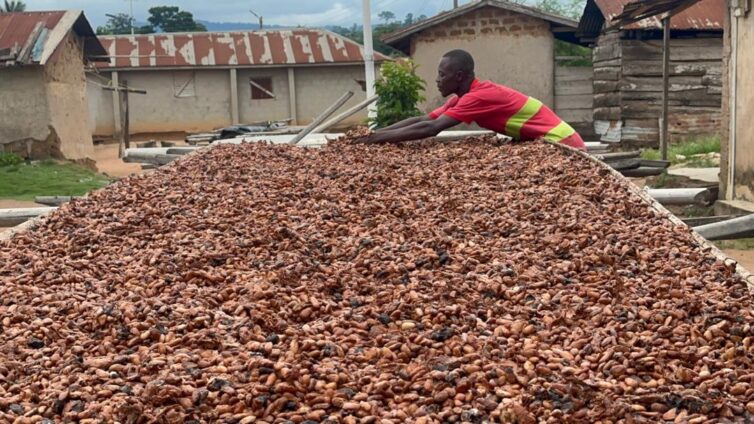
Tony’s Open Chain, in an effort to combat exploitation and structural poverty within the West African cocoa supply chain, is intensifying its localized child labor remediation and community development programs across Ghana.
Speaking on Wednesday at Manukrom in the Asunafo North Municipality of the Ahafo region, Emmanuel Fiifi Musah, a member of the Human Rights and Community Development Team for Tony’s Open Chain in Ghana, outlined the initiative's multi-layered strategy to combat child labor, forced labor, and child trafficking in cocoa-growing communities.
Tony’s Open Chain utilizes a direct, systemic Child Labor Monitoring and Remediation System (CLMRS) that addresses exploitation at three interconnected levels: the household, the child, and the community.
At the household level, the initiative implements targeted interventions designed to boost the economic stability and general wellbeing of farming families, minimizing the financial pressures that lead to child labor.

At the child level, the initiative provides direct incentives, including school uniforms, educational kits, and materials, to ensure vulnerable children are reintegrated into the formal education system.
These resources remove immediate barriers to schooling, keeping children in classrooms rather than working in the fields. At the community level, the initiative relies heavily on its partner cooperatives to address the root causes of exploitation.
Tony’s Open Chain currently works alongside four partner cooperatives across the Eastern and Ahafo regions, including the Asunafo North Municipal Cooperative Cocoa Farmers and Marketing Union, to facilitate sustainable, community-led development projects.
"The various developmental projects at the rural communities will go a long way to positively position them not to allow their children to engage in child or forced labor," Musah stated. "Instead of communities involving their children in laborious activities, they will rather enroll them into school."
Financing for these community preventive measures is reinforced by the Chocolonely Foundation.
Funded by a dedicated one percent of profits from Tony’s Chocolonely, the foundation supports projects and organizations striving to cultivate prosperous cocoa-growing communities, challenge the industry status quo, and drive systemic equity.
The interventions driven by Tony's Open Chain arrive at a critical juncture for West Africa's cocoa sector, which produces nearly two-thirds of the world's cocoa supply. Despite decades of voluntary corporate promises, data reveals that exploitation remains deeply institutionalized.
According to a study by the National Opinion Research Center (NORC) at the University of Chicago, an estimated 1.56 million children remain engaged in child labor within the cocoa sectors of Ghana and Côte d'Ivoire.
Of those children, 95% are subjected to hazardous child labor, which includes clearing land, using sharp tools like machetes, transporting heavy loads, and working exhausting hours.
Again, the United States Department of Labor and NORC findings highlight a dangerous trend where child exposure to hazardous agrochemicals in Ghana shot out from 7% to 32% over a ten-year tracking period due to shifting agricultural practices.
The Voice Network’s Cocoa Barometer consistently highlights that systemic poverty is the primary driver of this crisis; when adult smallholder farmers are paid far below a living wage, child labor becomes an economic survival mechanism for the household.
By operating via 5 Sourcing Principles - 100% traceable cocoa beans, paying a higher price (the Living Income Reference Price), long-term commitments, strengthening partner cooperatives, and improving cocoa quality and productivity, the initiative proves that ethical sourcing can scale commercially.
When foreign chocolate brands and international supply chain stakeholders intentionally join these open-source networks, they shift accountability away from impoverished smallholders and back onto multinational corporations.
The combination of paying a fair price alongside localized remediation systems offers a repeatable, verifiable blueprint to permanently sever the networks of exploitation that have clouded Ghana’s cocoa-growing communities for decades.
Latest Stories
-
Power restoration fault suspected in Kumasi Central Market fire
4 hours -
The 7-foot giant of Ngleshie Amanfro: Seven-foot Ghanaian Ephraim Saawa dreams of joining the national basketball team
5 hours -
Government promises support for Kumasi Central Market fire victims
5 hours -
Vibes The Movie: Big Ghun’s Ghanaian film earns five nominations at 2026 REFFA
6 hours -
MamaCare CEO warns unresolved conflicts among health workers could undermine maternal and neonatal care
6 hours -
Health professionals urged to translate medical knowledge into practice to save mothers
6 hours -
Conflicts among care providers linked to maternal, neonatal deaths – Expert
8 hours -
GIS marks 10th TIME conference, champions improved teaching practices
8 hours -
BRICS Or Balance? What Ghana’s bid really means
8 hours -
GPRTU wants full TRAFFITECH-GH implementation to start in 2027
9 hours -
How 10-mile walks for basic education birthed a 50-year legal career for Justice Korbieh
9 hours -
Mahama announces plans to import electric wheelchairs for PWDs
9 hours -
KGL U17 Colts 2026: Western beat Prempeh Elite Academy to set up final final with Greater Accra Region
9 hours -
Late Solanke strike salvages 10-man Spurs draw at Man United
9 hours -
Gender Ministry to monitor welfare of Nana Akua Addo’s children amid domestic violence case
9 hours