

Audio By Carbonatix
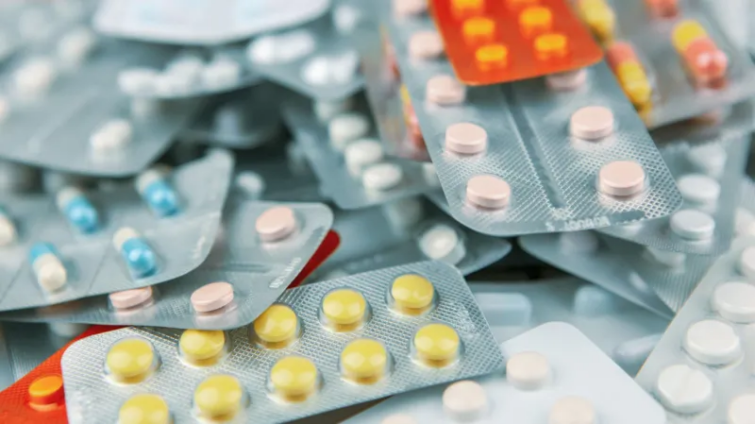
US President Donald Trump says he will soon announce "major" tariffs on imported pharmaceuticals, a move that could end decades of low-cost global trade in medicines.
For years, most countries, including the US, have imposed few or no tariffs on finished drugs, thanks in part to a 1995 World Trade Organisation (WTO) agreement aimed at keeping medicines affordable.
This shift comes after Trump introduced a blanket 10% tariff on other imports last week, as part of a broader effort to bring manufacturing back to the US.
His new "reciprocal" tariffs - including a duty of 104% on goods arriving from China - came into force on Wednesday, intensifying a global trade war and further shaking markets.
Pharmaceutical buyers, so far spared from such measures, are now preparing for what may come next.
The US has typically imported vast quantities of finished medicines from India, Europe and China without buyers paying tariffs - although active pharmaceutical ingredients (APIs), used to make drugs, do face some duties.
Speaking at a fundraiser dinner for his Republican Party on Tuesday, Trump said: "We're going to be announcing very shortly a major tariff on pharmaceuticals. And when they hear that, they will leave China."
He also told reporters on board his Air Force One plane last week that "pharma" tariffs would arrive "at a level that you haven't really seen before", saying these would be announced "in the near future".
In 2024, the US imported $213bn (£168bn) worth of medicines - more than two and a half times the total a decade earlier.
While short on detail, his comments have rattled buyers, especially those relying on Indian imports. India supplies nearly half of all US generics, or cheaper versions of popular drugs, saving the country billions in healthcare costs.
Indian pharma stocks fell sharply on the news. India sends about a third of its $13bn annual pharma exports to the US, which is a key market.
At the moment, Americans pay little or no tax on imports of Indian medicines - compared with the duty of nearly 11% paid by Indians importing American medicines.
Indian drugmakers warn that tariffs would force them to raise prices, which could ultimately drive up US medical bills. While firms like Cipla and Dr Reddy's have US plants, most say moving production is not viable for low-margin generic drugs.
European drugmakers are also on alert. After a high-level meeting between European Commission President Ursula von der Leyen and top pharma firms on Tuesday, the European Federation of Pharmaceutical Industries and Associations (EFPIA) warned that tariffs could shift production away from Europe, and to the US.
The EFPIA, whose members include major pharmaceutical companies such as Bayer, Novartis, and Novo Nordisk - the maker of the star diabetes type 2 drug Ozempic - expressed concerns that rising tariffs could disrupt Europe's role as a key player in global pharmaceutical production.
In 2024, pharmaceuticals were the EU's largest export to the US, worth a reported $127bn (£100bn).
Major companies have urged the EU to act swiftly, seeking policy changes to enhance Europe's competitiveness and prevent a "mass exodus" to the US. They have also expressed concerns about potential EU retaliatory tariffs, which could disrupt supply chains and affect patients on both sides of the Atlantic.
Global pharma giants like GSK and Pfizer operate across several countries, including Ireland and Germany, meaning new tariffs could disrupt multiple parts of the supply chain.
Latest Stories
-
LA 2028: Black Queens hold final training session ahead of second leg against Mauritius
10 minutes -
Standards are not Seasonal: What the EC appointments teach both sides
24 minutes -
King Mohammed VI urges private sector to create youth jobs and spread benefits of growth
25 minutes -
KGL U17 Colts 2026: Greater Accra win title after penalties win over Western Region
25 minutes -
UK Investment Roadshow opens in London to advance UK-Ghana growth partnership
36 minutes -
Assemblies of God requires pastors to resign before entering partisan politics – Rev. Wengam
46 minutes -
Ghana targets 20% annual reduction in maternal deaths – Health Minister
51 minutes -
Cyber attacks in Africa grow faster than global rate, report finds
53 minutes -
Ghana signs UAE deal to create 5,000 overseas jobs
60 minutes -
One Million Coders Programme targets 100,000 digital jobs in two years – Sam George
1 hour -
John Jinapor, Italian Ambassador explore opportunities for energy sector investment
1 hour -
NHIA seeks legal reforms to support Free Primary Healthcare
1 hour -
Beatrice Annan defends Afi Agbenyo’s EC appointment, cites record of gender advocacy
1 hour -
Ghana seeks investment deals in Bangkok amid global economic crises
1 hour -
IMF raises Ghana’s 2026 growth forecast to 5.7%, sees inflation falling to 4.8%
1 hour