

Audio By Carbonatix
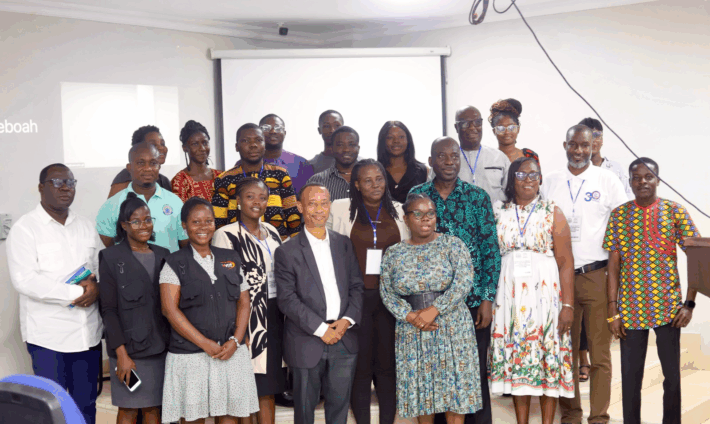
The University of Education, Winneba (UEW) has partnered with the United Nations Educational, Scientific, and Cultural Organization (UNESCO) to adapt and implement the organization’s Media and Information Literacy (MIL) curriculum in Ghana.
The initiative seeks to equip students and educators with critical thinking skills to combat the growing menace of misinformation and disinformation in the digital age.
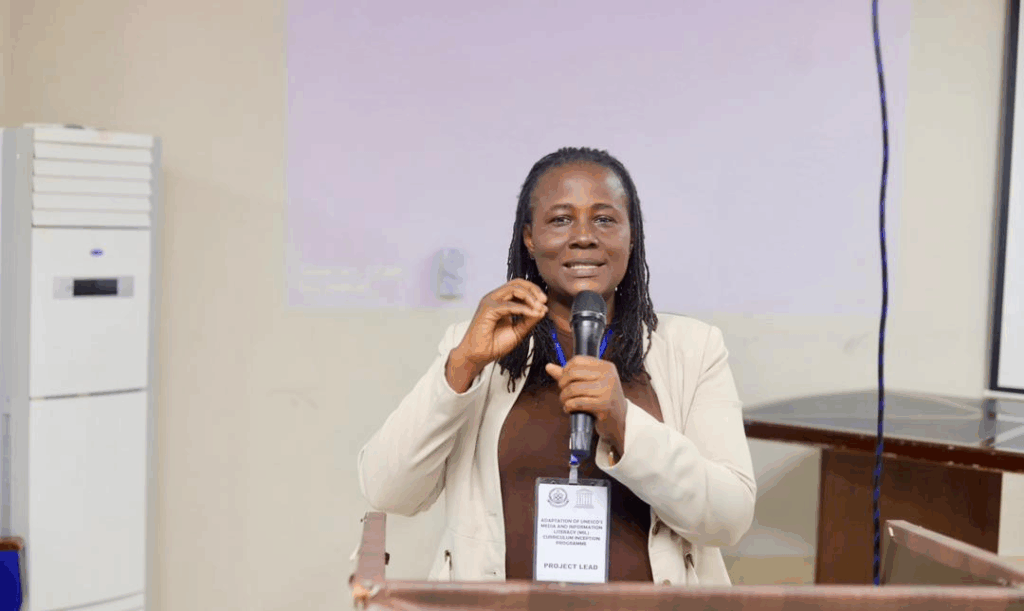
Launching the programme at UEW, the Project Lead, Professor Gifty Appiah Adjei, explained that the collaboration was designed to integrate UNESCO’s MIL framework into university teaching and learning.
She said the project would empower both teachers and students to “think critically and click wisely."
“We live in an era where the spread of misinformation threatens democracy and social harmony. This partnership is to help our students and educators become responsible consumers and producers of information,” Professor Appiah Adjei stated.
She added that the project aligned with Ghana’s education goals and the university’s commitment to advancing digital literacy, civic responsibility, and informed citizenship.
Prof Appiah Adjei further expressed optimism that the initiative would deepen media literacy education and help citizens become more discerning users of digital information.
The collaboration is also expected to serve as a model for other Ghanaian tertiary institutions.
The Programs Specialist at UNESCO, Abdul Hamid Yakubu, commended UEW for taking the lead among Ghanaian universities in integrating the MIL curriculum. He noted that the collaboration would help build a generation of discerning digital citizens.
“Media and Information Literacy is not just about technology; it is about developing critical minds that can question, verify, and create responsibly,” Mr Yakubu said. “UNESCO believes Ghana can set an example for West Africa in implementing this important educational framework.”
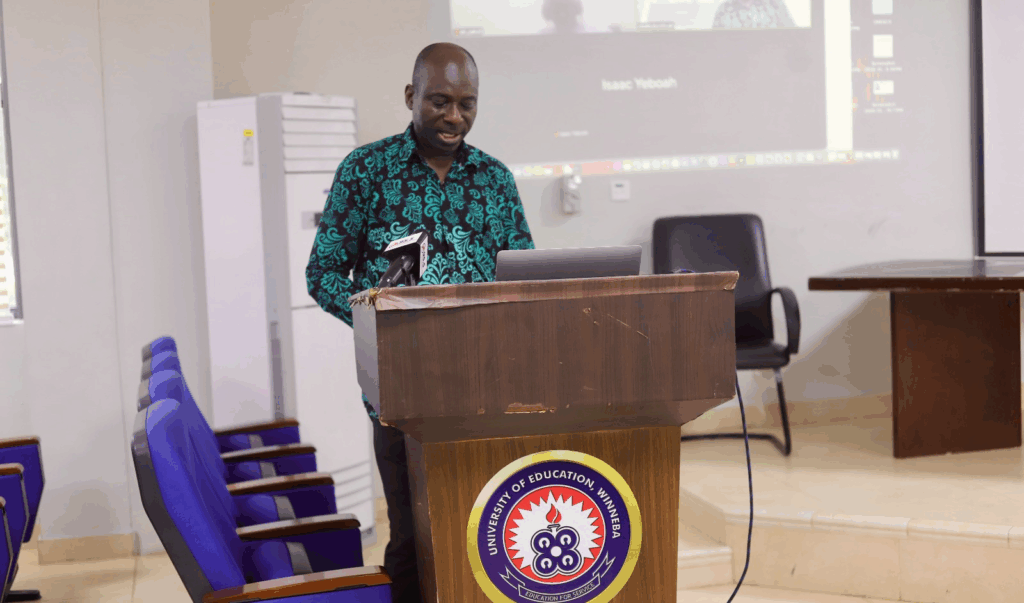
GES Representative, Isaac Yeboah, also emphasized the relevance of the initiative for pre-tertiary education. He urged schools to adopt similar practices, stressing that early exposure to media literacy would help students safely navigate the growing complexity of the online information space.
“Our young people are constantly online, and they must learn to distinguish facts from falsehoods,” Mr Yeboah remarked. “This collaboration gives us a foundation to promote responsible digital engagement across all levels of education.”
Director for Curriculum at the National Council for Curriculum and Assessment (NaCCA), Reginald George Quartey, highlighted that media and information literacy had already been embedded across Ghana’s new school curricula. He said the integration appeared in subjects such as history, mathematics, and ICT from the basic to senior high school levels.
“Media literacy should not be seen as a standalone subject,” Mr Quartey said. “We have integrated it across all disciplines so learners can assess and analyse information, evaluate sources, and act ethically when creating and sharing content.”
He revealed that NaCCA had developed a teacher resource pack and training guide on global citizenship education with support from a UNESCO Category 2 centre in South Korea. These resources, he said, aimed to strengthen teachers’ capacity to incorporate media literacy principles in classroom instruction.
Mr Quartey added that the emergence of artificial intelligence had made it even more urgent for educators to guide students in verifying online content. He stressed that “if we leave these issues for the future, we will forever remain behind,” and urged UEW to sustain its efforts in promoting digital literacy.
This event forms part of the series of stakeholder engagements to help undertake the prestigious UNESCO Ghana grant won by eight scholars from UEW spearheaded by Professor Gifty Appiah Adjei to adapt and implement the Media and Information Literacy (MIL) Curriculum within Ghana’s teacher education system titled “Adapting and Implementing UNESCO’s Media and Information Literacy (MIL) Curriculum at the University of Education, Winneba,” which seeks to enhance the quality, relevance and responsiveness of teacher education in Ghana by integrating Media and Information Literacy (MIL) as a core competency in pre-service teacher training.
The project aims to address the growing challenge of information disorder in society by equipping trainee teachers with the ability to critically evaluate media content, ethically use information, and responsibly engage in the digital space.
Latest Stories
-
Oti Region: LEAP reassessment delays spark concern in Krachi East
35 seconds -
HERizon Africa advocates 50% women representation in leadership to accelerate inclusive governance
5 minutes -
Herbal medicine now widely accepted and safer in Ghana — CPMR
7 minutes -
Air pollution driving widespread human rights violations, UN expert warns
10 minutes -
2026 U17 WWC: Black Maidens to begin qualifiers next month against Togo
39 minutes -
Sammy Gyamfi defends sole-sourcing for Big Push projects, rejects claims of irregularities
41 minutes -
Gender Minister intervenes in Bulemi family case, supports Down Syndrome awareness walk
42 minutes -
See the areas that will be affected by ECG’s planned maintenance today
46 minutes -
Weight-based bullying as a cause of recurrent headaches, chest pain, and abdominal symptoms in children
47 minutes -
NPP base declining untrue; I doubt findings—Kwadwo Poku
48 minutes -
Al Sharpton backs Ghana’s UN push to declare slave trade gravest crime against humanity
48 minutes -
Ghana’s hospital bed ratio stands at 0.9 per 1,000, below WHO standard- Titus Beyuo
1 hour -
Fitch Solutions revises Ghana’s GDP growth to 5.5% due to Middle-East conflict
1 hour -
Over 7,000 Korle Bu staff must be trained before new national patient system begins — Board Chair
1 hour -
Korle-Bu Board Chairman cites under-investment as cause of ‘no bed syndrome’
2 hours