

Audio By Carbonatix
Vice President Professor Jane Naana Opoku-Agyemang on Tuesday called for stronger stakeholder collaboration to help tap the full potential of Ghana’s culture and creativity industry for national development.
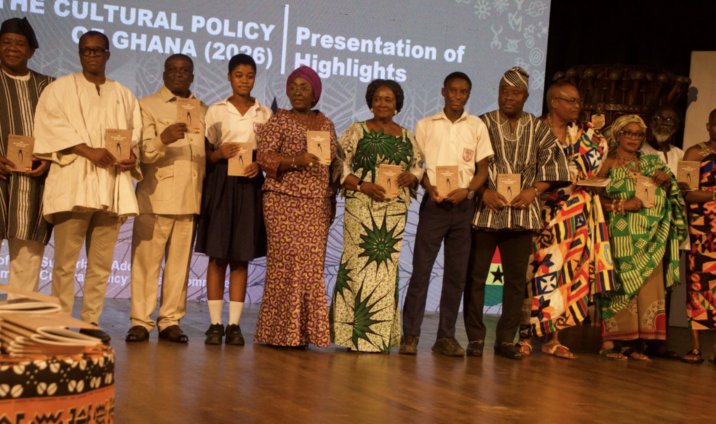
Speaking at the launch of Ghana's Revised Cultural Policy in Accra, she noted that the nation must rely on its cultural and creative strengths to create jobs and drive inclusive economic growth.
“We must build a nation that draws strength from its heritage, creates opportunities through innovation, and projects its voice with confidence and influence on the world stage,” Prof. Opoku-Agyemang said.
“Let Ghana stand as proof that culture is not only a reflection of identity, but also one of the most powerful drivers of development,” she stated, urging governments, traditional authorities, religious bodies, the youth, and the diaspora to lead the agenda.
Pro Opoku-Agyemang highlighted achievements such as the recognition and inclusion of Ghana’s Kente and Highlife on the UNESCO list of Intangible Cultural Heritage of Humanity, stressing that “history is indispensable to a nation’s identity and future.”
“These achievements remind us that our cultural expressions are not only the treasures of Ghana, but that they are gates to the world,” she said.
The Vice President urged citizens to learn additional local languages to promote social cohesion, while using technology to digitise indigenous culture and amplify the reach of artists.
“We must also use technology in ways that are innovative and rooted in our values for the benefit of our people, especially in the areas of job creation,” she noted.
Prof Opoku-Agyemang expressed confidence that the revised policy document would strengthen cultural cohesion, help promote and preserve the country’s indigenous culture.
The Ghana Culture Policy, among other things, aims to strengthen Ghana’s cultural identity and sovereignty, ensure culture informs all government policies and actions, and promote collaboration across sectors and stakeholders.
It recognises culture as the foundation of national identity and development, and emphasises that Ghana’s rich cultural heritage, both tangible (monuments, artefacts) and intangible (languages, traditions, knowledge systems), should be a source of pride and a key driver of economic growth, social cohesion, and sustainable development.
Madam Ablah Dzifa Gomashie, the Minister of Tourism, Culture and Creative Arts, stressed the need to harness the economic potentials embedded in Ghana’s culture and traditions, noting that the policy document was developed after broad consultations.
“By harnessing the economic potentials of culture and traditions, we can promote entrepreneurship, create sustainable economic opportunities, and empower our people, particularly the youth and women, while preserving the rich cultural heritage that defines us as a nation,” she said.
Madam Gomashie urged businesses to invest in arts and culture, while academic institutions, the media, and the youth promoted positive cultural narratives with digital skills.
She said the Ministry and partners were completing work on the UNESCO Cultural Indicator Framework, which will, among other things, measure the impact of culture on economic growth.
“On completion, the framework will improve evidence-based policy making, improve resource allocation, and support advocacy for investment in the culture and creative arts sector and help Ghana track and report on the contribution of culture towards the achievement of the Sustainable Development Goals,” she noted.
Representatives of UNESCO, the European Union (EU), and other partners pledged their support towards the implementation of the Cultural Policy.
Rune Skinnebach, the European Union Ambassador to Ghana, and Edmond Moukala, the UNESCO Representative in Ghana, highlighted the importance of investing in culture, as it creates employment and economic opportunities.
They described the document as Ghana’s strategic commitment to making culture an integral part of national development, adding that digital transformation should not lead to cultural erosion.
Latest Stories
-
Power restoration fault suspected in Kumasi Central Market fire
4 hours -
The 7-foot giant of Ngleshie Amanfro: Seven-foot Ghanaian Ephraim Saawa dreams of joining the national basketball team
5 hours -
Government promises support for Kumasi Central Market fire victims
5 hours -
Vibes The Movie: Big Ghun’s Ghanaian film earns five nominations at 2026 REFFA
6 hours -
MamaCare CEO warns unresolved conflicts among health workers could undermine maternal and neonatal care
6 hours -
Health professionals urged to translate medical knowledge into practice to save mothers
6 hours -
Conflicts among care providers linked to maternal, neonatal deaths – Expert
8 hours -
GIS marks 10th TIME conference, champions improved teaching practices
8 hours -
BRICS Or Balance? What Ghana’s bid really means
8 hours -
GPRTU wants full TRAFFITECH-GH implementation to start in 2027
9 hours -
How 10-mile walks for basic education birthed a 50-year legal career for Justice Korbieh
9 hours -
Mahama announces plans to import electric wheelchairs for PWDs
9 hours -
KGL U17 Colts 2026: Western beat Prempeh Elite Academy to set up final final with Greater Accra Region
9 hours -
Late Solanke strike salvages 10-man Spurs draw at Man United
9 hours -
Gender Ministry to monitor welfare of Nana Akua Addo’s children amid domestic violence case
9 hours