

Audio By Carbonatix
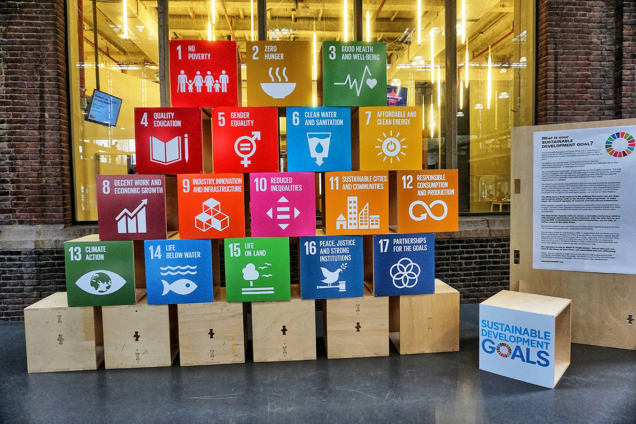
The United Nations’ Transforming Our World: The 2030 Agenda for Sustainable Development is one of the most ambitious and important global agreements in recent history.
The agenda, with the 17 Sustainable Development Goals (SDGs) at its core, is a guide to tackling the world’s most pressing challenges – including ending poverty and bringing economic prosperity, social inclusion, environmental sustainability and peace and good governance to all countries and all people by 2030.
There is already a strong interest in, and response to, the SDGs by governments, businesses and Organisations in most countries.
The SDGs will be a major influencer on the strategies and actions of these stakeholders – as well as on development finance flows – over the next 15 years. The SDGs also have strong relevance to universities and the tertiary and academic sectors more broadly.
The SDGs cover a wide range of complex social, economic, and environmental challenges and addressing them will require transformations in how societies and economies function and how we interact with our planet.
Education, research, innovation and leadership will be essential in helping society address these challenges.
Universities, with their broad remit around the creation and dissemination of knowledge and their unique position within society, have a critical role to play in the achievement of the SDGs. Arguably none of the SDGs will be achieved without this sector (Australia, New Zealand & Pacific Edition).
Engaging with the SDGs will also greatly benefit universities by helping them demonstrate university impact, capture demand for SDG-related education, build new partnerships, access new funding streams, and define a university that is responsible and globally aware.
Education and research are explicitly recognised in a number of the SDGs and universities have a direct role in addressing these.
However the contribution of universities to the SDGs is much broader, as they can support the implementation of every one of the SDGs as well as the implementation of the SDG framework itself. Some of these main areas of contribution are:
Learning and teaching: Providing students with the knowledge, skills and motivation
to understand and address the SDGs (broadly ‘education for sustainable development’); providing in-depth academic or vocational expertise to implement SDG solutions; providing accessible, affordable and inclusive education to all; providing capacity building for students and professionals from developing countries; and empowering and mobilising young people.
Research: Providing the necessary knowledge, evidence-base, solutions, technologies, pathways and innovations to underpin and support the implementation of the SDGs by the global community – through both traditional disciplinary approaches and newer interdisciplinary, transdisciplinary and sustainability science approaches; providing capacity building for developing countries in undertaking and using research; collaborating with and supporting innovative companies to implement SDG solutions; improving diversity in research; and student training for sustainable development research.
Organizational governance, culture and operations of the university: Implementing the principles of the SDGs through governance structures and operational policies and decisions, such as those relating to employment, finance, campus services, support services, facilities, procurement, human resources, and student administration.
External leadership: Strengthening public engagement and participation in addressing the SDGs; initiating and facilitating cross-sectoral dialogue and action; ensuring higher education sector representation in national implementation; helping to design SDG based policies; and demonstrating sector commitment to the SDGs.
Through their current actions in these areas, universities already make important contributions to the achievement of the SDGs. However, for the SDGs to be truly successful at a global scale, universities need to become champions of sustainable development and play a leading role in the implementation of the SDGs (Australia, New Zealand & Pacific Edition).
- For this, a whole-of-university and tertiary institutions approach is essential and universities can use the following Steps to start and deepen their engagement with the SDGs:
- Mapping what they are already doing
- Building internal capacity and ownership of the SDGs
- Identifying priorities, opportunities and gaps
- Integrating, implementing and embedding the SDGs within university strategies, policies and
- Plans
- Monitoring, evaluating and communicating their actions on the SDGs
Different universities will necessarily approach this process in different ways, and there will be a need to develop its own guide line to provide general tools and guidance that can be customised to different contexts and needs – including guidance on mapping, engaging with university stakeholders and senior leadership, building the business case, managing interlinkages, and reporting.
Given the size of the task of achieving the SDGs, and the critical role universities have in supporting and delivering on them, there is an urgent need for the sector to accelerate action on the SDGs. The key is for universities to get started. Both public universities and the private ones not forgetting the Technical universities and all the training colleges should prepare to embrace the tool for development
Credit: United Nations Statistical Division (UNSD) and Sustainable Development Solutions Network (SDSN)
****

The writer is a senior Statistician/Demographer with the Ghana Statistical Service.
Latest Stories
-
Trump seeks $152m to reopen notorious Alcatraz prison
19 minutes -
Ex-Chelsea player Oscar retires with heart issue
28 minutes -
CA Foundation drives constitutional literacy in Kpone Katamanso municipality
33 minutes -
GPRTU to hold talks with Transport Ministry over rising fuel costs
35 minutes -
CUTS International urges gov’t to halt sachet water price hike pending cost review
41 minutes -
Chief Justice: Efficient Judiciary essential to reducing business costs
44 minutes -
Bayern grabs 99th-minute winner to cap superb fightback
44 minutes -
Ahmed Ibrahim urges Ghanaians to reflect Easter values in nation-building
48 minutes -
ECG inefficiencies undermining power supply -Mahama outlines reforms
49 minutes -
Lewandowski scores as Barca fight back to defeat Atletico
51 minutes -
Lack of private sector consultation undermining economic growth – Jerry Ahmed Shaib
54 minutes -
Real Madrid seven points adrift after Muriqi’s late Mallorca winner
55 minutes -
Ghana must lead AfCFTA implementation by example – Trade Minister Ofosu-Adjare
59 minutes -
Strong Judiciary key to business confidence – Chief Justice Baffoe-Bonnie
1 hour -
Mahama announces 60-Hectare irrigation project to boost tomato production
1 hour