

Audio By Carbonatix
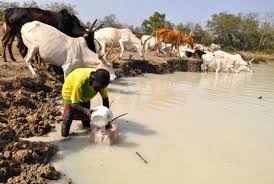
Residents of Damwaateon, a deprived farming community in the Wa West District of the Upper West Region have expressed concern about the manner in which they compete with both wild and domestic animals for water from a stream in the community.
That, they said, was as a result of the lack of alternative source of water in the community for domestic purposes such as cooking and drinking, which had compelled them to rely on dugouts at the stream for water.
Madam Mercy Dasaa, a resident of the community told the Ghana News Agency (GNA) that the streams dried-up in the dry season and they had to dig dugouts before they could get water to fetch.
“Sometimes if you are not lucky, you will dig and fetch and the time you will return the next day animals would have come to drink and destroy it, so you have to dig again to fetch”, she explained.
Madam Dasaa said they had only one borehole in the community of more than 500 inhabitants and added that it did not produce enough water during the dry season.
Madam Agnes Diesob, another resident of the community said the situation impeded their economic activities in the community as the women had to spend several hours at the stream or borehole in search of water for the family.
The residents appealed to the District Chief Executive, Mr Edward Larbiri Sabo and the Member of Parliament for the area, Mr Joseph Yiele Chireh to come to their aid by providing them with a source of potable water.
They said if nothing was done to alleviate their plight in accessing potable water in the community, they would not entertain any politician who would come to the community to campaign for votes during the electioneering.
Meanwhile, Mr Yussif Gizuure, the Assembly Member for the area told the GNA that he was aware of the challenges facing the people including the challenge in accessing potable water.
He gave the assurance that he would negotiate with the DCE to find solutions to those challenges.
Ghana, as a signatory to the 17 United Nations Sustainable Development Goals (SDGs), was required to, among other things; ensure availability and sustainable management of water and sanitation for all by 2030.
Latest Stories
-
Kwahu Business Forum 2026: Corporate citizenship, sustaining African businesses take centre stage with KGL as the case study
35 minutes -
Trump seeks $152m to reopen notorious Alcatraz prison
3 hours -
Ex-Chelsea player Oscar retires with heart issue
3 hours -
CA Foundation drives constitutional literacy in Kpone Katamanso municipality
3 hours -
GPRTU to hold talks with Transport Ministry over rising fuel costs
3 hours -
CUTS International urges gov’t to halt sachet water price hike pending cost review
3 hours -
Chief Justice: Efficient Judiciary essential to reducing business costs
3 hours -
Bayern grabs 99th-minute winner to cap superb fightback
3 hours -
Ahmed Ibrahim urges Ghanaians to reflect Easter values in nation-building
3 hours -
ECG inefficiencies undermining power supply -Mahama outlines reforms
3 hours -
Lewandowski scores as Barca fight back to defeat Atletico
3 hours -
Lack of private sector consultation undermining economic growth – Jerry Ahmed Shaib
3 hours -
Real Madrid seven points adrift after Muriqi’s late Mallorca winner
3 hours -
Ghana must lead AfCFTA implementation by example – Trade Minister Ofosu-Adjare
3 hours -
Strong Judiciary key to business confidence – Chief Justice Baffoe-Bonnie
3 hours