

Audio By Carbonatix
The Minority in Parliament on Thursday, July 16, staged a walkout during the consideration of the Tribunals Bill, 2026, accusing the Majority of using its numerical strength to push through legislation despite objections from organised labour, legal stakeholders and recommendations made during the constitutional review process.
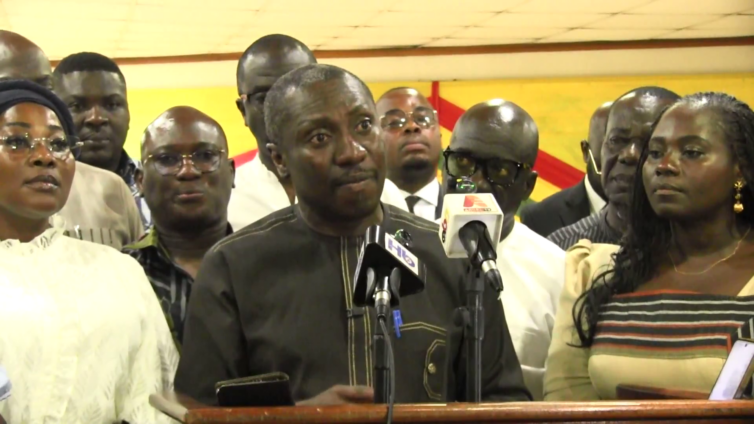
Led by the Minority Leader, Alexander Afenyo-Markin, the New Patriotic Party (NPP) caucus abandoned proceedings before the House proceeded with the passage of the controversial bill, JoyNews Parliamentary Correspondent James Avedzi reported.
Addressing journalists after the walkout, Mr Afenyo-Markin argued that the proposed tribunal system could undermine due process and fair trial guarantees.
"This whole exercise is to create a system where people would be pronounced guilty even before their case is properly determined. No established procedure of ensuring fairness, and it is not only the minority that is complaining."
He said opposition to the bill extended beyond Parliament, claiming organised labour had publicly rejected the proposed tribunal regime.
"Today, organised labour has come out loudly to re-echo its position on this matter. That we don't need a tribunal system in our country anymore."
Historical concerns
The Minority Leader also drew parallels with Ghana's tribunal system during the era of the Provisional National Defence Council (PNDC), arguing that the country's experience should caution against reintroducing such institutions.
"Tribunal system, we know what happened in the PNDC era where people were targeted, assets were seized and those people who claimed they were tribunal members enriched themselves. We know that record of the NDC, their predecessor PNDC," he stated.
'No room for dialogue'
Mr Afenyo-Markin said the Minority decided to leave the chamber after concluding that further debate would not influence the outcome because the Majority had resolved to pass the bill.
"So we, the Minority, have left the chamber because the Majority Leader decided to shut the door."
He said Parliament should always provide opportunities for consensus-building, particularly on legislation with constitutional implications.
"In Parliament, we believe that in all situations of disagreement, there must be a window to discuss, to raise the concerns. But once the Majority Leader makes a strong pronouncement that whatever the case, they will not listen, they will use their numbers to pass the bill, then there was no point again," he explained.
He added: "Every other effort will be rendered obnoxious. Every other effort by us will be rendered nocturnal."
Quorum dispute
The Minority Leader further alleged that the Majority lacked the required numbers earlier in the day and had sought time to mobilise members before proceedings resumed.
"You recall that earlier in the day when we raised this issue, the Majority Leader, realising that he didn't have the numbers, immediately called for suspension of the House."
According to him, although the House resumed several hours later, the Majority still did not have the number of members it claimed.
"So he used the five hours to marshal his members into the chamber. Even so, those present were not even up to 115. They were 113, " he claimed.
Mr Afenyo-Markin challenged the media to verify the attendance figures independently.
"We the Minority, counted them. They were not up to. Yet those who counted claim that the NDC members were more than that. You are the media. You can get in and do your own check to validate what we are saying. We tell you the truth. We will not say anything outside of the truth."
He concluded by accusing the Majority of refusing to heed dissenting views.
"So it is clear that the 'Yentie Obiaa' syndrome has set in, in this exercise."
About the bill
The Tribunals Bill, 2026, seeks to establish a new legal framework for the constitution, composition, jurisdiction and administration of tribunals established under Article 126 of the 1992 Constitution.
The government has argued that the legislation is intended to modernise the tribunal system, improve access to justice and provide specialised adjudication for categories of cases assigned under the Constitution or by statute.
However, sections of the legal fraternity, organised labour and some governance advocates have expressed reservations about aspects of the bill, arguing that Parliament should proceed cautiously to ensure that any tribunal system fully protects constitutional guarantees of fair hearing, judicial independence and due process.
Despite the Minority's walkout, Parliament proceeded with consideration of the bill after the Majority maintained that the legislation was necessary to operationalise constitutional provisions relating to tribunals.
Latest Stories
-
Government promises support for Kumasi Central Market fire victims
2 minutes -
Vibes The Movie: Big Ghun’s Ghanaian film earns five nominations at 2026 REFFA
32 minutes -
MamaCare CEO warns unresolved conflicts among health workers could undermine maternal and neonatal care
57 minutes -
Health professionals urged to translate medical knowledge into practice to save mothers
1 hour -
Conflicts among care providers linked to maternal, neonatal deaths – Expert
3 hours -
GIS marks 10th TIME conference, champions improved teaching practices
3 hours -
BRICS Or Balance? What Ghana’s bid really means
3 hours -
GPRTU wants full TRAFFITECH-GH implementation to start in 2027
3 hours -
Mahama announces plans to import electric wheelchairs for PWDs
4 hours -
KGL U17 Colts 2026: Western beat Prempeh Elite Academy to set up final final with Greater Accra Region
4 hours -
Late Solanke strike salvages 10-man Spurs draw at Man United
4 hours -
Gender Ministry to monitor welfare of Nana Akua Addo’s children amid domestic violence case
4 hours -
Benedict Okyere Yeboah: Ghana’s football problem goes beyond sacking a coach
4 hours -
GPL 2026/27: Darkwah Wiafe’s winner sees All Blacks beat Kotoko
4 hours -
ITF World Tour : Patel Wins Boys’ Singles Final at J100 Accra
5 hours