

Audio By Carbonatix
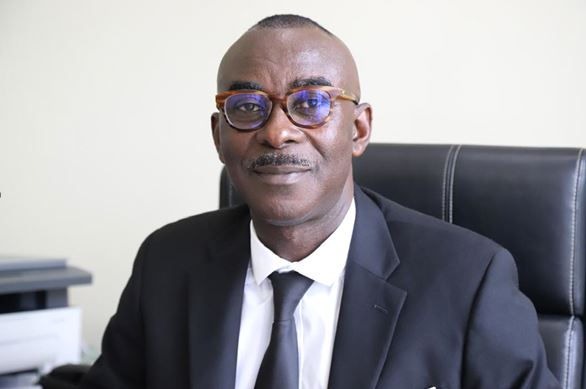
The Acting Chief Executive of the Ghana Chamber of Mines, Ahmed Nantogmah, is demanding the passage of a law to regulate how mineral royalties are used at the local level.
He said that without such a legal framework, communities hosting mining operations will continue to suffer from underdevelopment despite the huge revenues they generate.
Speaking on JoyNews’ PM Express Business Edition on Thursday, May 22, Nantogmah was emphatic: “We need an act or a law that will regulate the utilisation of mineral royalties.”
He argued that while mining companies are often blamed for underdevelopment in mining communities, the real issue lies with the misuse of royalties by local authorities.
“There’s a broad argument that development is in the hands of the state. That’s true. But mining companies do a lot in their communities,” he said.
“You go to some communities, and the schools there, the hospitals there, are run by mining companies.”
Mr Nantogmah questioned why assemblies receiving royalties still return to the companies asking for help with basic infrastructure.
“If there’s a one-kilometre road in town and there’s an assembly that gets mineral royalties, why would the assembly go back to a company like Gold Fields and say, come and develop the road for me?”
He noted that Gold Fields had constructed over 33 kilometres of road for one such community, even though the funds to do that work were supposed to have already been provided through mineral royalties.
“We are saying that. So that’s why we are also asking for a law,” he said.
“We know there’s one in the petroleum revenue management. Why can’t we do something for mining—for mineral revenue management?”
He proposed a mineral revenue law that would clearly define what royalties can be used for.
“For instance, if the law stipulates that mineral royalties can be used only for health, education, and sanitation, then you are bound by law to use it for that,” he said.
“Otherwise, it goes to the community, and nobody knows where it enters.”
Mr Nantogmah questioned whether royalty returns to host towns like Obuasi are being properly utilised.
“Obuasi—with the mining company there—I think a lot of royalties are supposed to come back. The question is, do they come back? And if they do, what are they being used for?”
He insisted that the lack of transparency and accountability in how these funds are managed is undermining development.
“So the question we ask of the mining companies must also be asked about the development authorities,” he stressed.
He said the state cannot expect mining companies to handle planning and development functions that clearly fall under local governance.
“If the town is not properly planned, it’s not the job of the mining company to make the street straight or to build skyscrapers. That’s mineral revenue.”
He referenced a recent study which revealed that about 80% of mineral benefits remain in Accra and are used to develop the rest of Ghana.
“Ghana is developing on the back of mining. But if you single out a local community and you bring the mining company in that community, well, you might have a point,” he said.
“But we also have to blame the people responsible for development.”
He called for a national conversation about whether royalty amounts are sufficient, how they are shared, and whether the system must tie revenue to specific projects.
“That’s why we think it should be done,” he concluded.
Latest Stories
-
Turning invitations into arrests is making citizens reluctant to assist police – Twumasi Ankrah
14 minutes -
The Traffitech-GH SMS spot-fine system: The good, the sad, and the funny – Bright Simons writes
26 minutes -
Hawa Koomson pledges experienced and mature leadership of NPP women’s wing
2 hours -
Young woman found dead at Kasoa Peace Town
2 hours -
Playback: The Law examined lawful arrest in Ghana
3 hours -
Mahama urges African governments to treat healthcare as an investment, not budget cost
3 hours -
Bawumia congratulates John Boadu and new NPP executives, pledges support ahead of 2028
3 hours -
Aksa Energy delegation pays courtesy call on GRA Commissioner-General
3 hours -
‘No talent should be left out’ – Bawumia pledges inclusive NPP campaign for 2028
3 hours -
Prof. Mike Oquaye recounts how he blocked the Special Prosecutor’s attempt to arrest Bawku Central MP
3 hours -
Make health sovereignty a priority for Africa – Mahama
4 hours -
Dorimon Naa, Wa West DCE lead massive clean-up exercise; threaten sanctions against recalcitrant residents
4 hours -
Photos from Adom FM Y2K Jam
4 hours -
Praye Tiatia steals the show at Adom FM Y2K Jam [Watch]
4 hours -
Boakye Agyarko congratulates John Boadu, pledges support for NPP leadership
4 hours