

Audio By Carbonatix
The Ghana Statistical Service (GSS) has revealed that it spent ¢6 million in conducting its corruption perception report recently released.
According to the GSS, a component of the expenditure was from United Nations Office on Drugs and Crime (UNODC).
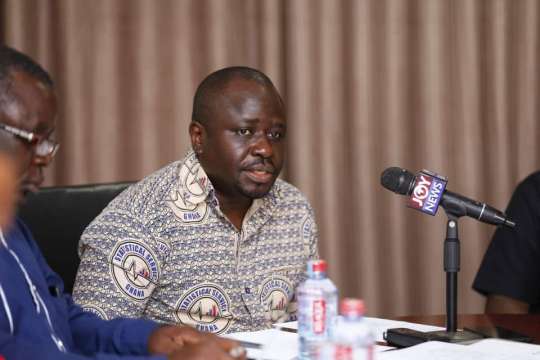
This was revealed by the Government Statistician, Prof Samuel Kobina Annim.
Speaking on the JoyNews’ AM Show on Friday, July 29, they can do the research with ¢5 million on their own.
“In total, we spent about ¢6 million on this survey but obviously this had a component of the expenditure from UNODC side because of the technical support they provided but once we are doing this by ourselves, we think something around ¢5 million will suffice,” he said.
Prof. Annim also said they will engage with the Finance Minister to see how often this research can be done.
“We have already started conversations on that unfortunately the conversations are from our development partners but what are going to do together with CHRAJ is to approach the Minister for Finance to see what government can do in terms of whether every year or every two years.”
The said report by the GSS together with CHRAJ and UNODC ranked the Ghana Police Service as the most corrupt institution in the country.
According to the survey, more than 17.4 million bribes were paid in 2021 with Police officers topping the list of officials who take bribes with 53.2%.
Meanwhile, the Inspector General of the Ghana Police Service, Dr. George Akuffo Dampare in a five-page letter to GSS and CHRAJ on Wednesday, July 27, questioned the methodology used to conduct the survey.
“Our discomfort, therefore, is the use of selective ranking methodology to project the outcomes in a manner that puts an unfair focus on the Police Service with all the others in your corruption index escaping public scrutiny,” the IGP said.
Dr. Akuffo Dampare explained that per the Police’s analysis of the report, the research could have been influenced by “a historically pervasive stereotyping of the Police Service.”
“The Service has almost now become the default institution of choice for such research and has therefore encouraged a deep-seated public stereotype over the years.”
Latest Stories
-
Divine Mission Academy advances to finals of 2026 Luv FM VitaMilk Primary Schools Quiz
15 minutes -
University of Ghana beat UENR to reach 2026 Honda Football Championship final
50 minutes -
President Mahama urges international partners to respect Ghana’s position on LGBTQ issues
56 minutes -
UDS edge UBIDS to reach 2026 Honda Football Championship final
59 minutes -
Gender Minister holds first quarter ministerial advisory board meeting
1 hour -
Yirenkyi, Adjetey score lowest as Ayew tops ratings in Austria annihilation
1 hour -
Mahama courts diaspora support, highlights $7.8bn contribution to Ghana’s economy
1 hour -
President Mahama honoured with International Statesperson Award in US
2 hours -
Biggest winners from Ghana’s defeat to Austria
2 hours -
Gov’t working to address salary arrears of 2024 teachers – Education Minister assures
2 hours -
‘Democracy Is Not for Sale’ forum ends with strong calls to tackle vote buying, reform political financing
2 hours -
Parliament rejects Minority motion to investigate GoldBod losses
2 hours -
‘We don’t have a lot of options’ – Otto Addo on playing Yirenkyi at right-back
3 hours -
Tiger Woods involved in Florida rollover crash
3 hours -
Report: Austria batter Black Stars in Vienna
4 hours