

Audio By Carbonatix
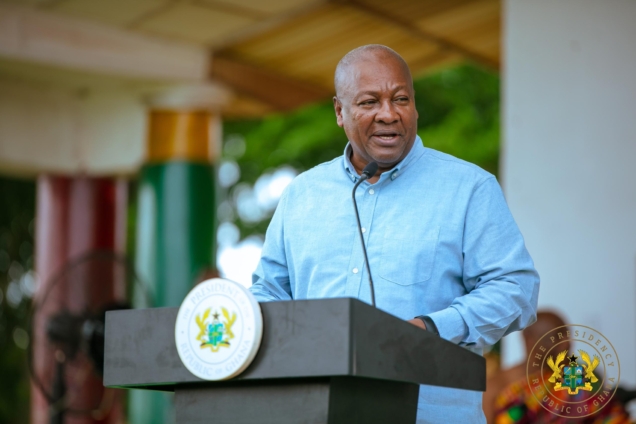
President John Mahama has mounted a strong defence for the newly approved one Ghana cedi charge on every litre of fuel purchased, calling it a necessary step to rescue Ghana’s ailing energy sector and avert a looming power crisis.
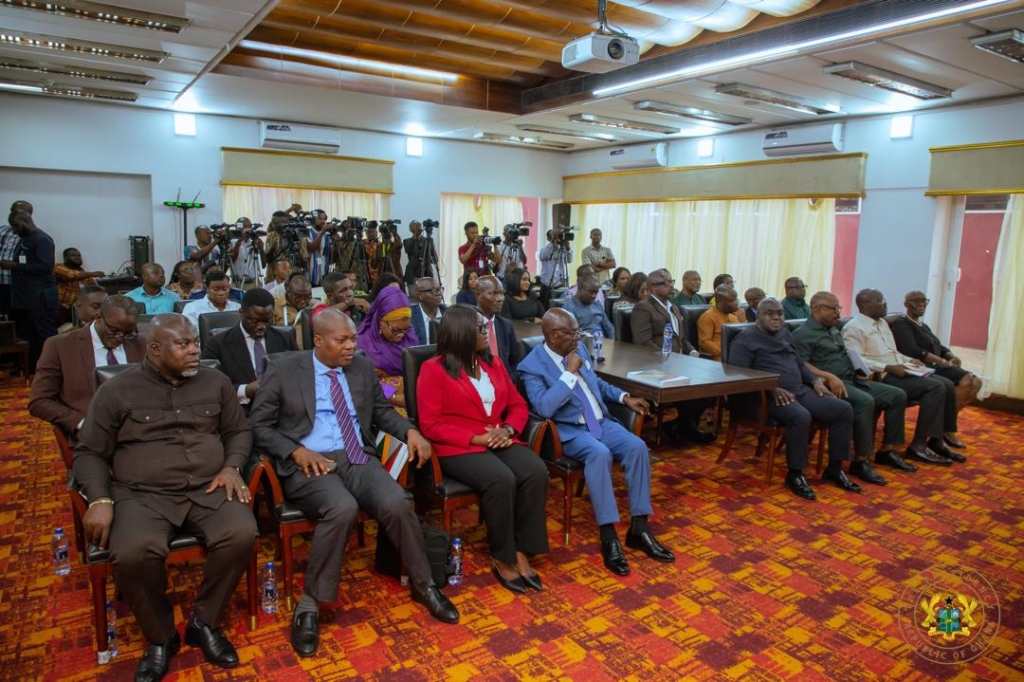
Speaking at the presentation of the final report of the National Economic Dialogue 2025 on Wednesday, June 4, the President said the decision, though difficult, is grounded in the harsh realities of Ghana’s energy debt burden and the urgent need to stabilise power supply.

“Our energy sector carries a debt burden of over US$3.1 billion,” President Mahama said, adding that “with an estimated US$1.8 billion more required to finance fuel procurement for uninterrupted thermal power generation in the coming months.”
He warned that failing to tackle this crisis head-on could threaten national productivity and derail industrial growth, noting that the dialogue identified energy sector liabilities as “the greatest existential threat to fiscal consolidation and macroeconomic stability.”
This, he said, led to the approval of the amendment to the Energy Sector Levies Act by Parliament on Tuesday, June 3, fast-tracked under a Certificate of Urgency.
The amendment introduced a one cedi increase in the energy sector recovery levy, an intervention, President Mahama stated, that "though difficult, is necessary and justifiable."

"The additional revenue projected is 5.7 billion cedis annually. This revenue will be strictly ring-fenced to pay down legacy energy debt, finance ongoing fuel purchases, and avert the risk of recurring power shortages.”
The President assured that the funds would not be exposed to the risks of the consolidated fund. Instead, a dedicated mechanism will manage the revenue, with regular audits and public reporting to ensure transparency and accountability.
"The fund will be regularly audited and audit reports made public to ensure its transparent use. While initially much of this revenue will go into the purchase of fuel to ensure a stable supply of electricity, with the ongoing developments in the upstream sector, we expect to receive more gas from our E&I Sankofa and Jubilee and TEN Fields.
"With the assurance of additional gas through the West African Gas Pipeline, we expect to substantially reduce the use of liquid fuels in our energy mix. At that stage, the resources generated by this increased levy will be channelled to pay down accumulated legacy debts in the power sector," President Mahama added.
Latest Stories
-
MamaCare CEO warns unresolved conflicts among health workers could undermine maternal and neonatal care
7 minutes -
Health professionals urged to translate medical knowledge into practice to save mothers
13 minutes -
Conflicts among care providers linked to maternal, neonatal deaths – Expert
2 hours -
GIS marks 10th TIME conference, champions improved teaching practices
2 hours -
BRICS Or Balance? What Ghana’s bid really means
2 hours -
GPRTU wants full TRAFFITECH-GH implementation to start in 2027
3 hours -
Mahama announces plans to import electric wheelchairs for PWDs
3 hours -
KGL U17 Colts 2026: Western beat Prempeh Elite Academy to set up final final with Greater Accra Region
3 hours -
Late Solanke strike salvages 10-man Spurs draw at Man United
3 hours -
Gender Ministry to monitor welfare of Nana Akua Addo’s children amid domestic violence case
3 hours -
Benedict Okyere Yeboah: Ghana’s football problem goes beyond sacking a coach
3 hours -
GPL 2026/27: Darkwah Wiafe’s winner sees All Blacks beat Kotoko
4 hours -
ITF World Tour : Patel Wins Boys’ Singles Final at J100 Accra
4 hours -
Ghana must pursue BRICS partnership if it brings economic benefits – Kpebu
4 hours -
Success and Wright Claims J100 Accra Girls’ Doubles Championship
4 hours