

Audio By Carbonatix
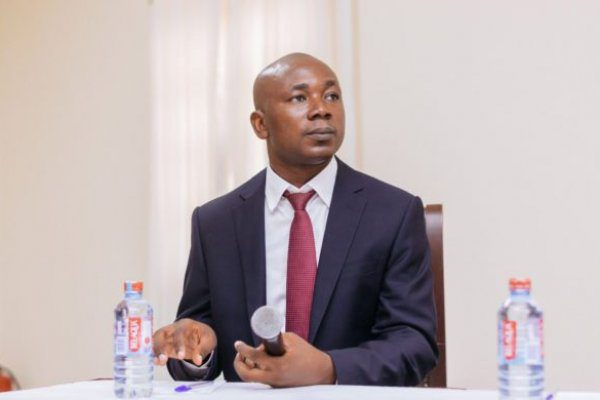
An economist at the University of Ghana Business School, Professor Godfred Bopkin, has called for closer collaboration between the state and the private sector, including religious bodies, to drive sustainable development in the country.
His comments come after the ongoing debate stems from a suit filed on December 24, 2024, by private legal practitioner Shafic Osman, who is invoking the original jurisdiction of the Supreme Court under Articles 2(1)(b) and 130(1)(a) of the 1992 Constitution.
Speaking on JoyNews’ Newsfile programme on Saturday, Professor Bopkin highlighted the need for a framework that promotes both state-led initiatives and private investment, stressing that this partnership would benefit the nation as a whole.
Prof. Bopkin noted that there has historically been a reluctance by certain religious groups to engage fully with formal education and investment initiatives.
However, he acknowledged that this perspective has evolved, with many religious institutions now seeing the value in contributing to societal development through education, healthcare, and other vital services.
“I understand where my Muslim brothers are coming from,” said Professor Bopkin, referring to religious groups' diverse approaches to development.
“And I also share my own experiences over the years. Decades ago, some religious bodies had a limited stance towards formal education. This belief also influenced how they made their investments. However, other religious bodies recognised early on that education was key to not only propagating their faith but also ensuring the sustainability of their initiatives.”
He pointed out that institutions such as schools, hospitals, and other social interventions have been crucial tools for religious groups to support both their faith and the development of communities.
He further emphasised that the Ghanaian constitution allows for religious groups to play an active role in social development, providing them with the legal framework to establish such ventures.
The economist believes that fostering a productive partnership between government and private entities, including religious organisations, is essential for the country to unlock its full potential.
Latest Stories
-
Do not despair, perseverance led to my three PhDs – TTU registrar urges all
23 minutes -
Alisson injury not ‘a big thing’ despite missing Galatasaray
3 hours -
Scholes ‘did not intend to be offensive’ to Carrick
3 hours -
23 players sent off after mass brawl in Brazil
3 hours -
Court remands pastor over alleged child abuse images
3 hours -
Anthropic sues US government for calling it a risk
4 hours -
Live Nation reaches settlement in US monopoly case
4 hours -
G7 to take ‘necessary measures’ to support energy supplies
4 hours -
Star Assurance rewards 10 more customers in grand finale draw of “40 Reasons to Smile” promo
4 hours -
Guinea opposition leader urges ‘direct resistance’ after 40 parties dissolved
4 hours -
Suhum MP calls for sincere dialogue on labour issues, warns against politicisation
4 hours -
We have instituted measures to diversify our reserves – BoG Governor
5 hours -
Ban on pay-TV services at the Presidency in force; my office is the only place with DSTV – Kwakye Ofosu
5 hours -
Fuel prices could hit GH¢17 if the Middle East crisis persists – COMAC
5 hours -
Cedi records modest appreciation on improved liquidity, but external risks linger
5 hours