


Audio By Carbonatix
Somalia's government has told the BBC it is concerned about WhatsApp's plan to launch a new feature that would let people chat using usernames rather than phone numbers, saying it could pose a security risk.
Communications and Technology Minister Ahmed Osman Dirie said it could make it harder to trace and counter criminals in a country that is still battling Islamist militants.
The rollout to three billion global users of WhatsApp worldwide is expected in the coming months, allowing people to remove or change their usernames at any time.
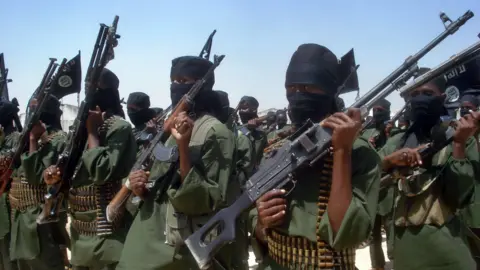
Somalia has been hit by a brutal and deadly insurgency - led by al-Shabab, an al-Qaeda affiliate - for more than two decades.
In response to Somalia's concerns, WhatsApp told the BBC that the feature was not yet live, and users would still need a phone number to use the app. It further stated that the feature comes with built-in safeguards against scams.
But Dirie told the BBC Focus on Africa podcast that the Somali government had approached Meta, which owns WhatsApp, about their concerns and hoped that "we'll reach a resolution on this matter very soon".
He pointed out that Somalia had a "unique context", with an economy that heavily relies on mobile money transactions.
"Unverified and untraceable usernames" introduced the risk of financial fraud and citizens becoming vulnerable to scammers, he said.
Al-Shabab militants have also been known to use WhatsApp for their operations, including for extortion and propaganda.
In 2024, Somalia's intelligence agency said it had shut down 20 WhatsApp groups allegedly operated by al-Shabab for extortion and intimidation.
It said it had also disabled data services for about 2,500 phone numbers associated with them.
Dirie told the BBC that while Somalia effectively regulated phone numbers in the country, WhatsApp's new feature would undermine that.
Somalia's issues follow a similar complaint raised by India - the biggest market for the platform with more than 850 million users.
Earlier this month, India said it believed usernames might increase online fraud, impersonation and other crimes by allowing criminals to contact potential victims without disclosing their phone numbers.
It also asked the company "not to roll out this feature until the consultation on this point is achieved to the satisfaction of the government".
Dirie said linking a WhatsApp profile to a phone number made it easier to track criminals.
"So moving away from phone numbers to usernames, we believe, will make it difficult for us to counter those crimes," he said.
The minister said they required further assurances from Meta, despite its assertion that it had built mechanisms to defend against cybercrimes through WhatsApp.
He demanded that Meta demonstrate that hiding phone numbers would not "erode digital traceability" and provide "specific safeguards" against financial fraud.
"If they prove that, when we discuss if we put those safeguards in place, then we will not have any issue with rolling out the new feature," he said.
According to Moses Kemibaro, a technology blogger who focuses on Africa, WhatsApp's new feature aims to enhance user privacy.
He views the change as an evolution of WhatsApp to become like other services under Meta, such as Instagram, where one's identity is not related to a phone number.
"It's almost saying that this can work irrespective of the phone number and just give you a single identity," he says.
While this can enable more private interactions, Kemibaro notes that countries have valid concerns about its impact on security.
"[It is] a very sensitive issue around the possibility of escalation in scams and risky propositions that might actually come out of this new trend," he says.
Meta needs to explain the implication of the changes - including whether regulators can link crimes committed by a username to a person behind it, the blogger adds.
Kenyan security expert George Musamali partly concurs, saying what WhatsApp is doing helps guarantee a user's privacy.
He says that when people complain about their details being taken from WhatsApp groups and used against them, the blame often falls on the tech giant.
There may also be cases when some governments use information shared in such groups to target their critics, which, Musamali argues, might be what Meta is trying to prevent.
Ultimately, he suggests that governments may be "jumping the gun", citing a need for a balance between privacy and security concerns.
Latest Stories
-
“US Embassy introduced TRIBE Culture Fest to NSA, GTA” – Kofi Adams
45 minutes -
“NSA did not tell us of any embassy arrangement” – Kofi Adams
1 hour -
Glasner suffers loss on Selhurst return as Palace beat Forest
3 hours -
WAFU B U17: ‘We won but I expected more from my boys’ – Kassim Ocansey
3 hours -
Man City cruise to statement win over 10-man Liverpool
3 hours -
Be careful with cross-border lending, foreign currency exposures – BoG to financial institutions
5 hours -
GPL 2026/27: Medeama go three clear as Hearts of Oak recover and Bechem stage stunning comeback
5 hours -
Ntiamoah Foundation launches “BEYOND 20” anniversary campaign
6 hours -
Credit Risk Management Directive: BoG to begin implementation for banks, others from July 1, 2027
6 hours -
Ghana Brands Awards 2026: Leading brands, business trailblazers to shine on November 20
6 hours -
T-bills auction: Demand improves as government exceeds target by about 76%; interest rates soften
6 hours -
Ziope undertakes initiative to build a technologically inclined community, commissions self-help ICT lab
7 hours -
ECG announces power outage in parts of Tema, Central Region due to network fault, maintenance
7 hours -
When the Gospel Becomes a Weapon: The church, blackmail and the abuse of faith
8 hours -
JoyNews’ Jacqueline Ansomah Yeboah selected for UK Media Excellence for Emerging Technologies Fellowship
8 hours