

Audio By Carbonatix
A former CEO of the National Pensions Regulatory Authority says the decision by the Attorney General to adopt a 60% recovery threshold as the basis for reconsidering prosecution in the banking crisis case is not the most effective way to resolve such a serious financial collapse.
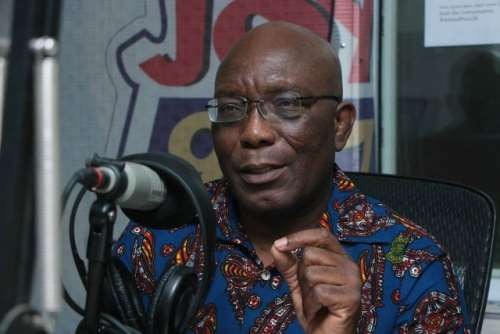
Dr. Daniel Seddoh, reacting to the Attorney-General’s announcement that 60% of losses have now been recovered in the case involving Dr. Kwabena Duffuor and seven others, said he wasn’t surprised by the decision.
“I wasn’t surprised, because this case took us how many years, between seven to eight years. We all know that we have a legal system that is very slow and very painful. We’ve lost lives because of this whole thing.
Read also: AG drops charges against Duffuor, 7 others over uniBank collapse
"So some people will tell you it’s better than nothing, but I have deeper questions to ask than telling me it’s better than nothing.”
For Dr. Seddoh, the fundamental issue lies in how banks operate and the nature of the funds they control.
“Let’s appreciate the fact that banks have no money of their own. They leverage on depositors' and other people’s money to work. So if you take a typical bank, the money the owners put in is very small compared to what they get from other sources, largely depositors, which very often they get at no cost.
"The depositors put money in the bank with the understanding that it is a relationship of trust between them and the bank. Then anytime they go for their money, they will get it.”
He lamented the breakdown of this trust and the failure of the system to adequately protect depositors during the crisis.
“But you see, what has happened has created a situation where the depositors could not get their money, and there was nobody to come to the air rescue.”
He challenged the rationale behind the 60% recovery benchmark, pointing to the implications for the remaining funds.
“That’s what we are seeing now. When you take 60% and you can get 40%, who is going to finance that 40%? Because ultimately, the money belongs to depositors, ultimately. So who is going to finance that?”
Read also: Duffuor Case: Accepting 60% recovery undermines justice and accountability – Sulemana Braimah
Dr. Seddoh believes the approach used to resolve the banking crisis was fundamentally flawed and could hurt the country in the long run.
“You will see, if we deepen our discussion, you will see that we use a certain approach to resolve the issue, and it will just come back to bite us. Probably this is not the most efficient approach.”
He proposed a different path—one focused on investment and recovery rather than writing off losses.
“We should have used two things. We should have probably used the approach of an investment. That is, you get people in, put money in, get stronger hands to manage the bank and get it out of the hole, turn it around, sell it and get your money out.
"But the approach we have used is to throw money at it as an expense which will never come back. And that ultimately, falls on the taxpayer, which includes the depositor.”
Latest Stories
-
Struggling Real suffer title blow with Girona draw
2 hours -
Mahama nominates Pamela Graham as Auditor-General
2 hours -
The five big sticking points in US-Iran talks
3 hours -
Melania Trump’s speech propels Epstein crisis back to forefront
4 hours -
What everyone should know about C-sections
4 hours -
Gunmen kill at least four people at Afghanistan picnic spot
4 hours -
Health Ministry engages Ga Mantse ahead of Free Primary Healthcare launch
4 hours -
We can tackle multiple priorities – Sam George defends Anti-LGBTQ Bill push
5 hours -
Statement: Ghana Chamber of Mines’ Response to Claims in Joe Jackson’s “Ananse Stories about the Economy of Ghana”
5 hours -
GES opens 2026 teacher recruitment for licensed B.Ed graduates
5 hours