

Audio By Carbonatix
I was stunned to hear about the gruesome murder of the University of Ghana Law lecturer, Professor Emmanuel Yaw Benneh.
It is however depressing to note that most crimes go unsolved in Ghana due to several factors, notably, the over-reliance on manual investigation processes rather than with modern digital methods, poorly trained crime scene investigators, lack of logistics, ignorance about crime scene preservation by first responders and on-lookers, etc.
Even high profile cases such as that of Fennec Okyere, Josephine Asante of GHAPOHA, missing Takoradi girls, Ahmed Suale are still muddled with confusion with no closure whatsoever brought to their families.
Why do we always assume a dead body dangling from a tree is suicide? Or perhaps, a dead body with rat poison beside him, is at the scene, without any investigation, automatically ruled a suicide?
How about that strong highly motivated investment banker precipitously dying from a stomach upset? Do we think all these are accidental? Food for thought…
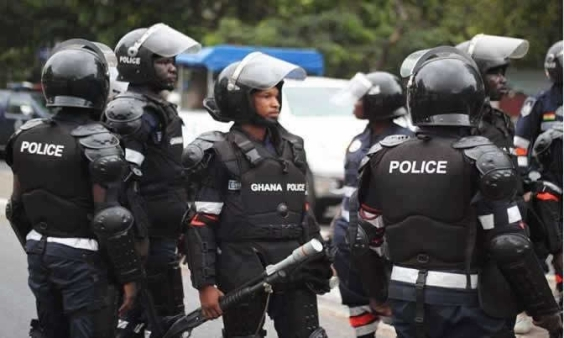
As a trained crime scene and forensics expert, I present to you some murder investigation tips that I think it will be useful to the police and also educate crime scene investigation enthusiasts;
- Cordon off crime scene: This is a standard procedure to protect the integrity of the scene against contamination.
- As an assigned lead investigator, all information on all persons who have been on the crime scene should be collected; the person(s) who found the deceased, first responders, etc.
- Perform initial crime scene checks on the victim to perhaps, ascertain the cause and time of death. This will establish a timeline that will prove crucial in the investigation process.
- Search for clues at the crime scene that can aid in the investigation. At this stage, everything matters, whether it’s a torn page from an address book or a strand of hair on a bedside locker. Are there any signs of a struggle? Treat everything as evidence.
- Harvest fingerprints, footprints, and collect DNA evidence. Take pictures and properly document everything.
- Get a profiler to profile the murderer. E.g. If the victim is shot multiple times, it’s an overkill, meaning, the perpetrator wanted the victim dead and not a simple act of random violence such as a robbery gone wrong. In criminology, it’s called a crime of passion or retribution. If the door lock is broken, it’s likely the victim doesn’t know the perpetrator who might have forcefully entered. If the door lock is not tampered with, it’s likely the victim allowed his killer access into his home because he knew and trusted him…. Or conceivably, lived with him.
- Start interviews with family, friends, and colleagues at work including students. Usually, the people that hurt us are those closest to us. It can be such a grim interview to conduct because people are still grieving. Questions such as “where were you at the time of the murder” and “do you know anyone who might want to hurt the victim” should be asked. With the victim’s nature of work, he might also have incurred the anger of a student he failed in an exam or subordinate he queried.
- From the interviews and background checks, a “persons of interest” list can be made. These are not suspects; they might just have exhibited some awkward behavior or being inconsistent in their narration of events.
- Establish the alibis of “persons of interest”. Your alibi is simply where you were at the time of the murder. Those with watertight alibis are deleted from the list.
- Our cell phones ping to cell towers as we move around. Using that technology, we can establish who was at the, or, near the crime scene at the time of the murder (remember I mentioned timeline earlier).
- Law enforcement should also collect CCTV footage of nearby cameras around Adjiringano.
- Run fingerprints found at crime scene in available databases.
- Call on BNI to help when the investigation proves complex or needs resources the police does not have. E.g. Phone taps, bugs.
All of the processes mentioned above would be easier to execute with the right structures and technologies in place coupled with adequate periodic training for officers.
If we have a robust centralized fingerprint database, that would prove valuable. I wish to appeal to the government to take advantage of the National Identification Authority exercise to collect fingerprints into the database for the police.
DNA technology is used by law enforcement agencies in many countries to solve crimes that were perpetrated in the 1970s and 80s. DNA technology is an area worth exploring.
And to you, the reader, have you invested in your personal security? Do you still leave your keys under the doormat or in the flower pot? Or you feel invincible?
-
The author, Adib Saani is a Security Analyst and Executive Director of Jatikay Centre for Human Security and Peace Building.
Tel: 0244 985 099
Latest Stories
-
China probes use of formaldehyde to keep cabbages fresh
2 hours -
Veteran Nollywood actor Taiwo Hassan ‘Ogogo’ dies at 65
3 hours -
SYPALA 2026 opens at UPSA, puts Africa’s economic future under the spotlight
3 hours -
Man City agree deal for Palmeiras winger Allan
3 hours -
New Zealand to introduce bill for under-16s social media ban
3 hours -
GoldBod rejects funding crisis claims, says gold purchases remain on course
3 hours -
I await courage from accusers to report ‘extortion’ claims – Afenyo-Markin
3 hours -
Prince Harry steps down from African wildlife charity board
3 hours -
I’ll submit myself to any investigation to clear my name – Afenyo-Markin on ‘extortion’ allegation
3 hours -
NAIMOS arrests 3, destroys 86 Chanfang machines in Ablebo galamsey sweep
3 hours -
Galamsey: Ghana’s rivers cannot afford another failed experiment – Akwasi Konadu
4 hours -
Blue Water Guards programme failing in fight against galamsey – Manhyia North MP
4 hours -
Policy indiscipline, incompetence stifling Africa’s growth — IMANI boss
4 hours -
We will vet Mahama Ayariga fearlessly – Minority Leader
4 hours -
Afenyo-Markin sues Sammy Gyamfi and others over alleged extortion claims
4 hours