

Audio By Carbonatix
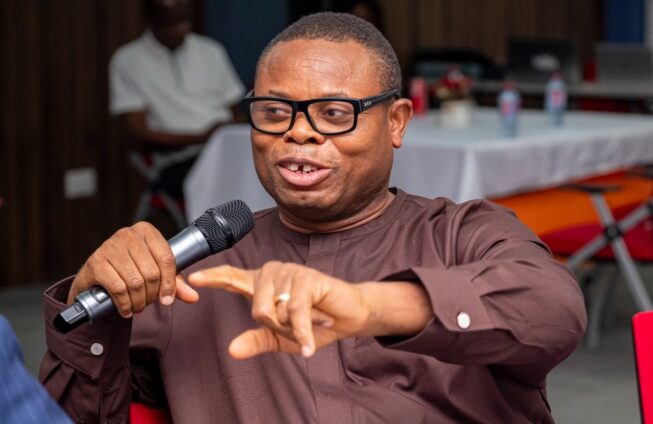
Policy indiscipline and institutional incompetence remain among the biggest barriers to Africa’s efforts to build resilient economies, the founding President of IMANI Africa, Franklin Cudjoe, has said.
Mr Cudjoe said the continent did not necessarily suffer from a shortage of development policies or economic plans but from the failure of governments and institutions to consistently implement and comply with the frameworks they had established.
He was speaking on Monday, August 24, at the Students and Young Professionals African Liberty Academy (SYPALA) 2026, organised by the IMANI Centre for Policy and Education in partnership with the University of Professional Studies, Accra (UPSA).
The four-day programme brings together students, young professionals, academics, entrepreneurs and policy thinkers to examine issues including governance, economic freedom, development and public policy.
Policy without discipline
Mr Cudjoe said African countries needed greater consistency between policy formulation and implementation if they were to achieve sustainable economic growth.
He described the disconnect between policy decisions and their implementation as a major weakness undermining economic resilience on the continent.
“Today’s lectures essentially were saying that you can build a resilient economy only when you have proper alignment with policy planning, the discipline in ensuring that you go through whatever plans you have, and then making sure that everything you do actually synchronizes,” he said.
He identified what he termed “asymmetry and policy illogicality” as a fundamental problem confronting African economies.
“I think the number one problem we have on the continent is what we call asymmetry and policy illogicality,” he stated.
According to him, the failure to observe laws and policies intended to safeguard public finances demonstrates a deeper institutional challenge.
He questioned why governments would establish legislation to promote fiscal discipline and subsequently disregard the same frameworks.
“How do you pass a law, pass two laws actually, Public Financial Management Act and Fiscal Responsibility Act, two years later, you are in debt?”
Mr Cudjoe said such conduct undermined the credibility of institutions and weakened confidence in the policies and laws designed to guide economic management.
“That means you don’t even respect the thing that you did,” he added.
‘We have a lot of good policies’
The IMANI Africa founder said African governments should focus more on enforcing and implementing existing policies instead of continuously introducing new ones.
“I think policy indiscipline has been the number one challenge facing that,” he said.
“We have a lot of good policies, right? Plans here and there, but we are not disciplined,” he added.
He said the challenge extended beyond policy choices to the capacity of institutions and the competence of people entrusted with implementing government programmes.
Institutional competence
Mr Cudjoe identified “institutional incompetence” as another major factor limiting the effectiveness of policies across the continent.
He said appointing people without the requisite expertise to key positions could undermine even well-designed policies and development programmes.
“And I think that’s the theme that ran through today’s lectures: incompetence, institutional incompetence, where people are not competent to perform certain roles,” he said.
He further argued that the situation becomes more problematic when officials responsible for implementing government policies do not have a sufficient understanding of those policies.
“Also because the things they… the policies they are working with, they don’t even understand,” he noted.
Mr Cudjoe's comments placed effective implementation, institutional capacity and respect for established economic rules at the centre of the debate on how African countries can build economies capable of withstanding economic shocks and delivering sustainable development.
The SYPALA 2026 programme is seeking to engage young Africans in such policy questions and equip them with ideas and perspectives on the institutional and economic choices that could shape the continent’s future.
Latest Stories
-
Police blur the line between invitations and arrests – Reindorf Twumasi Ankrah
22 minutes -
Turning invitations into arrests is making citizens reluctant to assist police – Twumasi Ankrah
56 minutes -
The Traffitech-GH SMS spot-fine system: The good, the sad, and the funny – Bright Simons writes
1 hour -
Hawa Koomson pledges experienced and mature leadership of NPP women’s wing
2 hours -
Young woman found dead at Kasoa Peace Town
3 hours -
Playback: The Law examined lawful arrest in Ghana
3 hours -
Mahama urges African governments to treat healthcare as an investment, not budget cost
4 hours -
Bawumia congratulates John Boadu and new NPP executives, pledges support ahead of 2028
4 hours -
Aksa Energy delegation pays courtesy call on GRA Commissioner-General
4 hours -
‘No talent should be left out’ – Bawumia pledges inclusive NPP campaign for 2028
4 hours -
Prof. Mike Oquaye recounts how he blocked the Special Prosecutor’s attempt to arrest Bawku Central MP
4 hours -
Make health sovereignty a priority for Africa – Mahama
4 hours -
Dorimon Naa, Wa West DCE lead massive clean-up exercise; threaten sanctions against recalcitrant residents
5 hours -
Photos from Adom FM Y2K Jam
5 hours -
Praye Tiatia steals the show at Adom FM Y2K Jam [Watch]
5 hours