

Audio By Carbonatix
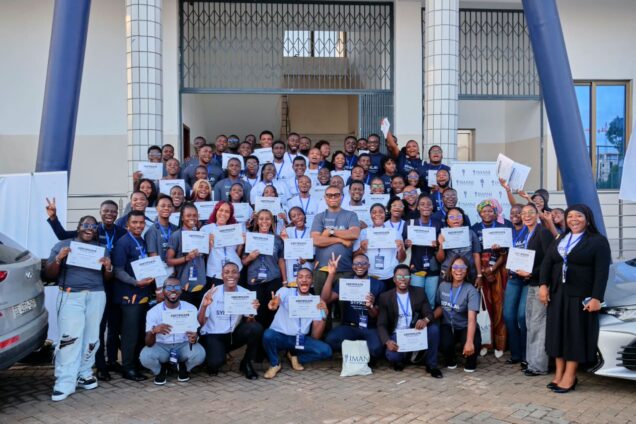
The curtain came down on the 2026 edition of the Students and Young Professionals African Liberty Academy (SYPALA) with a call on the 100 participants to move beyond intellectual engagement and use the knowledge acquired to influence policy, institutions and communities across Africa.
The Pro-Vice-Chancellor of the University of Professional Studies, Accra (UPSA), Professor Emmanuel Selase Asamoah, who represented the Vice-Chancellor, Professor John Kwaku Mensah Mawutor, at the closing ceremony on Thursday, August 27, said the real measure of the four-day academy would be what participants did with their knowledge after leaving the programme.
He cautioned them against treating the certificates presented to them as the culmination of their SYPALA experience.
“It is not only a record that you were here. It is not the achievement,” he said.
“The achievement is what you will do for 12 months that follows the certificate you are given.”
SYPALA 2026, organised by the IMANI Centre for Policy and Education in partnership with UPSA, was held from August 24 to 27 under the theme: “Africa’s Ascent: Forging Resilient Economies and Inclusive Governance.”
The academy brought together students and young professionals for intensive discussions on the economic, political and institutional challenges confronting Africa and the choices required to place the continent on a more resilient development path.
From ideas to action
Prof. Asamoah said the programme had exposed participants to a broad range of perspectives on economic diversification, governance and institutions, entrepreneurship and innovation, climate and energy security, geopolitics and human capital development.
He said the sessions, lectures, group discussions and brainstorming exercises were designed not simply to transfer information but to equip the participants with tools for better decision-making.
“The more you expose yourself to knowledge, the better the quality of decisions you take,” he said.
He explained that participants should leave the academy with the ability to interrogate policy proposals, understand public documents and assess competing options rather than merely memorising ideas.
According to him, the cohort had acquired a working vocabulary that would enable them to engage meaningfully with issues such as national budgets and regulatory impact assessments.
They had also been exposed to methods for identifying problems, examining evidence, assessing the cost of policy choices and understanding the trade-offs associated with decisions of public importance.
A powerful line-up
The four-day programme featured prominent policy analysts, academics, business leaders and governance advocates.
The Founder and President of IMANI Africa, Franklin Cudjoe, opened the discussions with a warning about policy indiscipline and institutional incompetence, which he identified as major impediments to Africa's development.
Professor Godfred Bokpin challenged participants to help build an idea-generating economy capable of reducing Africa's dependence on raw natural resources, while IMANI Senior Vice-President Kofi Bentil advocated free markets and limited but effective government.
The Founder and Executive Director of Mentoring Women Ghana, Bridget Dzogbenuku, urged young people to take up leadership roles rather than wait to be labelled future leaders.
Other speakers included the Chairperson of the African Union Advisory Board Against Corruption (AUABC), Edem Senanu; business executive Philip Tieku; policy analyst Bright Simons; governance expert Dr John Osae-Kwapong; Google's John Sitsofe Mensah; Senyo Hosi; and leadership expert Ato Coleman.
Their sessions covered issues ranging from African governance and democracy to artificial intelligence, business, resource management, leadership and economic transformation.
Three challenges for the cohort
Prof. Asamoah gave the participants three immediate tasks as they returned to their workplaces and communities.
First, he urged each participant to identify at least one idea from the academy and put it into practice rather than attempting to implement everything learnt at once.
Second, he encouraged them to maintain the relationships established during the programme.
He noted that the SYPALA alumni network, which dates back to 2007, now has more than 1,500 members, but cautioned that professional relationships could quickly weaken without deliberate efforts to sustain them.
His third challenge centred on character and ethics.
“Talent without character is unstable,” he said. “Ambition without ethics is destructive.”
He urged the young professionals to protect their reputations, warning that seemingly insignificant conduct and allegations could have lasting consequences for their professional lives.
UPSA-IMANI partnership continues
Prof. Asamoah further announced that the partnership between UPSA and IMANI would extend beyond SYPALA 2026.
He said the university's Center for Public Accountability would collaborate with IMANI on a year-long programme of public lectures, masterclasses and policy clinics involving IMANI fellows and academy alumni.
He thanked IMANI and its Founder and Chief Executive Officer, Franklin Cudjoe, for bringing the 20th edition of SYPALA to UPSA, as well as the university's support teams for their role in facilitating the programme.
He also appealed to sponsors and partners to maintain contact with the participants beyond the academy through internships, mentorship and other professional opportunities.
“You funded a week. What you actually funded is a cohort,” he told the sponsors.
Cudjoe: Take the ideas beyond SYPALA
Mr Cudjoe, who closed the ceremony, congratulated the 100-member cohort and urged them to translate the lessons from the academy into practical interventions in their respective fields.
He commended their enthusiasm and thanked the IMANI team, sponsors and media partners for supporting the programme.
The ceremony ended with the presentation of certificates to the 100 participants.
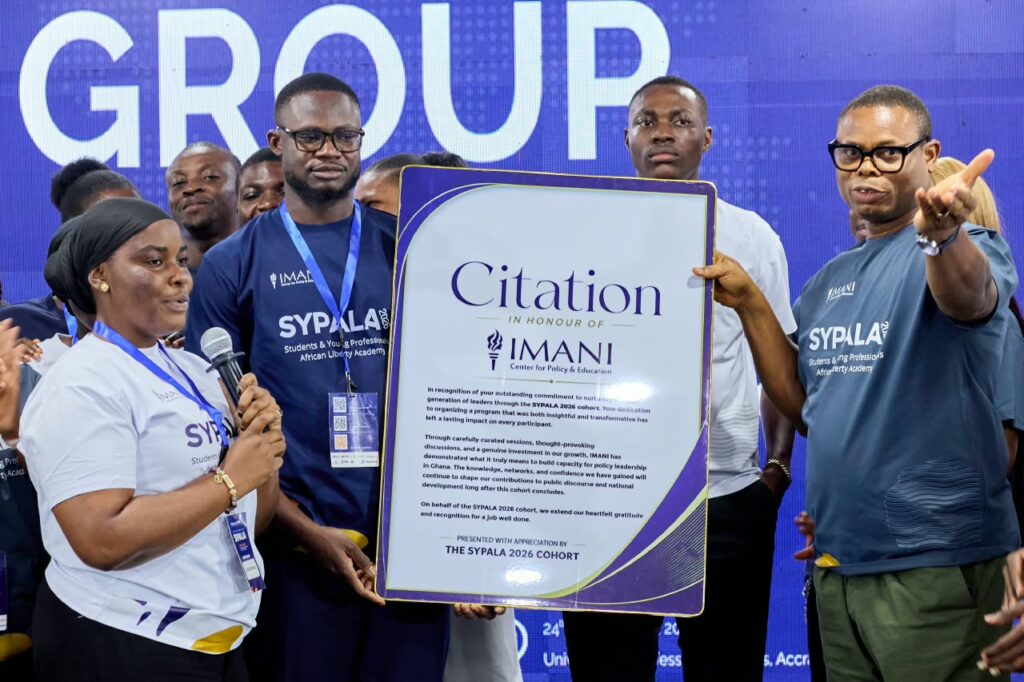
The cohort subsequently presented Mr Cudjoe with a Citation of Appreciation, recognising IMANI's contribution to strengthening their capacity for policy leadership.
Latest Stories
-
In the matter of my first year at the Bar
38 seconds -
ActionAid Ghana calls for an end to child marriage, greater investment in girls’ rights
6 minutes -
Newsfile to tackle World Cup visa scandal, beach demolitions, education strikes, BRICS bid
29 minutes -
UK-Ghana Trade & Investment Summit: Trade Resource Centre to help businesses maximise UK-Ghana trade opportunities
44 minutes -
Embassy of Denmark celebrates World Maritime Day
51 minutes -
Linking LEAP to productive inclusion could cut extreme poverty by 2030 – UNICEF
2 hours -
Trade Ministry backs use of creative arts to rehabilitate prison inmates
2 hours -
Negotiations with government to continue despite strike suspension – GNAT
2 hours -
‘Ghana cannot afford to waste public resources; every cedi has a job’ – Ato Forson
2 hours -
Ghana expects economic boost as World Assemblies of God Congress brings 10,000 delegates to Accra
2 hours -
Joy in Nayilifong as Farouk Aliu Mahama donates 100kVA transformer to improve power supply
3 hours -
Chief Justice urges employers to tackle mental health stigma in workplaces
3 hours -
Analysis: Ghana’s yellow fever numbers reveal a gap between vaccination and protection
4 hours -
Education Ministry welcomes suspension of teachers’ strike
4 hours -
Vice Chancellors Ghana appeal to striking university administrators to resume work
4 hours