

Audio By Carbonatix
Korea International Cooperation Agency (KOICA) CHPS+ Project that seeks to strengthen the capacity of Ghana's health system in the Upper East Region to deliver high-quality care has ended.
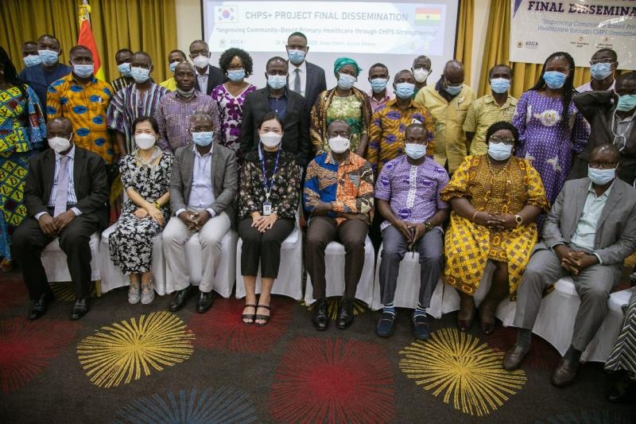
The Final Dissemination of the CHPS+ Project which was held in Accra to mark the closing of the five-year project provided a platform to share impacts and lessons learned during the implementation period.
A statement from KOICA Office and copied to the GNA in Accra said the five-year (2016 -2020) project focused on strengthening the regional health system for primary healthcare delivery.
It involved community health volunteers and management committee, maternal, newborn and child health, provision of basic equipment and infrastructure, as well as technical training and capacity building of the health workforce.
Dr Winifred Ofosu, the Upper East Regional Health Director, in his remarks at the event, noted that CHPS+ Project was one of the most comprehensive projects that covered all the cascading health system and same took care of the administrative and health management system.
Dr Ofosu said he was impressed with the transparency level and autonomy that the Project instilled in the implementing partners such as Ghana Health Service and Upper East Regional Health Directorate.
“KOICA Ghana Office was grateful to the Ministry of Health, Ghana Health Service (HQ and Upper East), Navrongo Health Research Center, UNOPS, and PWC as well as all health workforce and community members in the Upper East Region for their commitment and selfless dedication to the project.
We hope to continue to support Ghana to achieve its Universal Health Coverage by 2030,” the statement said.
The statement said during the project’s life span, more than 2,700 health workforces (administrative, nurses, midwives, and doctors) in the area of health management, essential newborn skills, and CHPS operation, as well as more than 3,000 community members in CHPS operations, were trained.
The project also provided more than 2,900 essential medical equipment ranging from basic delivery kits, baby warmers, suction machines, anaesthesia, and ultrasound machines to 120 CHPS zones, health centres, and district hospitals in the Upper East Region.
According to the statement, the project supported the Region with four vehicles, 171 motorbikes, 820 bicycles, and 80 community tricycle ambulances to support the health outreach and monitoring activities of the health workforce.
The Project has improved the availability of basic equipment and delivery and Emergency Obstetric Care (EmOC) services that health facilities offered and the same had a strong effect on measles and DPT3 vaccination coverage.
“The deployment of community tricycle ambulances has reduced delays in case of referrals by three hours,” the statement said.
Latest Stories
-
HAPPY Programme empowers 160 young women through poultry value chain in Upper West
4 minutes -
Researchers urged to make academic work useful beyond journals
21 minutes -
Unemployed man gets six-month jail term for committing three offences
35 minutes -
Chaos mar NDC branch elections in Assin Central Constituency
4 hours -
Wontumi knew he would be convicted – Appiah-Kubi
4 hours -
GIMPA graduates tasks to master modern digital tools to be competitive
4 hours -
Oti High Court adjourns NPP Krachi East Organiser election dispute to October
4 hours -
Court issues bench warrant for man accused of threatening EOCO staff
4 hours -
Vice President Opoku-Agyemang engages Ghanaians in Maryland, United States
4 hours -
UG graduates urged to uphold integrity, excellence
4 hours -
Gabonese President to begin three-day official visit to Ghana on July 28
4 hours -
Accra-Tema residents advocate stricter enforcement of sanitation laws
4 hours -
Financing key to unlocking Africa’s energy potential – John Jinapor
4 hours -
Opoku-Agyemang delivers keynote address at Sister Cities International 70th anniversary
4 hours -
Government urged to establish community autism units
4 hours