

Audio By Carbonatix
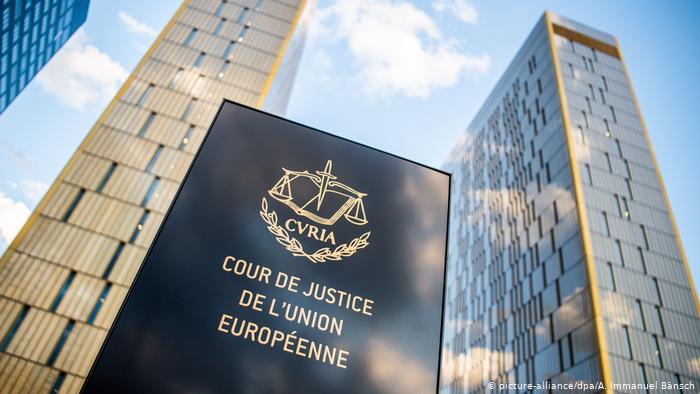
The European Court of Justice has ruled that unaccompanied minors may only be sent back to their country of origin if there were "adequate reception facilities." Otherwise, the court said, they should be allowed to stay.
In a ruling on Thursday, the European Court of Justice (ECJ) in Luxembourg said member states should only be able to deport unaccompanied minors where they could ensure that relatives or an appropriate institution in the home country would receive the child.
The court ruled that such deportations — even if they did not take place until the minor reaches the age of 18 — did not sufficiently take into account the best interests of the child. As a result, the court ruled, the practice was not compatible with EU law.
"Such a minor would thus be placed in a situation of great uncertainty as to his or her legal status and his or her future," the Luxembourg judges said.
The court specifically rejected the Dutch practice of dealing with underage asylum-seekers and migrants who are not entitled to refugee protection.
For children under 15 years of age, suitable reception options in the country of origin are examined. Only if a suitable one is found will a "return decision" be issued.
However, for those over 15, Dutch authorities wait for the age of majority before returning minors to their origin country without inquiring where they will end up.
Young migrant's challenge to decision
A refugee aged 15 years and 4 months at the time filed a complaint against such a return decision. The boy said he had been born in Guinea but later lived in Sierra Leone with an aunt who had died. He then left for Europe.
The young man claimed to have been the victim of human trafficking and sexual exploitation, suffering serious psychological trauma as a result. However, Dutch officials decided he was not eligible for a fixed-term residence permit, refugee status or subsidiary protection.
His appeal was on the grounds that he did not know where his parents lived and would not be able to recognize them upon his return.
In their decision, the judges said, member states "must necessarily take into account the best interests of the child at all stages of the procedure, which entails a general and in-depth assessment of the situation of that minor being carried out."
The court ruled that deportation with no suitable reception facility would affect the individual's schooling and his connection with a foster family in the host country.
"It follows that, if such reception facilities are not available in the state of return, the minor concerned cannot be the subject of a return decision."
The court also ruled that EU countries should not distinguish between different groups of minors merely based on their age.
Latest Stories
-
Make loyalty to NPP a permanent culture, not an election-season tactic – Joseph Cudjoe
7 minutes -
NPP delegates want reform without destroying party’s reputation – Joseph Cudjoe
9 minutes -
Salomey Awiti Baffoe granted GH¢100,000 bail over alleged false news publication
13 minutes -
NPP is for all social classes, not just the middle class – Mike Oquaye
19 minutes -
Freezy Mɑcbones wins WBO Africɑ Light Heɑvyweight title in Lɑgos, Nigeria
21 minutes -
John Boadu is ‘an exceptionally gifted political figure’ – Prof Mike Oquaye
38 minutes -
NDC must study NPP congress closely for strategic lessons – Mustapha Gbande
44 minutes -
NDC has built strong structures to face any electoral challenge – Mustapha Gbande
54 minutes -
John Boadu can appeal across Ghana’s social groups – Prof Mike Oquaye
1 hour -
‘Electing Kojo Bamba is backward politics’ – Mustapha Gbande
1 hour -
Government must order payment of promoted teachers’ salaries – GNAT
1 hour -
Meet Sethina Edem Sunu, the healthcare professional eyeing the NDC UK & Ireland deputy organiser role
1 hour -
The myth of ‘sophisticated customer experience’ in the digital age
2 hours -
What happened to lands reserved for sanitary sites? -WasteCare CEO calls for audit
2 hours -
Manasseh Writes: The shift in the NPP
2 hours