

Audio By Carbonatix
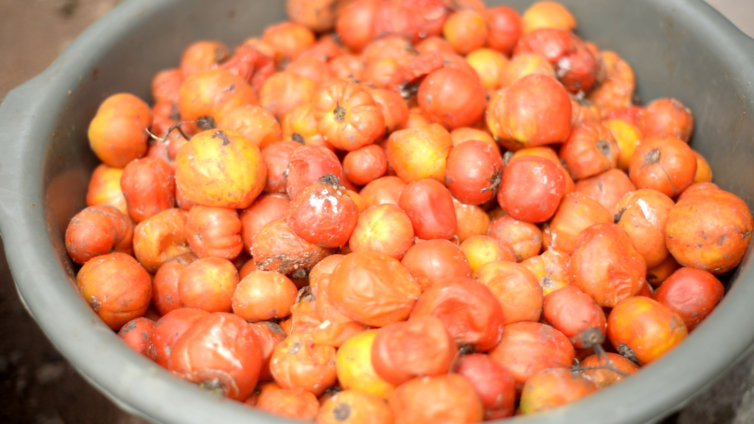
Consumption of spoiled tomatoes is on the increase with more patronage by some commercial food operators in Ghana.
Spoiled tomatoes may have higher nutritional and healthful plant-based chemicals than fresh tomatoes but are highly contaminated with harmful microbes, thus not safe for consumption.
That is the conclusion of a study by the Kwame Nkrumah University of Science and Technology (KNUST), Kumasi, with sponsorship from the Foundation for Food and Agriculture Research and Rockefeller Foundation.
Consumption of tomatoes provides health benefits. However, they’re highly perishable due to their high moisture content, soft nature, postharvest handling and are highly prone to microbial contamination.
The study was undertaken to determine the nutritional and phytochemical compositions of fresh and spoiled tomatoes. In addition, the researchers also sought to determine the levels of microbial load in sampled tomatoes.
For the study, fresh tomatoes and spoiled tomatoes were obtained from different tomato sellers at Borla Market in Kumasi in the Ashanti region of Ghana and analysed.

The researchers found all the spoiled tomatoes had considerably higher levels of nutrients (crude fibre, higher potassium, and high folic acid) as compared to the fresh tomatoes except for moisture and vitamin C.
Again, higher levels of plant-based chemicals known as phytochemicals were found in the spoiled tomatoes, particularly lycopene, beta carotene and chlorogenic acid.
The researchers attribute the results to advance ripening and moisture loss in spoiled tomatoes.
“As ripening goes on, these phytonutrients are synthesized,” lead scientist Prof. Faustina Dufie Wireko-Manu of the KNUST Food Science and Technology said.
The researchers, however, warn spoiled tomatoes are highly contaminated with harmful microbes.
“We found the spoiled tomatoes were contaminated with molds, E Coli and other harmful bacteria, beyond recommended levels by Foods and Drugs Authority (FDA).
"They’re highly contaminated with microbes and therefore not safe for human consumption,” explained Prof. Faustina Dufie Wireko-Manu.
Latest Stories
-
GNFS contains fire outbreak at Teshie Lekma Road near Lekma Hospital
4 hours -
Samia Nkrumah rejects the narrative that Ghanaians were happy after Nkrumah’s overthrow
5 hours -
A Mother’s pain: Tribute by Ivan Baidoo’s mother
5 hours -
‘Forgive us for staying away’ — Samia Nkrumah leads family back to Nkroful, pledges to preserve Nkrumah’s legacy
6 hours -
Ernest Nuamah scores twice as Lyon beat Rennes
6 hours -
‘My dear Ivan’ – A father’s tribute to a son tragically killed
6 hours -
GNPC Explorco advances Voltaian Basin drilling preparations with 13.5km access road
6 hours -
Cabinet approves facility manager for Borteyman Sports Complex – Kofi Adams
7 hours -
Sanitation is improving; critics may be ‘living in another world’ – Salaga South MP replies Bekwai MP
7 hours -
Government must do more to tackle sanitation crisis – Bekwai MP
7 hours -
World Cleanup Day: GFF begins sanitation education in local communities
7 hours -
EU Ambassador, IGP discuss stronger cooperation on policing and security
7 hours -
Africa Nations Volleyball Championship: Ghana set up quarterfinal clash with Cameroon after beating Chad
7 hours -
Meet Dr Benjamin Appiah Osei — Ghana’s three-time tourism awards winner
8 hours -
UEFA & CONCACAF demand Fifa pays $10m to all 211 members
8 hours