

Audio By Carbonatix
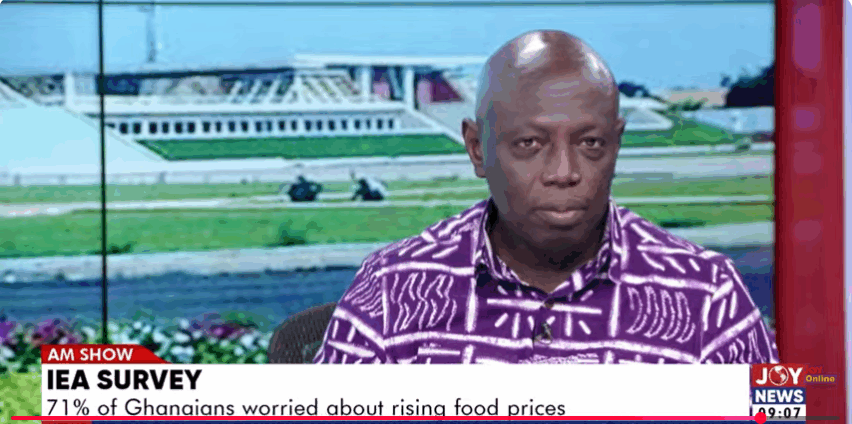
The Dean of the Faculty of Accounting and Finance at the University of Professional Studies, Accra (UPSA), Isaac Boadi, says many Ghanaians continue to face economic hardship because the prices of goods and services remained unchanged despite a sharp decline in inflation.
Speaking on the JoyNews AM Show on Friday, February 13, Prof Boadi explained that the recent drop in headline inflation to 3.8% does not mean the cost of living has reduced, stressing that inflation measures the rate of price increases rather than an actual fall in prices.
“People are going through hardship,” he said, insisting that the decline in inflation has not translated into relief for consumers at the market.
According to him, many people wrongly assume that a fall in inflation automatically leads to cheaper goods and services. However, he explained that inflation only reflects how fast prices are rising.
“When you record a reduction in inflation, it does not mean prices of goods and services have gone down. It only means the pace of increase has reduced,” he stated.
Prof Boadi noted that the cost of living remains a major concern for most households, estimating that nearly nine out of every 10 Ghanaians are struggling with the rising prices of goods and services. He added that both food and non-food items continue to put pressure on consumers.
He also expressed concern about rising unemployment, which he believes is worsening the economic situation and contributing to the hardship experienced by citizens.
The economist further questioned reports suggesting price declines in some parts of the country. He cited data indicating negative inflation or deflation in the Oti Region, Savannah Region and Upper North
Region, which typically suggests falling prices. However, he said the general market conditions do not reflect significant reductions in the cost of commodities.
He cautioned against celebrating the inflation figures without considering the lived experiences of citizens.
“So we should not be celebrating the headline inflation figure of 3.8%. When you go to the market, prices are still high,” he stressed.
His comments come amid ongoing national discussions about Ghana’s economic recovery, cost of living pressures, and the impact of inflation trends on households and businesses.
Prof Boadi emphasised that while official data may show improvements in key economic indicators, the persistent rise in the prices of goods and services means many Ghanaians continue to struggle to meet their daily needs.
Latest Stories
-
Journalists look back on a decade of breast cancer reporting in Ghana
15 minutes -
President Mahama ends Resetting Ghana tour of Ahafo Region
2 hours -
African negotiators seek delivery of climate commitments at COP31
2 hours -
BoG develops AI rules for financial sector
2 hours -
‘Big Push’: Government assures contractors of prompt payments
2 hours -
Court fines miner for breaking into gold buying shop
2 hours -
Tarkwa court jails labourer for three years over GH¢123,000 theft
3 hours -
GAEC must retain nuclear scientists for Ghana’s nuclear ambitions – Minister
4 hours -
Man reportedly mistaken for game and shot by hunter dead in forest
4 hours -
19-year-old mason jailed 15 years for defiling seven-year-old pupil
4 hours -
Ghana’s banking sector assets rise 20.47% to GH¢500.2bn – BoG Governor
4 hours -
22 injured as Sprinter bus overturns at Sege after tyre burst
4 hours -
UN housing expert urges Ghana to strengthen Rent Control Department amid housing affordability concerns
4 hours -
Delta-BCI partnership reaches 166,000 people with breast cancer education
4 hours -
Power restoration fault suspected in Kumasi Central Market fire
10 hours