

Audio By Carbonatix
Somewhere in Ghana today, a baby is being born with clubfoot. Chances are, her family has never heard of it.
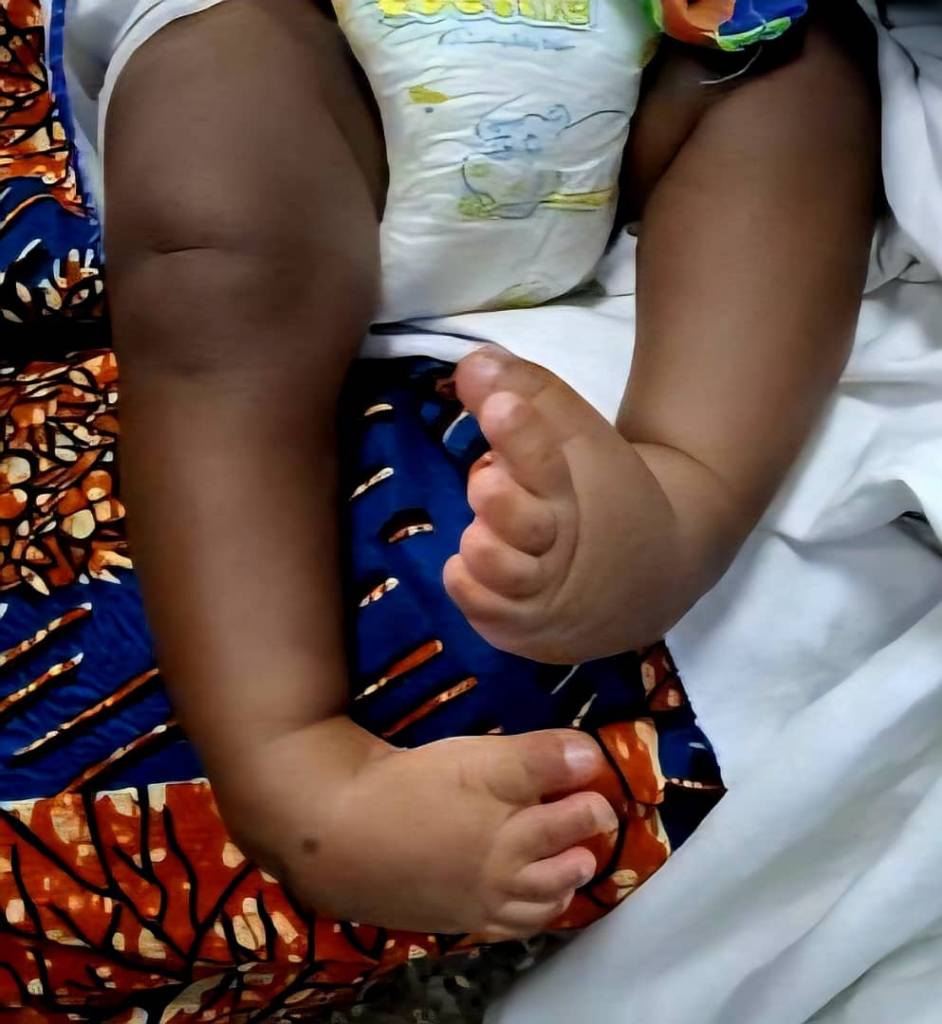
Her feet will be twisted inward and downward, a condition as old as human history, yet one that most Ghanaians still cannot name. In many homes, the grandmother will say the child will grow out of it. In others, a neighbour will suggest a traditional remedy. In some, the family will quietly pull the curtains and grieve in silence, afraid of what the community will say. And in each of those homes, a clock begins ticking, because the longer the treatment waits, the harder it becomes.
This is not a rare story. Every single year, approximately 1,000 babies are born with clubfoot in Ghana. That is roughly three children every day, three families plunged into confusion, fear, and a search for answers that far too many never find in time.
Yet here is a truth that must be heard in every community across Ghana, spoken in every language, broadcast on every radio station, and shared in every WhatsApp group: clubfoot is treatable. The treatment works. And for children under five, it is completely free.
The Mothers Who Travel for Miles, and the Children Who Arrive Too Late
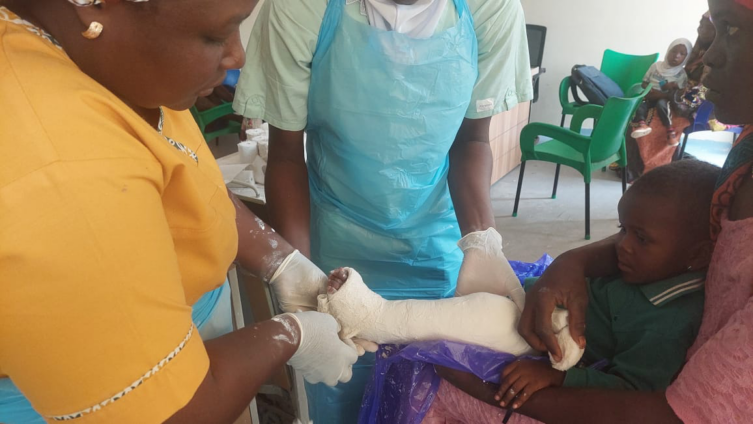
Across Ghana’s clubfoot clinics, the same scenes repeat themselves week after week. A mother arrives clutching a child who is already two, or three, or four years old, a child who has spent the first precious years of their life without treatment, because nobody told her it existed.
She did not fail her child. She simply did not know.
Some of these mothers heard about the clinic from a friend at church. Others saw a post on Facebook. A few heard something on the radio and wrote down a number. Many more spent months moving from one health facility to another, being sent away without a referral, without a name, without a direction to go.
“We meet caregivers who have spent months searching for answers. We meet children who arrive years after birth because no one identified the condition early enough. Many parents tell us they were never referred. Others say they were unaware that clubfoot could be treated at all.”
These are not stories of negligence. They are stories of families who have not yet been reached with timely information and access to treatment, and of a health system that is still working to ensure that every child born with clubfoot receives the care they need to walk, thrive, and reach their full potential.
Because when a child with clubfoot does not receive treatment early, the consequences are not temporary. They are lifelong. The child struggles to walk. School becomes difficult, then impossible. Employment narrows. Social participation shrinks. A condition that could have been corrected in weeks becomes a disability that defines an entire lifetime.
18 Years of Quiet Miracles
Since 2008, the Ghana Clubfoot Program, implemented by the Christian Health Association of Ghana (CHAG) in partnership with Hope Walks, has been working to prevent exactly that kind of tragedy.
The results are extraordinary. Over 18 years, more than 9,000 children have been treated and transformed. Nine thousand children who might otherwise have grown up with untreated disabilities now run, jump, dance, attend school, and plan futures without limits.
The method used is the internationally recognised Ponseti technique, a series of gentle casts that gradually reshape the foot, followed by a brace to hold the correction and prevent relapse. It is non-surgical in most cases. It is safe. And when started early, its success rate is remarkable.
“Behind every number is a story. A child who can now run with friends. A student who can walk to school. A parent whose fears have been replaced with hope. A family whose future has been transformed.”
The Stigma that Steals Years from Children
One of the cruellest aspects of clubfoot in Ghana is not the condition itself, but the misconceptions that surround it. In some communities, children born with clubfoot are viewed as cursed, and their is wrongly interpreted as punishment for a parent's wrongdoing. Fear of stigma and judgment has led some families to hide their children, while mothers often bear the burden of blame. None of this is true. None of it is deserved.
Clubfoot is a medical condition. It develops before birth, for reasons that are not fully understood, and has nothing to do with what a parent did or did not do. It is not a curse. It is not a sin. It is not a punishment. It is a treatable condition that requires timely care, understanding, and a community willing to replace stigma with support.
Every week of stigma and silence is a week of treatment lost. Every month of delay makes the correction harder. The children who pay the highest price for our collective ignorance are the ones who had no say in being born at all.
WHAT YOU SHOULD KNOW ABOUT CLUBFOOT
- Clubfoot is present at birth; one or both feet are turned inward and downward
- It is one of the most common congenital conditions, affecting roughly 1 in 1,000 births
- If untreated, it causes lifelong difficulty with walking, education, and employment
- Treatment is most effective when started early one week after birth
- The Ponseti Method involves gentle casts over several weeks, minor surgical procedure.
- Treatment is FREE for children under five at CHAG–Hope Walks partner clinics
- Over 9,000 Ghanaian children have already been successfully treated
A Call That Must Be Answered
This World Clubfoot Day, the Ghana Clubfoot Program is not asking for sympathy. It is calling for action; specific, practical, and urgent.
We call on midwives, nurses, doctors, community health workers, and all frontline healthcare professionals to examine every newborn's feet and make referrals without hesitation. A few moments of observation at birth can save a child from a lifetime of disability.
We call on parents and caregivers who suspect something may be wrong with their child's feet to seek medical attention immediately; not to wait, not to rely solely on traditional remedies, and not to suffer in silence. When it comes to clubfoot, early treatment changes everything.
We call on pastors, imams, chiefs, traditional leaders, and community influencers to speak openly about clubfoot. Help families understand that it is treatable, not a curse, and that free treatment is available.
And we call on the media to continue using its powerful voice to educate, inform, and inspire action. Every story shared, every interview aired, and every awareness message broadcast has the potential to connect a child to life-changing treatment.
The solution exists. The treatment works. The opportunity is before us.
The responsibility now belongs to all of us. More than 9,000 have already made it. The question is not whether the treatment works. The question is whether we will ensure that the next 1,000 babies born this year are not left behind.
************
The writer, Nana Afua Adutwumwaa Adjetey, is the Program Manager, Ghana Clubfoot Program (CHAG–Hope Walks)
Latest Stories
-
Teacher unions reject government plea, vow to stay home until salaries reflect on payslips
5 minutes -
Passengers decry non-uniform charges after 8% transport fare increase
12 minutes -
IDP Foundation partners with Opportunity International to expand the Rising Schools Program to Northern Ghana
13 minutes -
We Should Say No to Floating Nuclear Reactors, and Yes to Patience
20 minutes -
33-year-old phone dealer murder investigation reveals fight, burnt body and sale of iPhone 12
21 minutes -
You can’t build a winning team if you change every call-up – Carlos Quieroz
26 minutes -
Teachers’ strike: All outstanding issues to be addressed at meeting – Education Ministry assures
27 minutes -
AFCON 2027Q: ‘I was not happy that Ghana lost to Côte d’Ivoire’ – Carlos Queiroz
35 minutes -
GPL Matchweek: Aduana’s Osei Kufuor, 8 others win TV sets as NASCO Men of the Match
36 minutes -
Ghana urged to harness AI to transform tourism
38 minutes -
Four killed in Accra-Kumasi Highway crash at Anyinasin Junction
39 minutes -
Jetour set for wider presence in Ghana as Swiss Group plans more showrooms and workshops
41 minutes -
Tinting front windscreens is illegal – ACP Alexander warns motorists
46 minutes -
Your HR Department already has the answer. The problem is finding it
47 minutes -
AFCON 2027Q:‘Qualifying for one or two tournaments is not a sign of success’ – Carlos Queiroz
50 minutes