

Audio By Carbonatix
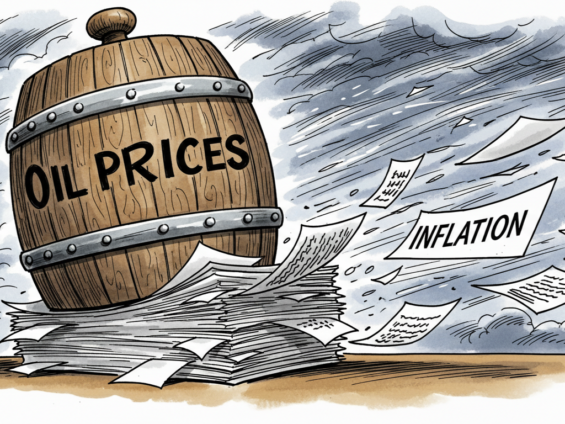
The Bank of Ghana is concerned that the inflation rate could rise above 10 percent by the end of this year if crude oil prices continue to increase on the international market.
This was captured in an internal projection model that often guides the monetary policy decisions of the Bank of Ghana, as well as its Inflation Targeting Framework.
The model, under one scenario, noted that if the price of crude oil remains above 100 dollars throughout the month of June, it could present challenges for inflation in the coming months.
If inflation were to inch above 10%, it would breach the Bank of Ghana’s upper bound target band for inflation this year and over the medium term.
JOY BUSINESS is learning that these are among several scenarios developed by the Bank of Ghana to guide its monetary policy decisions and should not be viewed as a major concern for the central bank.
There are also concerns about the impact of rising crude oil prices on petroleum products, the pass-through effect on transport fares, and the quarterly utility tariff review, all of which could add further pressure to inflation in the coming months.
Impact
If this forecast is anything to go by, it could influence members of the Monetary Policy Committee to vote for a policy rate hike or maintain the rate at its current level during their next meeting, scheduled for July 20 to 22, 2026. The meeting will conclude with a policy decision.
Should the Bank of Ghana decide to increase the policy rate, it could have a negative impact on interest rates in the country.
The Ghana Reference Rate for May 2026 stood at 10.03%, and there are concerns that it could rise further in the coming months.
Bank of Ghana Governor Dr. Johnson Asiama, during an engagement with businesses and investors at the Ghana-UK Investment Summit, noted that recent developments in the Middle East may force the Monetary Policy Committee to "pause" policy rate cuts.
He, however, assured stakeholders that if conditions normalize soon, the committee could react quickly and proceed with its rate review.
Some analysts have warned that the biggest threat to Ghana’s economic stability at the moment could be developments in the Middle East if the situation does not improve soon.
Latest Stories
-
St Augustine’s College retain National Investment Quiz title after nail biting grand finale
6 minutes -
Education infrastructure investment will drive Banda’s development – Ahmed Ibrahim
13 minutes -
Teacher unions strike: Gov’t presents fresh proposals as talks end inconclusively
55 minutes -
51,000 teachers’ promotion arrears to be validated for October payment – Education Minister
1 hour -
Kwabena Boamah appointed Board Chair for Impact Investing Ghana
2 hours -
Striking teacher unions to meet Fair Wages and Salaries Commission on October 6
2 hours -
EOCO working with AG to arraign Nana Baffour Awuah before weekend court
2 hours -
Duraplast reassures customers after fire, announces October 5 reopening
2 hours -
Call off strike, gov’t will not renege on promotion arrears pledge – Haruna Iddrisu appeals to teacher unions
2 hours -
Committee set up to validate teachers eligible for 20% deprived-area allowance – Education Minister
2 hours -
Five-member committee to search for new Black Stars coach after Sports Ministry-GFA meeting
3 hours -
Pinktober: Breast cancer survival exceeds 90% when detected early – Breast Society of Ghana
3 hours -
TCDA to adopt Upper West’s MATCO mango farm as northern prototype, issues warning against felling shea trees
3 hours -
‘Fear delegates’ tag: Afoko touts genuineness among delegates ahead of NPP delegates conference
3 hours -
John Boadu: The leader our party needs at this time – Amb. Edward Akwasi Boateng
3 hours