

Audio By Carbonatix
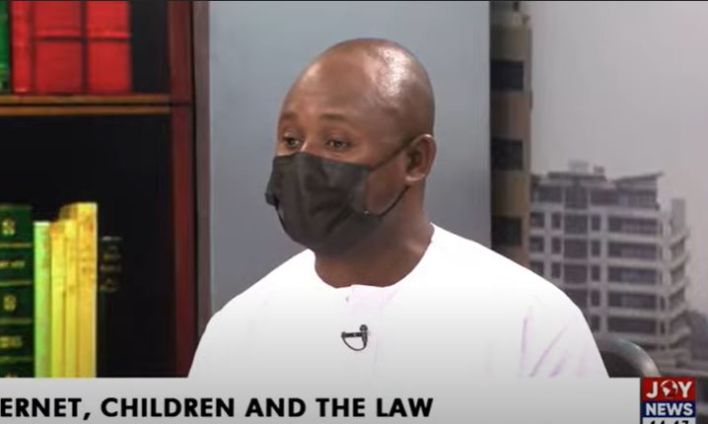
Lead Capacity Building and Awareness Creation Department of the Cybersecurity Authority, Alex Oppong, has warned of the increasing risk of anonymity on the internet in recent times.
Speaking on The Law on Sunday, he urged parents to put in more effort to ensure the safety of their wards when they are surfing through the internet due to the anonymity the internet provides.
“One of the things that all of us will be aware of is the fact that what the internet does provide for everyone in terms of its use is anonymity.
“So someone can be sitting behind the computer, be chatting with a child. The person sitting could be 30 or 40 years but pretend to be a 13-year-old,” he said whiles giving a possible situation.
According to him, those ‘internet stalkers’ engage children to gather information about “what children like, the kind of things that would allow them to continue the conversation that they’ve already started.”
Mr Oppong stated that these stalker behaviours, from the perspective of Cyber Security when investigating crime, show the intent to commit a specific type of crime.
He added that “when the investigation goes through, and it’s found that the person is guilty, there able to face the law to its fullness if possible.”
He cited an instance of gaming. He said: “A lot of gaming communities, children are not aware who they are playing with, and they are also talking to, and probably because the person is an adult, they are good at the game, and they would start with things like I can show you few tricks to get more points for your avatar.”
He stated that “Those conversations would draw the child to the particular member of the gaming community that they fall within”, therefore the need for parents to keep a watchful eye on their children.
Meanwhile, the Cybersecurity Act, 2020 (Act 1038) states that “a person shall not use an online computer service, an internet service, or a local internet bulletin board service or any other electronic device to compile, transmit, publish, reproduce, buy, sell, receive, exchange, or disseminate the name, telephone number, electronic mail address, residence address, picture, physical description, characteristics, or any other identifying information on a child in furtherance of an effort to arrange a meeting with the child for the purpose of engaging in sexual intercourse, sexually explicit conduct, or unlawful sexual activity."
It continues to add that any person who goes against this provision “commits an offence and is liable on summary conviction to a term of imprisonment of not less than five years and not more than 15 years.”
Latest Stories
-
Children among 109 dead after boat capsizes off Djibouti, UN says
1 minute -
OmniBSIC Bank’s 11th health walk promotes fitness and business growth
11 minutes -
2026 World Maritime Day: Danish Embassy organises “The Gulf of Guinea Speaks”
33 minutes -
New Economy will tackle unemployment and restore hope – Ato Forson
38 minutes -
IMMILAC president recounts personal losses as security women lead breast cancer awareness campaign in Wa
46 minutes -
University of Ghana postpones October 12 reopening as GAUA strike persists
60 minutes -
Bahass Foundation launches vocational skills training to support mental health recovery in Wa
2 hours -
NPP orders parliamentary aspirants and their supporters to suspend campaign activities
2 hours -
Techiman unites against child marriage: Joy Impact Makers Awardee leads charge on International Day of the Girl Child
2 hours -
Ghana Psychological Association calls for greater involvement of people with lived experience in mental health care
3 hours -
Ablakwa says Ghana could evacuate more citizens from South Africa if the situation worsens
4 hours -
Violence against girls must be tackled through individual responsibility – Gender advocate
4 hours -
Ghana’s BRICS bid must be guided by national interest – International Affairs Analyst
4 hours -
Journalists look back on a decade of breast cancer reporting in Ghana
5 hours -
President Mahama ends Resetting Ghana tour of Ahafo Region
7 hours