

Audio By Carbonatix
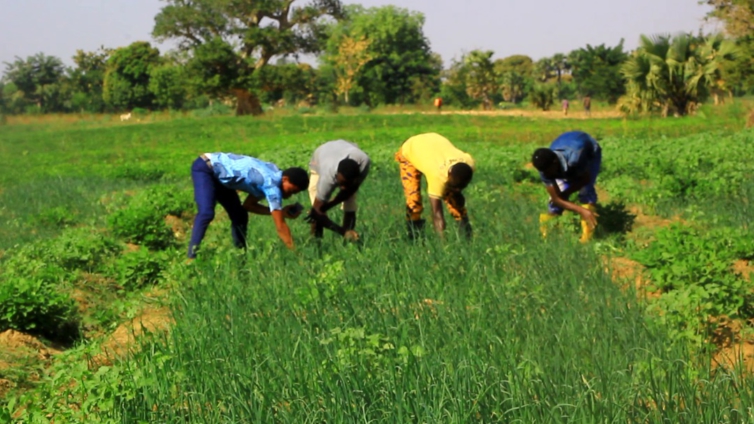
Food insecurity is concentrated in the five northern regions in the country, comprising, Upper East (48.7%); North East (33%); Northern (30.7%); Upper West (22.8%); and Savannah (22.6%).
These are findings from the 2020 Comprehensive Food Security and Vulnerability Analysis (CFSVA), implemented by the Ghana Statistical Service (GSS) in collaboration with the Ministry of Food and Agriculture (MOFA), with financial and technical assistance by World Food Programme and Food and Agricultural Organisation of the United Nations.
The regions with the highest level of food insecurity are also the areas most prone to adverse weather conditions, such as floods and droughts.
These regions are disproportionately affected by food prices during their lean season and bumper season.
The districts in the country facing the highest rates of food insecurity, among others are Kassena Nankana West (78.8%), Karaga (75.9%), Builsa South (74.5%), Tatale (68.4%), Bolgatanga East (66.3%), Kumbungu (61.2%), Jirapa (61.0%), Chereponi (60.3%), Tempane (59.2%) and Bongo (57.3%).
All these districts are in the aforementioned regions. Food insecurity is not only predominant in northern Ghana but there are also pockets of areas in Southern Ghana where the population are food insecure.
For instance, 71.4 per cent of the population in the Tarkwa-Nsuaem district in the Western Region are food insecure. Food insecurity is also prevalent in Ada West (35.9%) in the Greater Accra Region, Sekyere Afram Plains (34%) in the Ashanti Region, Ayensuano (31.7%) in the Eastern Region and Asunafo South (31.4%) in the Ahafo Region.
There are also striking regional differences in terms of absolute numbers. For instance, Ashanti Region had 6.2 per cent of its population being food insecure which translates into 369,096 people having limited access to sufficient and nutritious food for an active and healthy life.
This turns out to be the third region with the highest number of people who are food insecure following Northern (598,706) and Upper East (634,293) regions. Eastern Region also had 261,526 of its population being food insecure.
The CFSVA also revealed that households that depend mainly on agriculture as their source of household income, unskilled labour, household heads who are less educated and remittances dependent households are more likely to be food insecure.
As the world continues to face widespread food insecurity, achieving food security for all at all times is increasingly becoming complex. This calls for monitoring and evaluation of the food security status among the population.
In Ghana, Comprehensive Food Security and Vulnerability Analysis (CFSVA) has been conducted twice nationwide and one that targeted Northern Ghana to measure level of food insecurity among the population in 2012.
The study among others aimed to determine the prevalence of food insecurity in Ghana; determine how many people are food insecure; assess the trends over the waves; determine why they are food insecure to assess the dietary need of the population; help end hunger and ensure that people live healthily; address undernourishment among mothers and children and reduce child mortality and possibly, increase life expectancy.
This write-up was written by Dr. Peter Takyi Peprah, CFSVA Project Coordinator of Ghana Statistical Service.
Latest Stories
-
52-year-old South African arrested with suspected heroin after arriving from Accra
4 minutes -
Shatta Wale challenges UPSA students to build entrepreneurial mindsets
38 minutes -
Finance Minister advises African governments to strengthen regional tax cooperation
2 hours -
NPP accuses NDC of master-minding demolition of Ho regional office fence
2 hours -
Ghana plans stronger regional power trade with Nigeria
2 hours -
GRA Commissioner-General calls for stronger tax cooperation to boost regional revenue mobilisation
2 hours -
NACOC needs more personnel to tackle drug trafficking – Toobu
2 hours -
Railway workers resist KMA eviction order, demand consultation
2 hours -
Legacy Leadership Africa Institute to host boardroom women’s leadership programme
2 hours -
Ghana needs a law to sustain constitutional reforms – CDD-Ghana
6 hours -
COVID fumigation audit: Auditor-General has a lot of questions to answer – Akwatia MP
6 hours -
Stranded Ghanaian medical graduates in Cuba appeal to Mahama for immediate return
6 hours -
GNFS contains fire outbreak at Teshie Lekma Road near Lekma Hospital
12 hours -
Samia Nkrumah rejects the narrative that Ghanaians were happy after Nkrumah’s overthrow
13 hours -
A Mother’s pain: Tribute by Ivan Baidoo’s mother
13 hours