

Audio By Carbonatix
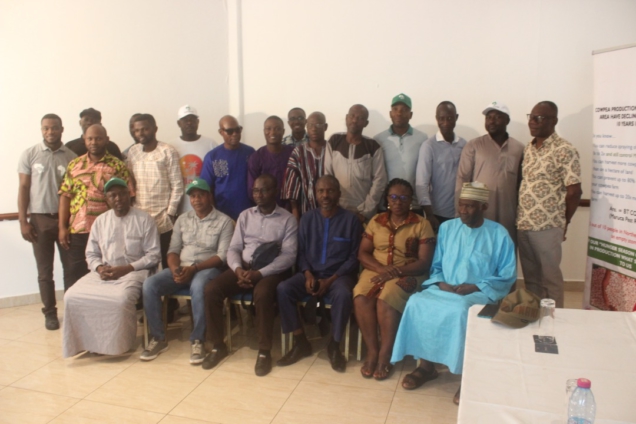
Open Forum on Agriculture Biotechnology (OFAB) Ghana, has partnered with the Council for Scientific and Industrial Research (CSIR), to organise a day’s sensitisation programme on Biotechnology and Genetically Modified Foods (GMOs) for some Muslim clergypersons in the Kumasi.
It was aimed, among others, at equipping the Muslim clergy members with the requisite knowledge and understanding of biotechnology in farming and agriculture to help effectively educate the general public to adopt the technology to ensure sustainable national food security and improved farmers' livelihoods.
Biotechnology involves the exploitation of biological processes for industrial and other purposes, particularly the genetic manipulation of micro-organisms to produce antibiotics, and hormones, among others.
Owing to the misconception about the adoption of GMO technology, OFAB believes that the training would enable the clergy members to significantly educate policy-making on agriculture issues through the provision of expert knowledge and facts.
According to OFAB, one tool, which is currently used to enhance biodiversity, is biotechnology. The technology covers various techniques and applications that allow variation and enhancement in living organisms to provide desirable products for humanity.
The one-day sensitisation programme, held with the Muslim clergy members in the Ashanti Region, was also to enable the clergy members to contribute significantly to neutralising the false impression, beliefs, and mystery surrounding the adoption of GMO products.
It brought together high-profile Muslim personalities and researchers from Council for Scientific and Industrial Research (CSIR) and Savanna Agricultural Research Institute (SARI).
Alhaji Professor Walter Alhassan, a senior statesman and former Director-General of CSIR, mentioned to the clergymen that the GM technology can be considered “Halal” in the Muslim faith.
The former Director-General, who is also a staunch Muslim, explained that GMO crops must be considered 'Halal', meaning pure for consumption by Muslims.
“Let’s all help promote the GM technology; it will help solve food security issues in Ghana and even beyond,” he said.
Latest Stories
-
Ghanaian evacuee from South Africa dies on arrival in Accra
3 minutes -
POS Foundation raises alarm over student cohabitation, sexual harassment on university campuses
1 hour -
Nandom NPP primary heats up as four candidates enter 2028 race
1 hour -
Mangione admits killing healthcare CEO and pleads guilty to federal charges
2 hours -
The Invite to The Odyssey: 12 of the best films of 2026 so far
2 hours -
Ayra Starr on her secret relationship and teasing Stevie Wonder
2 hours -
NPP Ashanti holds vigil in support of Wontumi as lawyers appeal conviction
2 hours -
TCDA targets higher crop yields as farmers receive inputs
2 hours -
Kofi Amoako Attah inducted into 11th Corporate Ghana Hall of Fame
2 hours -
Newsfile to discuss AKSA energy deal, legal vacation and GoldBod losses
3 hours -
Gushegu MCE says slain Yiidana was targeted as police investigate killing of chief and son
3 hours -
President Mahama reiterates commitment to link regional capitals with good roads
3 hours -
Ex-Cambridge professor at centre of plagiarism row found dead
3 hours -
ORAL doing fantastic job, Ghanaians will see results soon – Attorney General
3 hours -
TEWU gives government two weeks to address non-teaching staff grievances or face industrial action
3 hours