

Audio By Carbonatix
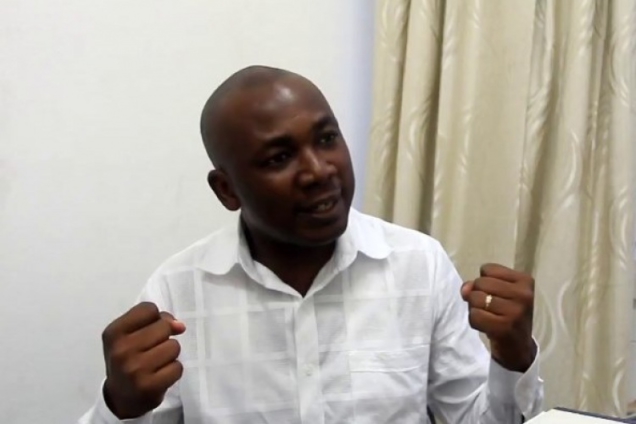
Economist and Economics Lecturer at the University of Ghana, Prof. Godfred Bokpin has predicted that this is not the last time the country will be seeking an International Monetary Fund (IMF) bailout.
He said this is due to the failure of successive governments to adopt prudent measures to stabilize the economy.
“This is not the last time we will be going to the IMF. We have failed as a country to successfully do the needful- to say these are the necessary fiscal reforms we need to pride ourselves as a nation that won independence in 1957,” he said on the Super Morning Show, on July 6, 2022.
Ghana has sought the assistance of the Bretton Woods institution 16 times already.
Contributing to discussions on the government’s decision to seek an IMF bailout, Prof. Bokpin recalled that in 2019 when the country was exiting the 16th IMF programme, government promised to roll out some reforms to restore the ailing economy.
"This won't be the last time we will go to the IMF, we have failed as a country successfully to the needful when we were in charge"
— Joy 99.7 FM (@Joy997FM) July 6, 2022
- Prof. Godfred Bokpin on Ghana and the IMF. #JoySMS pic.twitter.com/mltwGeXKva
However, failure to implement those measures has resulted in the current derailed economy.
“When we were exiting the 16th programme in 2019, government promised the IMF they were going to embark upon certain reforms – fiscal reforms, productivity-enhancing reforms and they satisfied the IMF that these were going to be done. The IMF agreed with them in principle and we exited successfully."
He noted that although government pledged to implement an Exemption Bill as part of the measures, this did not happen.
“The other thing they said was a Fiscal Responsibility Act. Inbuilt in that they talked about a Fiscal Council but then the Exemption Bill went to Parliament and government wasn’t really committed to passing the Exemption Bill. They only took it to Parliament to fulfil righteousness. The Bill was never passed,” Prof Bokpin stressed.
He also mentioned that although government promised to do proper supervision of the State-Owned Enterprises (SOEs) to reduce losses, this was not fulfilled.
“If you put all these together, you realise that how we are running our democracy is very expensive – that when it comes to the cost of running the government architecture, it leaves nothing for development activity.
“And if we continue like this, you’ll have to be unique to expect a different outcome and I’m sorry if we don’t take advantage of the next programme to make the necessary reforms, we will be there (IMF) again,” he added.
Latest Stories
-
Manhyia South constituents demand apology from EOCO over attempt to ‘unlawfully’ arrest MP
3 minutes -
Twelve women have been killed in one part of South Africa since July. Here’s what we know so far
6 minutes -
OMJ Foundation commits to supporting transport, safety and livelihoods of commercial riders in Akuapem South
9 minutes -
The Reciprocity crisis: Why Ghana welcomes British Professionals while the UK relegates ours
9 minutes -
GNAT rejects gov’t fresh assurances, demands implementation of August 31 agreement
19 minutes -
Gabriel Tanko Kwamigah-Atokple appointed Patron of NDC UK and Ireland Aldershot Branch
24 minutes -
Bawumia engages Ghana Medical Association on health workforce and licensing concerns
27 minutes -
SEC shuts down Nyak-City Hostels over unlicensed investment scheme
29 minutes -
The Ladder Project engages 60 UPSA student leaders on leadership and Ghana’s next chapter
31 minutes -
National Investment Quiz: St. Augustine’s, Prempeh College advance to semi-finals
36 minutes -
Leadership is about responsibility, not titles – Sammi Awuku tells UPSA students
38 minutes -
National Investment Quiz: Corpus Christi, Wesley Girls, advance to semi-finals
42 minutes -
Phone dealer murder: 3 suspects remanded as court adjourns Teshie case
45 minutes -
Seamless Technologies CEO Calls for Strategic AI adoption to transform Ghana’s financial services sector
48 minutes -
Cargill, ICI equip 111 youth with vocational skills to tackle child labour
49 minutes