

Audio By Carbonatix
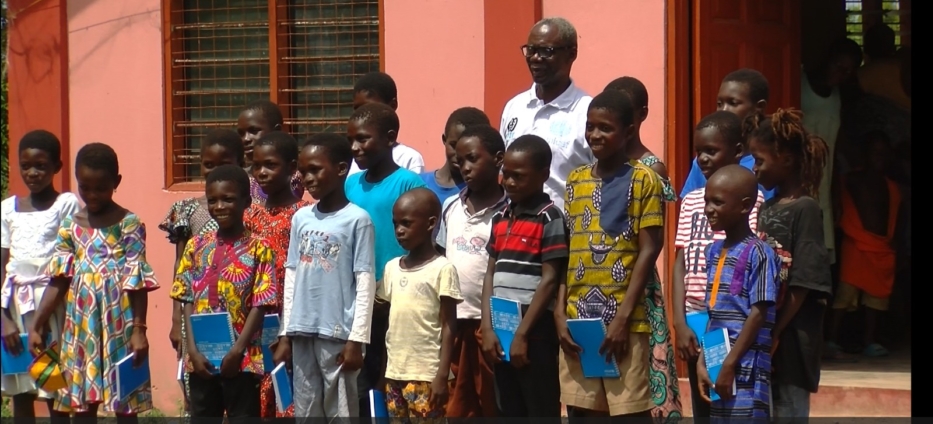
The right to education for thousands of school-going-age children, particularly in deprived communities in Ghana, is seeing a significant improvement. Many of these children, found in areas such as Afram Plains North in the Eastern Region and Builsa North in the Upper East Region, are now able to read and write in at least their mother tongue.
This progress is due to a host of educational interventions rolled out in selected districts by the Ghana Education Service (GES) with support from UNICEF Ghana and funded by the Jacobs Foundation.
Under the Communities of Excellence Programme, various stakeholders, including children of school-going age, school dropouts, facilitators, School Management Committees, traditional authorities, and District Education Oversight Committees, have the opportunity to receive training through specially designed interventions aimed at improving educational outcomes in their communities.
The Complementary Basic Education (CBE) and Differentiated Learning (DL) are two key initiatives under the Communities of Excellence Programme designed to enhance literacy and numeracy skills among primary school learners.
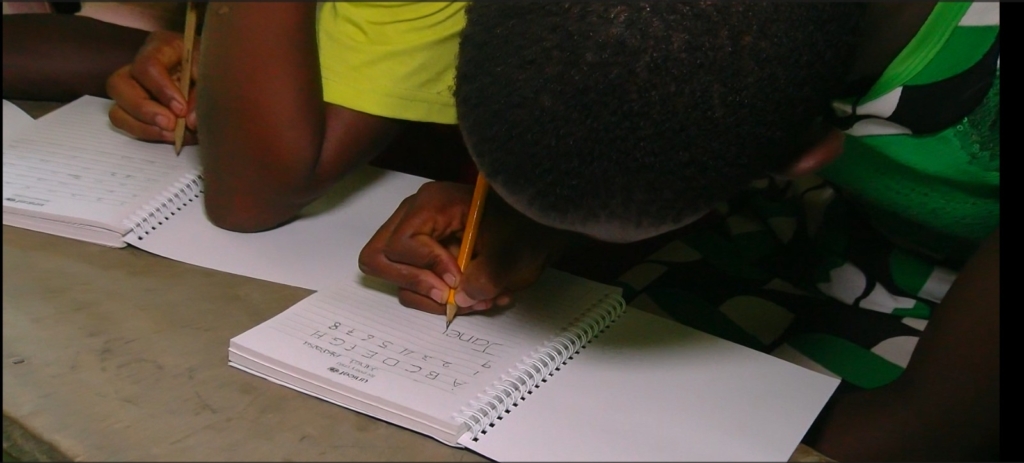
Under the Complementary Basic Education initiative, children who have never had a chance at education are assisted by specially trained facilitators at the community level. These facilitators help them learn the alphabet and their sounds, construct simple sentences, and read them in their mother tongue. This approach also nurtures their ability to identify numbers and perform basic arithmetic.
The Differentiated Learning (DL) module, on the other hand, encourages teachers to facilitate result-oriented learning through activity-based strategies in a more relaxed and playful manner. The focus is on the child’s ability rather than their age or grade level in school.
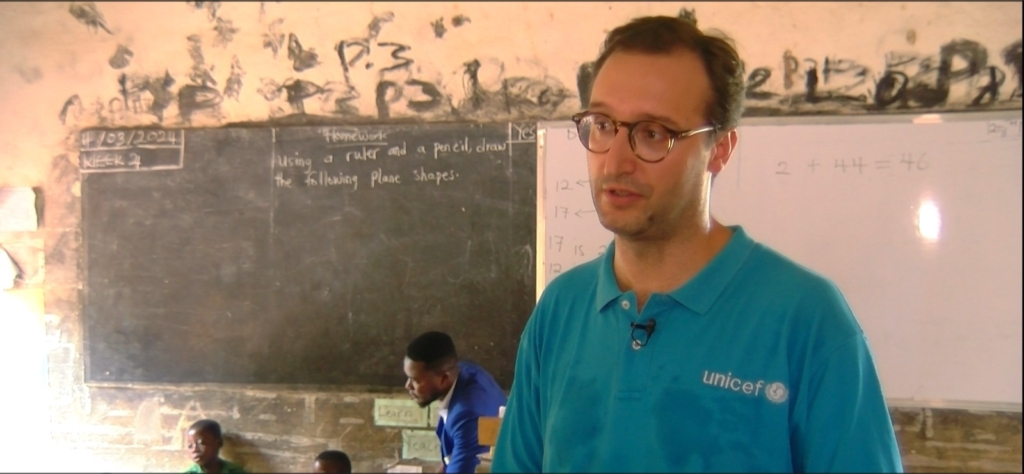
An Education Specialist with UNICEF and Project Lead for the Communities of Excellence Programme, Tillman Guenther, shared with JoyNews’ Emefa Ewoenam Atiamoah during a tour of some beneficiary schools that, "In total in Afram Plains North, we have more than 15,000 children who are part of eighty (80) primary schools in the district that have been part of the DL (Differentiated Learning) trainings." He added, "So far, within reading and writing in English, more than 8,000 children have moved up one level and about 6,000 have moved up in mathematics – so they have improved essentially." With regards to the Complementary Basic Education, Mr. Guenther added that "more than one thousand, one hundred (1,100) children have benefited'' from the initiative.
Kezia Asabea, head teacher of Donkorkrom EP Primary School in Afram Plains, confirmed the improved outcomes. She noted - "after introducing Differentiated Learning in our school for a little over a year, there’s been a lot of improvement in the learners' school work. Formerly, our learners could not read – during exams, teachers would have to read out the questions and explain to them, but with the inception of DL, there’s been an amazing improvement." She was particularly excited about the programme's structure, which allows children to be taught at different and progressive levels according to their abilities rather than their age or existing academic grading system.
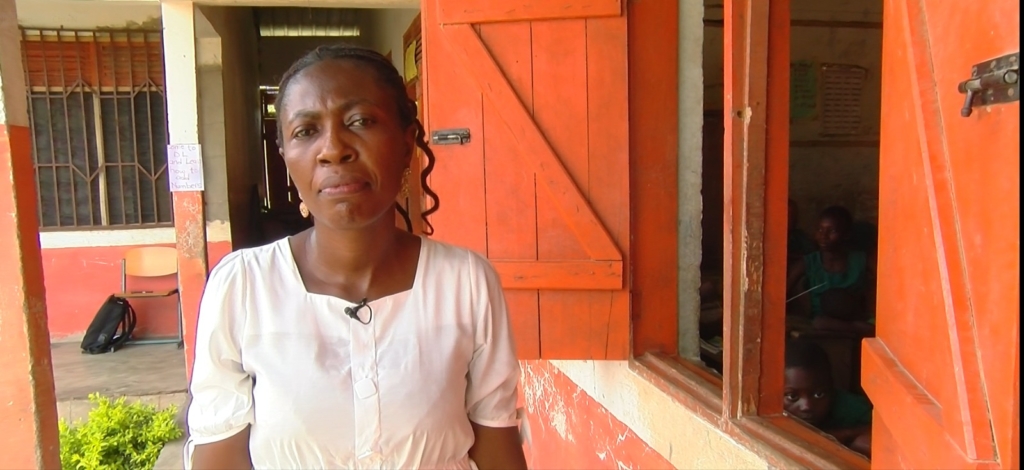
Kezia further explained, "before we started this programme, those who we say would be in level three were very few – they were about ten (10) at the lower primary, but with the inception of this programme, now those in level three, in English, they are more than fifty (50) at the lower primary."
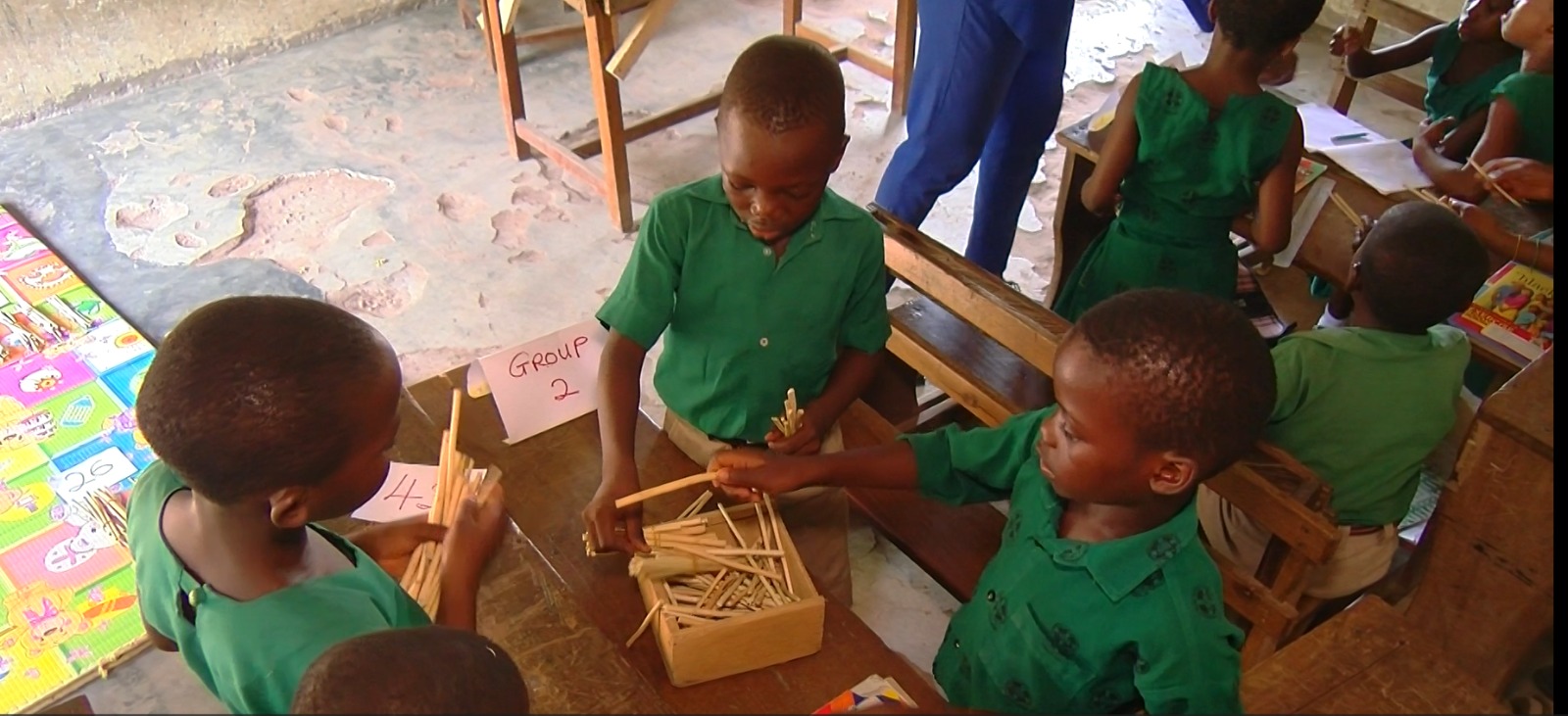
In a typical Differentiated Learning setting, the use of everyday objects such as sticks, counters, stones, smaller class sizes, and extended facilitator-learner interactive sessions are common features. Learners have ample time to learn through playful activities, with less focus on memorization and reproduction of information provided by the regular school teacher.
With the support of their facilitators, learners at the Donkorkrom EP Primary expressed the impact of these interventions on their academics on coloured cardboards posted on the walls and pillars of their school blocks, bearing inscriptions such as "DL Lesson will expand your mind," "Skip DL Class and forget your letter sounds", "Build your confidence through DL" among several others.

The Communities of Excellence Programme is expected to conclude by November 2024. The programme implementers, Ghana Education Service with from UNICEF Ghana and funded by the Jacobs Foundation, are optimistic that the impressive outcomes and positive responses from beneficiary communities and the Government of Ghana will be sustained to help preserve the gains made in the country’s education sector, particularly in deprived and hard-to-reach communities.
Latest Stories
-
JoyNews-Republic Bank Habitat Fair finale turns homeownership dreams into real possibilities
30 minutes -
Bamiri chief commissions KG block, guest house to boost education and revenue
48 minutes -
NSMQ 2026: Yaa Asantewaa Girls’ going ‘beck’ to Tanoso after Bishop Herman deals them early exit
1 hour -
Data Protection Commission acquires two vehicles to strengthen data protection enforcement
1 hour -
NSMQ 2026: Holy Child School storms back from two-year NSMQ absence to book One-Eighth ticket
3 hours -
GNFS dismisses reports of unpaid 2025 rent allowance
4 hours -
Gordon Asare-Bediako steps down from NPP Communications Director race, backs Dennis Aboagye
4 hours -
GES dismisses requirement for newly promoted teachers to submit documents for salary adjustments
4 hours -
Meko Bono 2026: Vice President pledges agricultural revival as Atebubu hosts grand homecoming
5 hours -
Russian skydiver Sergey Boytcov sets world record with 11,551-metre stratosphere jump
5 hours -
Ablakwa-led committee submits five reports to Mahama ahead of 2027 AU chairmanship
5 hours -
Africa not seeking Western cash in reparations campaign – Ablakwa
6 hours -
Production decline, reserve depletion threaten Ghana’s upstream sector – Jinapor
6 hours -
Surveyors caution against treating compensation disputes as professional misconduct
6 hours -
Mahama calls for AU dialogue on migration after South Africa xenophobic tensions
6 hours