

Audio By Carbonatix
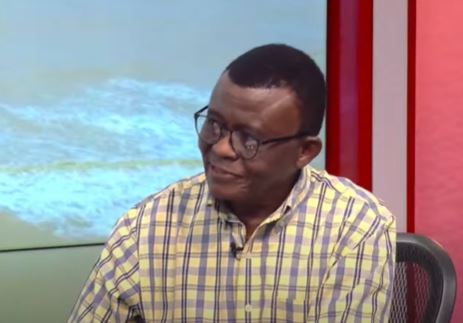
A former UN Senior Governance Advisor, Professor Baffour Agyeman-Duah, has expressed concern about the government’s perception of the illegal mining (galamsey) crisis in the country.
He pointed out that while the public and various organisations are making efforts to combat galamsey through public statements, the government's understanding of the crisis appears to differ significantly.
Speaking on UpFront on Wednesday, September 11, Prof Agyeman-Duah voiced his disappointment with the statement issued by the Ministry of Lands and Natural Resources regarding the galamsey menace.
According to him, the government's statement failed to convey the gravity of the situation and questioned whether government officials are aware of the pollution of river bodies and destruction of lands.
"I wonder if these people do drive on our ways and they are alerted and they see the river bodies over which we drive on the bridges.
“...So for the government to issue this statement is a non-starter in my humble view. The problem is huge and I think the government has been lacking the nerves to tackle it over the years to a point where it has completely gone out of control,” he said.
His comment follows the statement issued by the Lands Ministry on Wednesday, September 11, reiterating the government's commitment to promoting sustainable and legal mining practices in Ghana.
The ministry stressed that responsible mining remains a priority to protect the environment and ensure the well-being of communities impacted by mining activities.
The statement further noted that following a high-level meeting on Wednesday, stricter guidelines were issued to all Regional Ministers and their security councils to strengthen the fight against illegal mining.
In light of this, Prof Agyeman-Duah criticised the government's approach of fighting against galamsey by working through regional ministers as “useless.”
He argued that the country’s centralised governance system has been ineffective in resolving the crisis.
“We have a centralised government and it’s what the government or the president wants is what the ministers will do in the region. They represent the president, the same with the District Chief Executives and that tells you how this centralised governance system we have is failing us.
“Those in the districts and the regions are almost powerless in enforcing measures unless the national government takes the action so this statement that you just read, for me it’s a non-starter,” he said.
Latest Stories
-
Ghana Ambassador hails Team Ghana efforts after Zone II Swimming Championships
1 minute -
Volta NPP Chair urges President Mahama to dismiss Sammy Gyamfi over misconduct
5 minutes -
Maternal mortality is a women’s empowerment emergency!
23 minutes -
Kwame Pianim holds up Fidelity Bank as a model of sound governance and Ghanaian leadership
27 minutes -
GOIL defies market forecasts, holds petrol at GH¢15.43 and diesel at GH¢17.26
31 minutes -
When a wife helps build the dream: Celebrating Apostle Mrs. Rita Korankye Ankrah at 40 years of marriage
49 minutes -
NDPC, AGI and Coca-Cola engage on Ghana’s evolving food and nutrition policy
50 minutes -
Joyce Bawah Mogtari urges diaspora women to turn investment into generational wealth
1 hour -
Dr Bawumia urges new NPP Ashanti Regional executives to prioritise inclusion for 2028 victory
1 hour -
GIS urges public to channel donations to social welfare and credible NGOs instead of street beggars
1 hour -
Ghanaian businesses cautiously optimistic about 2026 performance – Chamber
2 hours -
Ghana Reference Rate drops to 10.18% in September, could ease borrowing costs
2 hours -
Ablakwa calls for new African leadership paradigm to tackle conflicts
2 hours -
Chief Imam backs optional Arabic in public schools
2 hours -
Mahama lauds Dr Kwame Nkrumah’s pioneering role towards NAM formation
2 hours